Idiot Joy Showland

This is why I hate intellectuals

Tag: polemic

Google Glass: the horror, the horror

 If you want a picture of the future, imagine a human face grinning moronically at the middle distance – forever.

Google has strapped a smartphone to a pair of glasses, and it’s very exciting.

To try humanity’s brand new toy out, Google is demanding a fee of $1500 from the 800 winners of an online competition. For a chance to win, we’re to use the #ifihadglass hashtag to tell them how we’d use the thing. Thousands have eagerly replied that they’ll use it to creatively document the actualisation of their synergistic networking strategies – in other words, they’ve pointed out that Glass isn’t actually useful for anything. Actually, there’s one thing: it brings the panopticism of the information age to its apotheosis. Everything we do will we supervised; everything we look at will be analysed, all our information will feed into the contextual adverts that will inevitably start to pop up around our semi-virtual landscape. Glass is a technology of individuation, building a dystopically pliant Subject. It also finally euthanises the old, wheezing real world – technology ceases to be a part of existence; existence is now just one aspect of the technology. With Google Glass we can never be alone. We must always be connected. We must always be staring at images. Real people are reduced to holographic simulacra. Real relationships are reduced to digital delusions. And then there’s Google’s first promotional video, released last year, which dreams of a day when a twat can do some mundane stuff. Around a minute in, you realise that you’re supposed to actually identify with the smug self-absorbed protagonist rather than want to cave his head in with a rock. It’s an awful, sinking feeling: this is what the rich and powerful think we’re like. A world of preening narcissists.

But none of this is what’s really revolting about the whole thing. The panopticon was there before; it’s the panoptic nature of society that the problem, not the technology itself – the act of putting a camera on your face doesn’t inexorably lead to a surveillance society. Glass might provide a retreat from the real world, but so does art and literature and abstract thought itself; authenticity has never really existed. And twats are hardly a recent invention. Still, there remains something horrifying about it, something fundamentally and viscerally wrong.

Imagine this same video, shot from three feet in front of our hero instead of through his eyes. Suddenly, the technology recedes far into the background, and we’re left instead with what it’s created. We’re confronted with a man, hideous in his bodily actuality, sleeping on his sofa, a crusted line of drool running from the side of his mouth, still clothed in a plaid shirt, jeans, and flip-flops. The blinds are open; the pallid light of day shines without mercy on the whole fetid scene. A strange pair of glasses sit at an awkward angle across his face; there are red marks near the bridge of his nose where they’ve been pressing into his skin. He wakes up with a sudden start. As he does so his glasses whir into life. The man stretches his arms out. “Eeeeuuuuhhhh,” he says. His eyes flick back and forth. He’s looking at something, but we can’t see what it is; it doesn’t exist. There’s a strange unfocused aspect to them. They’re the eyes of a shaman, a prophet, the unblinking eyes of a madman, the staring eyes of a corpse. As he makes coffee his head lolls around and around. He can’t focus on anything. “Hng,” he says. He stands by a window for a while, looking but not seeing. “Gnunng,” he says. Then, shambling, eyes darting, he sets off into the world.

As he walks various grunts plop from his mouth. “Mmmng,” he says at a lamppost. “Hnuh,” he proclaims to an empty subway station. “Hueergh,” he tells a dog. A homeless man ranting in a corner pauses for a moment to observe the man in silent pity: at least he knows how to talk. Our hero carries on: he walks into a bookshop. “Where’s the music section?” he bellows – ignoring the plainly visible signs – to the horror of the other customers. As he blunders blind about the place he continues to speak, eyes rolling and darting, shouting at nobody. “Uuuugh,” he says. “Oh. Is Paul here yet? Heugh.” An employee’s hand hovers over the phone. She doesn’t want to call the police on a man who’s clearly not well, but he’s disturbing the customers, stomping and shouting – it’s as if he’s in his own little world, completely blind to the existence of those around him. Well, not quite: there’s someone outside who seems to recognise him; his carer, perhaps. “Hey dude,” he says. “How’s it going?” They buy coffee from a food truck, but even here his attention is diverted. He stares silently at its tyres for a while. “Cool,” he says, eventually, quaveringly. The other man soon leaves. It’s hard to blame him.

This tale of woe concludes on a windswept rooftop. Our hero stands by the edge. “Hey,” he says. “You wanna see something cool?” There is nobody around. He takes out a ukelele and plays a few twanging chords at the sunset, grinning wildly. He presses himself against the railing. Down on the street, passersby watch the frail form of a ukelele tumbling down the side of a building, buffeted up by the winds and falling down again, and soon after, a human shape, following it into the abyss…

One shambling zombie is a horrifying enough image. The second video, released last week, shows us a whole world of them. The cities are full of wandering people with flickering eyes. Their chatter rises to the clouds, a single monophonic drone. “Glass, record.” “Glass, take a photo.” “Hueergh.” “Glass, connect me.” “Hnnnugh.” “Glass, sustain me.” “Glass, direct me.” “Euuh.” “Glass, lift me from this pit of ashes and bones. Give me your fire. Let me burn as you burn.” Remove their glasses and it’s worse: they look at the world with a newborn’s bafflement. Where do they go? What do they do? The body is frail and helpless. Without one foot in the eternity of the digital Cloud their skin constricts them. It’s unendurable.

Everyone is always elsewhere. They ride rollercoasters. They go ice-skating. They perform in ballets. They don’t experience a thing. They’re watching themselves watching. The present moment is nonexistent, it’s only an electronically aided memory in progress, it’s already become the past, even while it’s happening. Crowds drift into the roads to be mowed down by distracted drivers. Hundreds are minced up. They don’t mind. The rollercoaster slides off its rails; the safety supervisor is watching TV through his glasses. As the car plunges towards the ground its passengers solemnly chorus: “Glass, record a video.” Far away, in a reinforced concrete server complex, their last moments will be stored. In these rows of humming computers all of humanity is kept: every second of their lives, documented, processed, regurgitated as consumer profiles and product suggestions. They will leave their record. They will not have died in vain.

Ten years later, children sift for scraps through the rubble of the old world.
Forget Orwell

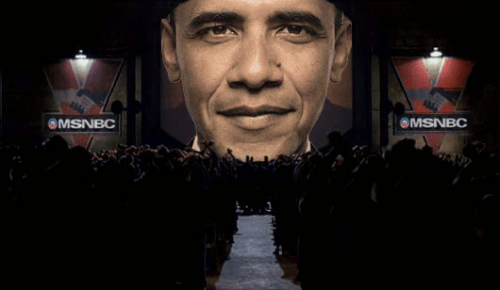
obama-orwell

Monday of last week marked the first annual George Orwell Day, seeing Penguin’s rerelease of several of his books, mass giveaways of his essay Politics and the English Language, and the launch of an Orwell season on BBC radio. (Purely by coincidence, it was also ‘blue Monday’ – the day calculated by to be the most depressing of the year.) For a supposedly radical writer, Orwell fits very comfortably into the cultural mainstream. Certainly it’s easy to claim that Orwell’s been hijacked by the political Right – witness the countless chiding voices from the Left reminding those that hold up the Obama administration as a prophecy fulfilled or recommend Animal Farm as an education for naive socialists that Orwell was, in fact, actually, despite what you might think, incredible though it may seem, something of a leftie himself. Was he actually, though? Now that Orwell’s been thoroughly assimilated into the ideological state apparatuses, it’s time to ask if there’s really much left over. To be honest, there’s not a lot. Here’s why.

1: Nineteen Eight-Four misses the point entirely.

I’ll start with the big one. There are two main criticisms of the dystopian society presented in Nineteen Eighty-Four: firstly, it’s impossible, and secondly, it already exists. These aren’t quite as contradictory as they appear.

The society in the novel is an absolute tyranny, a warning (not, as we’re continually reminded, a prediction) of the horrific consequences of absolute power and its ability to completely dominate both the individual human and the entire world. This Orwellian-Arendite dogma needs to be challenged. So-called ‘totalitarian’ societies are in fact defined not by their totalising discourses but by their utter failure to exert such a monopoly. Totalitarianism is a state of vulnerability: the paranoid totalitarian state continually affirms its own weakness. It is beset by saboteurs or contaminated with impure races; it is situated in opposition to a political Other with which it must maintain a constant dialogue (albeit one of repression); it depends, utterly and openly, on the support of the faithful masses. (Really, Arendite totalitarianism should be considered not as a social form but as a tactic.) The Orwellian society simultaneously projects an image of fragility (bombing its own citizens, inventing a political Other in the form of Emmanuel Goldstein) and an image of strength (orders are barked from screens, Big Brother is everywhere, sexuality is confined, reality itself is moulded to its rulers’ will).  Such a society wouldn’t last two minutes: in its crude parody of authoritarianism it could never admit that the source of its continuation lies in the faith of its populace, despite such an admission being absolutely essential for its operation.  This is why, for instance, present-day dictatorial societies are in general far more likely to yield to popular pressure on matters of policy. It’s precisely because such governments are not constrained by judicial, constitutional or electoral limits to their power that they have to listen very carefully to the voice of the street: if they ignore it too much, they lose all legitimacy. Democratically elected governments, meanwhile, already have their legitimacy in the ritual of the vote; they are entirely unbounded; they can ignore millions of marchers or break up protest camps with disproportionate force, and when challenged, they have an undeniable excuse: well, you voted for us.

This is where the impossibility of Nineteen Eighty-Four meets its pre-existence. We do, in fact, live in a society where discourse is totalised and panopticism is embedded in the structure of everyday life. Dictatorial societies must engage with their Other; in liberal society the political Other is pathological or an aberration, it can be rectified through the use of military violence but is never engaged with. A constrictive discourse of rights, freedoms, limitations, and above all of choices is maintained far more subtly than any Newspeak because the violence that underpins its operation is not an overt one. The panoptic gaze that fixes and individuates us is everywhere, but rather than watching for forbidden activity, it commands us to enjoy. When it comes to subsuming libidinal flows, the pornographic commodification of sexuality functions more efficiently than the Junior Anti-Sex League.

The root of the problem here is Orwell’s conception of power as something that is held and wielded by a group or individual. It’s not: power is a field, it’s decentred, something that can only be directed; that’s what makes it so pernicious. In the medieval period the field of power was fractal, with the feudal and family units replicating royal sovereignty; in this manner its structure was able to be continually reproduced. In liberal capitalism it is decentred; this is another defence mechanism. In the panopticon the exercise of power is both universally supervised and universal in its reach; there is no Big Brother, just everyone else. Improper attitudes aren’t punished, they’re medicalised; the patient turns herself in, there’s no need for rats, and the administrator of the cure can believe that she’s doing the right thing.

Displacing the panoptic and discourse-totalising elements of contemporary society onto an imagined ideal totalitarian state means that these aspects are relegated to the Outside of contemporary politics. It is precisely because of this that paranoiacs of all shades can see the incipient elements of a Nineteen Eighty-Four-style tyranny manifesting themselves in our society: totalitarianism is evident in security cameras, in government jargon, in detention without trial. The Orwellian society is one that we might move towards, it is not something that is already there. Not that these aren’t valid concerns, but they’re the accoutrements of totalitarianism, not its content. Our present society can’t exert despotic power, Nineteen Eighty-Four tells us, not until the government starts rationing food and banning sex.

2: Animal Farm is pretty awful and Trotskyism isn’t much good either.

Admittedly, the most glaring problem with Animal Farm isn’t so much the text itself as the way it’s entered the literary canon. It’s a staple of the GCSE curriculum in the UK, and seems to be just as prevalent in America. Nothing wrong with that, except for the fact that it’s not presented as a historical document embodying a certain political attitude, but both as allegorical literature representing universal themes and as an accurate history of the Russian Revolution. It’s no such thing. Animal Farm is, avowedly and openly, a Trotskyite polemic, a political pamphlet.

The text has its own problems – the lack of a Lenin-figure, for instance, or any allegorical representation of the Civil War – but it’s this Trotskyism that lies at the root of its easy integration into the educational apparatuses of ideology. Trotskyism shouldn’t really be considered as a branch of Marxist thought in the proper sense. Rather, it’s a symptom. Trotskyism represents simultaneously the elevation of the October Revolution to a world-historical moment and the disavowal of every subsequent attempt at building socialism. Trotskyites like the idea of revolution – which is why they make every effort to turn 1917 into an abstract ideal – but they don’t much like any of its ‘perverted’ aftereffects. Trotskyism means keeping the revolution pure and unsullied by historical reality, turning it into a dinner party.

Trotsky himself is really incidental to all this. His actual deeds and policies are irrelevant; he’s only a master-signifier for anti-Stalinism. Needless to say, this is all profoundly anti-materialist: despite their attempts to effect a materialist analysis of Stalinism as ‘bureaucratic state capitalism,’ the jargon really just disguises a complaint: ‘if my guy had won out, everything would have been so much better!’ – with the unspoken caveat that this can never be anything other than a conditional, that Trotsky represents nothing more than the guy who didn’t win out. As such Trotskyism raises the cult of personality to its apotheosis: it’s pure personality-cult, based on a ‘pure’ personality, defined entirely negatively, a personality that can gain universal relevance through avoiding any particular affirmation.

It should be remembered that after he consolidated his power, Stalin actually put most of Trotsky’s ‘far-left’ policies into practice, collectivising agriculture and focusing on the rapid development of heavy industry in the five-year plans. None of this is to say that the excesses of Stalinism should not be critiqued; the point is that the Trotskyite critique lacks any substantive foundation. Imagine a counterfactual: if Trotsky had won the Soviet power struggle, expelling Stalin and extending the violence of War Communism into peacetime, would present-day Trotskyites have affiliated themselves with his period in power? Of course not. They’d be calling themselves Stalinists.

You can see this in Homage to Catalonia: Barcelona under the Anarchists and the POUM is described as ‘real socialism,’ pure and unsullied. Why? Because they were crushed. Any successful socialist project is inherently untrustworthy; ‘real socialism’ is that which is crushed. This is why Animal Farm lends itself so easily to anti-Communist interpretation. The only pig-character not at fault – including Snowball, the Trotsky-surrogate – is Old Major, representing Karl Marx, who dies before the Revolution. While Napoleon demonstrates his evil by drinking the communal milk, his evil is on an axis with Snowball’s speechmaking and political organising; despite their internal differences the pigs are for the first few pages presented as a coherent bloc. Class divisions inhere; socialism is ultimately a quixotic endeavour. In other words, Trotsky himself is guilty of the Trotskyite original sin: he actualised revolutionary ideology.

3. Politics and the English Language is utterly repulsive.

Really it’s not the whole essay I want to take issue with, but this helpful list right near the end:

  1. Never use a metaphor, simile, or other figure of speech which you are used to seeing in print.
  2. Never use a long word where a short one will do.
  3. If it is possible to cut a word out, always cut it out.
  4. Never use the passive where you can use the active.
  5. Never use a foreign phrase, a scientific word, or a jargon word if you can think of an everyday English equivalent.
  6. Break any of these rules sooner than say anything outright barbarous.

There’s a great line in Godard’s film La Chinoise: ‘We are not the ones using obscure language; it’s our society, which is hermetic and closed up in the poorest of languages possible.’ Orwell’s rules, more than those of anyone except perhaps Strunk and White, have impoverished the English language. They’ve become entrenched: creative writing programmes encourage their students to righteously purge their works of any adjectives or adverbs, contemporary literature has become a sullen grey plain of terse mediocrity. Why shouldn’t we use long words? Why shouldn’t we use more words than is strictly necessary? Why not enrich our works with language from around the world and throughout the span of human knowledge? Orwell has his answer: without poetic language it would be impossible for politicians to mislead people. Any cursory reading of the grimly matter-of-fact reportage that surrounds the ongoing drone war would be enough to bring that into question. Nonetheless, he has something of a point: it would be hard for a dictatorship to survive under his rules; the same goes for anything approaching literature. Orwell is not a great stylist. He communicates himself through language well enough, but to reduce the incredible power of language to its capacity to convey a series of statements – in the name of combating totalitarianism, no less – is to rob it of everything that makes it valuable. It’s barborous. And so, by Orwell’s sixth law, the others should be immediately discarded.

4. Time for a purge.

There’s plenty more to be said, I’ve barely scratched the surface. John Dolan has an excellent piece on Orwell’s racism, classism and anti-Catholicism. It shouldn’t be forgotten that he wrote a blacklist of ‘crypto-communists’ working in the media for the British Foreign Office, or that the dissemination of his books was encouraged by imperialist intelligence agencies. Above all, however, the problem with Orwell is not that he was a writer who collaborated with oppressive forces or held incorrect or prejudicial opinions – there have been plenty of those; some are very good – but the extent to which he’s wormed himself in to the general understanding. To understand totalitarianism, you must read Nineteen Eighty-Four, and end up with an entirely distorted view of what State power is and how it functions. As an introduction to Soviet history, we’re given Animal Farm, and a partisan screed is enshrined as a true historical fable. And, God knows why, but being a writer still means being held to the standard of Politics and the English Language, and the blandly awful fiction being produced today speaks for itself. It’s time to rid ourselves of this toxic influence – maybe only temporarily, so that afterwards we can go back to Orwell without the figure of Orwell weighing down on us. It’s interesting that this year’s Orwell Day was held not on the anniversary of the writers birth, but that of his death. Perhaps Orwell Day should mark the day that he can finally be laid to rest.

Newt Gingrich is an invented person

Newt Gingrich is an invented person. How could he not be? His name sounds like something inbetween Charles Dickens and Dr Seuss, he appears to have been drawn by a failed caricaturist or an elephant holding a paintbrush in its trunk, he has, to my knowledge, never once done anything to suggest that he’s an actual living human being with the kind of moral and psychological complexities that only storybook villains seem able to go without. But for some unfathomable reason people allow this fictional character to hold political office, and to appear on TV so he can engorge his throat sac at the viewing public. And on Friday, Newt was happily croaking away on the Jewish Channel when his gular burps arranged themselves into a series of incredibly stupid words:

INTERVIEWER: Now on Israel, do you consider yourself a Zionist?

NEWT: Well, I believe that the Jewish people have the right to have a state, and I believe that the commitments that were made at a time- remember there was no Palestine as a state. It was part of the Ottoman Empire. And I think that we’ve had an invented Palestinian people, who are in fact Arabs, and were historically part of the Arab community. And they had a chance to go many places. And for a variety of political reasons we have sustained this war against Israel now since the 1940s, and I think it’s tragic.

I want to briefly address this idea, because besides being jaw-droppingly moronic, it’s also fairly commonly espoused by Zionists (who are, to be fair, always big fans of long-discredited ideas – I remember being constantly fed the old canard about Arab radio broadcasts rather than Jewish ethnic cleansing causing the mass depopulation of Palestinian villages during the 1948 war, and this at a relatively liberal peacenik-y synagogue; and Joan Peters’ From Time Immemorial is still cited as a source by Zionist commentators such as Alan Dershowitz despite its patent nonsense about a ‘country without a people’ being extensively debunked).

I don’t know what kind of definition of ‘people’ our bloated newty friend is using, but it’s a pretty weird one. Of course the notion of a Palestinian people is an invented one. So is that of an Israeli people, an American people, an English people, whatever. I thought it was common knowledge to everyone who hasn’t just stepped out of a time machine from the 19th Century that all ethnic identities are social constructs (although if Newt had just arrived in our time from the days of scientific racism that would certainly explain his economic policies). Unless you’re the kind of swivel-eyed lunatic that goes around measuring people’s cranial sizes it should be pretty obvious that ethnicity doesn’t have any real objective basis. It’s a matter of self-identification, and if a group considers itself to be a distinct people, then that’s exactly what it is. End of.

More to the point, though, even if there wasn’t a distinct Palestinian identity before 1948, so what? Is it then alright to ethnically cleanse them, occupy their ancestral lands, deny them self-determination, bomb them at sporadic intervals, tear down their houses and villages, shoot their peaceful demonstrators in the face with tear gas canisters, import and protect a population of settlers that burns their fields and abuses them on the street, subject them to an extensive system of apartheid, enact blockades that turn their meagre scraps of territory into the world’s biggest prison camp – all because their national identity doesn’t have the same long pedigree as yours does?

If the Incredible Newt is allowed to declare by fiat that the Palestinians are not a people, then I can do the same to him. Newt Gingrich is not a person. He’s a delusion, a collective hallucination. And, of course, invented beings can hardly claim human rights. They certainly shouldn’t be allowed to run for President.