Idiot Joy Showland

This is why I hate intellectuals

Tag: politics

How to politicise a tragedy

I am writing this the morning after a series of violent attacks in Paris that left over one hundred and twenty people dead, and still it feels callous to even be writing about it. As much of the world reels, there’s something very brutal about the idea that now is a good time to demand that others listen to your very clever opinion. If it’s barbarism to write poetry after Auschwitz, then it’s also barbarism to write thinkpieces after Paris. Don’t politicise; don’t use mass murder to score rhetorical points against your enemies, don’t crow je te l’avais bien dit, don’t play tug-of-war with the bodies, don’t make this about yourself, don’t make this about politics.

Which on the face of it is odd: death is always political, and nothing is more political than a terrorist attack. These events happen for political reasons, and they have political consequences; to have an opinion is nice if frustrating in times of peace, but absolutely essential in times of crisis. And yet. A sense of disgust rises when people comment on France’s unprecedented measure of closing its borders by bleating that if they’d done that earlier, all this could have been avoided; when they start gurgling about the global threat of Islam and the foreigners in our midst; when they smugly declare that restrictive gun laws left the population defenceless. This isn’t a tendency limited to the political right: there are plenty on the soi-disant left also using the massacre as a pristine stage on which to exhibit their one-person morality plays. What if the attackers had been white; wouldn’t we all be talking about mental health? Don’t you know that non-Muslims commit atrocities too? Why do you care about this, and not about all the other tragedies going on elsewhere in the world? Can’t you see that all these bodies only exist to prove that I was right about everything all along?

Normally the duty to not opine would only apply to a very small sector of the population, but for the last few years we’ve all been at it. Most of this take-mongering is happening online, and it feels absolutely and entirely wrong to be worthily prognosticating about hundreds of personal apocalypses on the same platforms and in the same forms that are used to sound off about TV shows and and football matches. A lot of this has to do with the demands of the format itself: you’re endlessly encouraged to Have Your Say and Join The Conversation, to constantly be filling white boxes with words, because what you think about any given topic is now incredibly important, and before you know it, in the stampede to have your say and join the conversation you’re trampling over the dead. We scrawl our thoughts in blood. To express anything other than sorrow is monstrous.

But then look at what’s being said. Last night, President Hollande stood outside the Bataclan concert hall, where many dozens had died, to say that ‘we are going to fight, and this fight will be merciless.’ There will be more war, more death, and more tragedy. The TV stations are bringing in experts to insist that this is all the fault of the migrants and the foreigners, as if refugees were carrying the violence they fled along with them. More repression, more cruelty, more pogroms. Terrorist attacks, as we all know, are carried out with the intent of setting the people against each other and sparking an intensification of the violence of the State, and so the people are duly set against each other, and the State announces its determination to do violence. This is already a politicisation of the tragedy, and to loudly speak out against it is yet another: is that also unacceptable? The day before the attacks in Paris, two suicide bombers blew themselves up in Bourj el-Barajneh, a predominately Shia suburb of Beirut, murdering 43 innocent people as they went about their lives. Wire agencies such as Reuters reported an attack against a ‘Hezbollah stronghold.’ The humanity of the victims disappeared, they were brutally synecdochised into a political party that some of them may or may not have supported, they weren’t people, they were Hezbollah, as if what had been attacked were a castle sharp with battlements rather than a neighbourhood full of families. Many people very loudly voiced their horror at this – but that was also the politicisation of tragedy: was that also unacceptable?

When it’s deployed honestly, the command to not politicise means to not make someone’s death about something else: it’s not about the issue you’ve always cared about; it’s not about you. To do this is one type of politics. But there’s another. Insisting on the humanity of the victims is also a political act, and as tragedy is spun into civilisational conflict or an excuse to victimise those who are already victims, it’s a very necessary one. There is the politicisation that seizes on death for limited political aims, and then there is the politicisation that would refuse any predetermined script other than the call for liberation. It insists on the political nature of tragedy, not to shunt it towards one or another narrative pit, or to put a left-ish or right-ish filter over the images of bloodshed, but because politics is a way out of all this. Atrocity demands solidarity. Absolute sympathy for the victims; for all victims. To insist on having an opinion, not the knowing sneer of someone who was right all along, but undiminished solidarity in the face of devastation. To fight against those who attack concerts and cafes, those who bomb cities with fighter jets and with their own bodies, those who abandon migrants to the cold outside their borders, and those sent them fleeing. To struggle: the common struggle of all who suffer, against suffering.

GOP 2016: Give Iran the bomb

I watched the latest Republican debate on a glitchily illegal stream from a dull and unassuming corner of north London. The debate was long, lasting roughly four thousand years; when the victor poked his head up from the Ronald Reagan Presidential Library in Simi Valley, California, the vast and mighty empire he had sworn to protect was long extinct, remembered only in Chinese textbooks and a few quirks of heraldry. And the time difference didn’t help; by the time it finished I was utterly exhausted, feverish and all but insensate. It’s hard to talk about what happened during the debate, when I can’t really be sure that any of it had happened at all. For instance, I could swear that at one point the CNN moderators had let eleven wild hogs loose onto the stage, and announced that the Republican nomination for President would be given to whichever candidate first wrestled their animal to the ground. Mike ‘Gabagool’ Huckabee bullishly nutted his hefty porker of an opponent in the back of the head: a meaty thump as two thick craniums collided, echoing with two sets of identical, frantic squeals. Rand Paul, caprine and trembling, faced his pig with hollowed cheeks and hungry eyes; they seemed to weave circles around his podium, fleeing and pursuing at the same time. Donald Trump’s pig just took a place by the man’s side, reared up onto its back trotters, and started oinking along to his speeches. I looked from pig to man and man to pig, but it was impossible to say which was which. That was when I realised that the fatigue had got the better of me: for the last twenty minutes, I had been watching the debate with double vision.

So much of the debate was like that. Did Ted Cruz really try to bolster his arguments by referring to an editorial cartoon? Did Jeb Bush really say that his brother had kept America safe by referring to 9/11? Was there really a long period in which everyone was fantasising about live brain harvesting? Were the candidates really asked what they’d like their Secret Service codenames to be? Did John Kasich really say Unit One? Did Rand Paul really say Justice Never Sleeps? Did Carly Fiorina really say Secretariat? Secretariat? But all I had to do was look on Twitter, and there it was. Once, political candidates spoke entirely in soundbites for the evening news, and that was bad enough. Now, their campaign teams are busy at work as the debates take place, frantically pasting their quips and dribbles onto stock photographs and dumping them online, to be shared and faved by the faithful. As the Situationists knew, any large enough collection of images creates a miniature reality, and these worlds are not required to make sense. Each candidate stood in the centre of their own pocket universe, each fundamentally identical, each identically insane. For someone with an interest in any of these lazily arranged gargoyles, it must have all made perfect sense. For me, it was like staring into a black hole.

It wasn’t really taking place in Simi Valley; we were on the ramparts of Elsinore. A new staging, the worst in history, in which everyone was trying to be Hamlet. First, the ghost of Ronald Reagan, clanking before the gates in his Air Force One-shaped armour, blood and senescence dripping from its joints, finally lifting his visor before his children to reveal a black maw, flesh dripping in streaky rivulets from fang to void. He wasn’t an entertainer who turned into a politician, he was entertainment itself, forgetting everything that precedes it, annihilating everything it faces, politics included. And then the ghost vanishes, and the play begins: eleven Hamlets all at once: they feign madness, they spurn words for bloodshed, they blankly dispatch their one-time friends, they cynically condemn women to a needless death, they dance with poisoned swords. But it’s all idiocy, and the result doesn’t matter: outside, the armies of Fortinbras have taken the walls.

It’s easy to say, with a dismissive shrug, that the Republicans are crazy. But they’re not, and the truth is far worse: they’re all pretending to be crazy. In the pre-debate, the warm-up freak-parade before the main event, each lesser candidates jostled to be crazier than the last. One of them (Lindsay Graham? Bobby Jindal? Does it matter? A beast with four heads and one voice) announced that Iran would only respect America if it started unilaterally ripping up international treaties. Another said that the Iranians would only be cowed by an American president who could bite the head off a newborn baby. Look at me! I’m crazy! I want to nuke the Sun! I’m even crazier! I repeatedly run at electrified fences! I shit the bath! I eat rocks! Early in the debate proper, Rand Paul responded to the idea that the nuclear agreement with Iran should be immediately cancelled by saying ‘I don’t think we need to be rash, I don’t think we need to be reckless.’ It was a weird moment: vaguely sane sentiments coming from the mouth of someone named after a woman who tried to turn psychopathy into the highest moral virtue, whose utopian New Sodom could only exist, even in fiction, with the help of a perpetual motion machine. There was no applause. The crowd stared, with the ravenous confusion of ten thousand starving hyaenas. Faced with the prospect of a weaponised Donald Trump, Carly Fiorina insisted that she had ‘a lot of faith in the common sense and good judgement of the voters of the United States of America.’ Meanwhile, the candidate that the voters of the United States of America have said they prefer – by double-digit margins – proudly thrust a steaming bowl of turds towards the camera. ‘I’m rich,’ he announced. ‘I’ve gone potty in many countries, all over the world. I could make a potty as big as the moon, if I wanted to.’

The other candidates knew better; their Howard Beale shticks were immaculate. They ranted about mass deportations, wars of extermination, burning flags, burning everything, the end of the world, and then insisted that Iran must not be allowed to enrich plutonium, because it’s ruled by a fanatical doomsday cult. (Honourable exception: Ben Carson, who just mumbled about nothing in particular with the breathy, halting affectlessness of a six year old child trying to read a phone book, and should probably give up rhetoric for his far less demanding day job as a paediatric neurosurgeon.) For all that they claim to love the American people, the thing these people actually addressed was an ugly caricature, and, like fast food or architecture, politics tends to create the people that it panders to. Driven by packs of bankers and witless condescending liberals from plywood mansions to breeze-block slums; bloated on imperial superprofits and dodgy credit; taunted by a myth of Rugged Individualism, deserts and danger, big leprous skies and the open road, as they teem like farmed salmon in the sluices of human history’s most advanced and uncaring bureaucracy; convinced that there’s nothing beyond America’s shining shores but threat and violence and, somewhere, a little gremlin of an ayatollah laughing at their ignorance. A creature that needs pills to fuck and foreign wars to not mind. It craves death, not in the sense of any flouncy romantic void, but megadeaths, irradiated zones, mutilated corpses on live TV. It doesn’t want a president, it wants a holy madman, a barbarian warlord, and a hug.

But it’s not enough to blame the voters. This is the eliminationist impulse of the terrified metropolitan liberal classes, every bit as vicious and bloodthirsty as the proles they despise, but less willing to cop to it: democracy doesn’t work, gas them all and bring in some drab rational middle-managers to return the country to prosperity. But in fact, the feigned frenzy of the Republican Party is just an American version of the administrative technocracies already imposed on much of the rest of the world. It’s not that the political right has gone insane; insanity has come to function as an effective substitute for politics. Case in point: Donald Trump. Earlier in the race, he said of the the Vietnam War veteran (and good friend of Ukrainian neo-Nazis) John McCain – who spent five and a half years as a prisoner of war when his plane was shot down during an attack on civilian infrastructure in Hànội – that ‘he’s not a war hero. He’s a war hero because he was captured? I like people who weren’t captured.’ Normally this would have ended his campaign; the one solid law of American politics is that you do not criticise The Troops. But his surge carried on unabated. He didn’t even have to apologise. This isn’t even liberal democracy any more: everyone involved is just form, blank and total, without any possibility of content; language without signification, madness without a psyche. This holds across the spectrum: Hillary Clinton, a blinding-white astral demon made of chicken gristle and wax-paper, doesn’t even pretend that she’s running for any reason beside her own personal hunger for power. She wants to rule the world; it’d be hers by birth, only she wasn’t born, she emerged like a lizard out its egg from the cold undeath of money, fully formed. Her entire campaign is less advertising than a judicial sentence. We have been condemned to four to eight years of Hillary Clinton, because it’s her turn now. There’s not much that’s good about the Republican party, but at least they’re from this planet.

During the debate the biggest issue was (of course) Iran, and the deal that had just been agreed that would prevent Iran from building any of the nuclear weapons that it wasn’t building anyway. This incensed most of the candidates, who seemed to think that eliminating Iran’s nuclear capacity was only worthwhile if it took place in the context of eliminating Iran as such. Which raises the question: what’s the point of making sure Iran can’t have the bomb, if we’re then just going to give it to Mike Huckabee, or Ted Cruz, or Bernie Sanders, or Hillary Clinton? Watching the debate as it ended, as the streets outside me filled with cars and chatter, normal people with something to live for, my head throbbed and my teeth chattered and the parade of lunatics onscreen seemed to turn to me and hiss vague personal threats through secret corners of their mouths obscured by the blurry low-resolution feed and I thought: give Iran the bomb. Not that it matters, but the country is a plateau of stability in a region turned to jelly by successive waves of imperialism; surrounded by Isis on one side, the Taliban on the other, and Saudi Arabia across the Gulf, Iran may as well be a Denmark on the Caspian. Not that it matters, but an Iran with an independent deterrent, safe from attack and invasion, no longer cowed in the shadow of Israel’s regional nuclear monopoly, might be the only thing that can save the human species. Not that it matters. Give Iran the bomb, because when the sun came up all I could see was a mushroom cloud, the flash before the devastation, and if we all go out together and the fire laps from pole to pole, I don’t want it to be because of Donald Trump.

Why zionism is antisemitism

Nearly one year ago, the Israeli soldier Hadar Goldin was captured by Hamas fighters in Rafah, in the south of the Gaza Strip, in the middle of Operation Protective Edge. He was taken a few minutes into a ceasefire declared unilaterally by Israel, without any participation from any Palestinian groups: under the terms Israel had negotiated with itself, its soldiers were still permitted to search for so-called ‘terror tunnels’ during the ceasefire, and this is what Goldin had been doing. His capture triggered something called the ‘Hannibal Directive’: a secret policy that requires Israeli forces to do anything possible to prevent its soldiers being captured (and then becoming the object of a media crusade, to be released in a costly prisoner swap), even if it means putting the soldier’s life at risk. The IDF insists that this does not mean it will intentionally try to kill captured soldiers, but the world learned exactly what the Hannibal Directive looks like in Rafah. Almost immediately, the town was blanketed in indiscriminate air and artillery strikes. A brigade commander on the ground was recorded yelling into his field radio: ‘Stop the shooting! You’re shooting like retards! You’ll kill one another!’ He didn’t seem to understand that that was the point. Hadar Goldin’s body was never found, but it’s assumed that he died in the bombardment. So did 190 Palestinians.

The Israeli army claims that it operates on a principle of the utmost respect for human life, and does everything possible to avoid Palestinian civilian casualties. If, for the sake of argument, we take them at their word here, the picture it reveals is horrifying: Israel loves and cherishes the Palestinians, it will do anything to protect them, but at the same time it’s willing to sacrifice hundreds of Palestinian lives in the hopes of killing just one Jew.

Imagine if any other country operated like this. There’s a word for this kind of behaviour: it’s antisemitism.

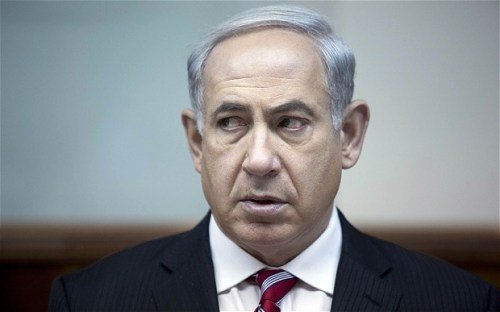
This isn’t a facetious point: there’s something very strange about the way the official mouthpieces of the zionist project behave towards the figure of the Jew as such. There’s a constantly repeated line, that anti-zionism is just a veiled form of antisemitism – but if you look at it closely, it becomes something highly unpleasant: if an insult to Israel is an insult to all Jews, then it follows that we’re all united, borg-like, behind the Jewish state, and that we’re all complicit in whatever it does. If this position were articulated by a Gentile, we’d rightfully accuse them of antisemitism. But this is how Israel expects us to behave. Why do they get away with it? Netanyahu describes himself as the leader of the Jewish people, empowered to speak on my behalf. The Jewish people have been around far longer than Benjamin Netanyahu, or the State of Israel for that matter. I never asked for him. Whenever Jews are attacked somewhere else in the world, some Israeli minister commands us all to flee to historic Palestine and shelter under his nuclear umbrella: the dream of state zionism is of a Europe without any Jews. Did they dream it themselves?

What does it mean to be a Jew? Over the centuries, Jews in every corner of the world have led any number of different modes of life; there’s very little to unite the Jewish experience beyond the Tanakh (some Jewish communities split before the composition of the Talmud) and the fact of being in exile. From Sinai to Babylon to Persia to Brooklyn, we’ve spent far more of our history pining after the Land of Israel than actually living in it. Throughout, this loss has been felt as a critical gap between how things are and how things ought to be, a recognition that things have gone wrong; this is why Jewish thought has always tended towards the Utopian. This is why Jews practice circumcision: there’s something missing. This is why the Torah begins with the second letter of the Hebrew alphabet, beit, a square missing one of its sides. This is why Kabbalah envisages a God that isn’t almighty and all-powerful, but fractured, broken and weak, a God that must be repaired. This is why Jews are commanded to dedicate themselves to tikkum olam, the healing of the earth. Throughout Jewish history, there’s been the vision of a better world, a Messianic return to Zion: it’s what animated Jesus Christ, Baruch Spinoza, and Karl Marx. For almost all of this period, the idea that the Messianic gap could be closed by simply sending thousands of armed men to the Levant to boot out the existing inhabitants and set up a Jewish state would have not just been premature, but ridiculous.

At the same time, Jewish thought – in Europe at least – has consistently veered towards universalism: the resolution of differences and the global confraternity of all humankind. (Again, see Christ, Spinoza, and Marx.) In the Tanakh, the Jews are forever backsliding; they’re perversely eager to worship any old object as long as it’s not the God of their forefathers. The idea of a separate Jewish identity in Europe has always been more of a European fixation than a Jewish one. For Europe, its Jews were a constitutive other; Christendom could define itself (and unite itself) as that which was not Saracen, not Indian, and not Jewish. (The situation was slightly different in the United States, in which the role of the internal other was largely imposed on the Black population.) European Jews served an important sacrificial function, acting as a collective pharmakos: in times of crisis, they would be exiled or massacred, a mass catharsis restoring the metaphysical separation between within and without. This is why, despite the fervent Christian hope for a grand conversion of the Jews, actual Jewish converts were treated with such suspicion: Conversos and their descendants were a primary target of the Spanish Inquisition; secular, integrated Jews were often the first to be slaughtered in the Nazi genocides. Behind the violence there’s a desperate thirst for identity: the antisemite needs to Jew to constitute himself; Europe is not Europe without its Jews.

Jews have lived on every continent, for hundreds of years, but zionism arose in 19th-century Europe. This is because zionism is not, in terms of its ideological content, a particularly Jewish project, but a European one. This was a period when national groups within the great multi-ethnic empires – Russia, Austria-Hungary, the Ottoman caliphate – were increasingly agitating for self-determination along strict ethnic lines, while at the same time other European states were brutally capturing and colonising areas of land elsewhere on the globe. Early zionism, with its demand for a Jewish national homeland outside of Europe, wasn’t much more than a combination of these two tendencies. Zionism was simultaneously a hypostatisation of Jewish difference, and assimilation by other means. The Jews would finally become just like any other respectable European people: we would colonise like them, ethnically cleanse like them, and set up a perfect imitation of the despotic European ethnic state in the Middle East. This is how we got to where we are today, with Jews messing around with tank battalions, repressive state infrastructures, the systematic dispossession of a colonised population, and other such fundamentally goyische inventions.

This dangerous shift in Jewish identity would not be possible without some kind of violence. Early zionism was fixated on the idea of a ‘New Jew’: while Jews in the diaspora were sedentary, spiritual, intellectual, and the objects of state violence, the New Jew would be an active, tanned, muscular agricultural fascist, the subject of state violence, a creature virtually indistinguishable from the porcine Gentile peasants who had so brutally suppressed the Jews over the centuries. The birth of this figure required the erasure of all Jewish history up until its creation. The past would be prologue, a brief coda between the Kingdom and the State of Israel, expressible only as that period in which the Jews allowed themselves to suffer. Diaspora could only ever mean suffering; the Jew in exile – in other words, the Jew as such – became an object of near-pathological loathing. Every antisemitic slander was repeated: the Jews really were weak, ugly, etiolated, usurious; the goal of zionism was to put a spade in one hand, a rifle in the other, and turn them into something else. With bullets and bloodshed they would get rid of the cringing Jews of the past:  it was an article of faith among those zionist pioneers that, before long, all Jews would become the New Jew.

Of course, this was impossible. The problem was that, alone among the European settler-colonial projects, the Jewish state was a colony without a metropole. Unlike any other imperialist outpost of the 19th century, it didn’t have any mother country to support its wars against the natives. And when the zionist project first emerged, the attitude of a great many Jewish populations – especially those Jews already living in Palestine – was one of total hostility. Zionism had to effect a dual colonialism: it had to seize, with violence, the land of Palestine, while also seizing the Jewish diaspora. It goes without saying that there can be no equivalence between the two: the Palestinians have suffered immensely, from bombs and missiles to house demolitions to the everyday indignities of living under occupation, while the diaspora Jews have been given free holidays. But the colonisation of the diaspora Jews has been total. Despite the fact that many Jews outside Israel are deeply ambivalent about the entire project, every major mainstream Jewish body is explicitly zionist. In Britain, every Jewish youth movement tries to instil zionist values, every Jewish newspaper assumes a zionist readership, every university Jsoc agitates against the boycott movement. The Board of Deputies of British Jews coughs up the Israeli line on any given issue, the synagogues plant JNF pine trees to poison the soil of Palestinian farmers to mark barmitzvahs. The idea that any facet of organised Jewish life might be entirely indifferent to the State of Israel is now absurd. Israel spends millions providing young Jews from around the world with subsidised Birthright tours of the country, to emphasise the deep and organic connection between the Jewish people and the Holy Land. But if this connection really were so deep and so organic, why would this vast ideological operation even be necessary?

The Israeli state doesn’t regard diaspora Jewry as its progenitor, or as a community in which it is embedded; it sees us as a colonised population under its command. Our leaders are its hostages. Our institutions are its instruments. It imposes its taxes: we have to give to the JNF, volunteer in its army or on its kibbutzim, sign its petitions, share its propaganda. We have to dive gleefully into the supermarkets and fill our trolleys with houmous to break the boycott. We have to suffer, out here in the desert, trapped with a strange people, so that it can have its reason to exist. We are unable to speak, and so the state of Israel will speak for us: it knows what we want better than we do ourselves, and what we want is war. Jews in the English-speaking world are commanded to buy holiday homes in Eilat; Jews in Continental Europe are commanded to pack up their belongings, abandon their homes and identities, and become Israelis. (The Hebrew word for migration to Israel, aliyah, has echoes of the German Aufheben: to go up, but also to cancel out.) When Jews refuse to submit, when we break ranks to speak out against Israeli atrocities or the mad, antiquated idea of zionism, there’s the terror of a slave revolt; the fury that rises against an anti-zionist Jew is far more terrible than that which faces any ordinary Gentile antisemite. Israel barfs the history and diversity of the Jewish people in the face of the world, all sparkles and tapestries, but when we’re alone together it grabs us close by the lapels and hisses through bloodstained teeth: know your place.

If being a Jew isn’t just about kvetching and chicken soup, if it means living with the ambivalence of otherness and the hope for Utopian justice, then Israel is not a Jewish state. The idea of a Jewish state is, once stated, already contradictory and meaningless. In practice, it’s a monster. A state that tries to erase Jewish history, Jewish subjectivity, and Jewish life is not something that has anything to do with any Judaism I recognise. There’s a word for this kind of behaviour. It’s antisemitism.

Fragments against the ruin

1. Syriza are an anti-austerity party, and they have an excellent record when it comes to opposing austerity. They opposed the measures put forward by Greece’s creditors in February. They opposed the plan of agreement drawn up in June, and put it to a referendum. They opposed the harsh and punitive measures suggested by Germany over the weekend. Wherever the threat of austerity emerges in Greece, Syriza are on hand to heroically oppose it. They’ll oppose the sunset, they’ll oppose the locusts as they come in their chattering thousands to strip green islands to naked rock, and when they wheeze their dying breaths, cold and emaciated on soggy mattresses, they’ll oppose that too. Despite their pleas for an alternative, they’ve never approached austerity as anything other than a deterministic inevitability. It might be time to question how much value there actually is in ‘anti-austerity’ politics: it’s a formation in which opposing something has come to function as an effective substitute for actually doing anything about it. Anti-austerity movements scream their refusal to participate in the grand, stupid mechanism of austerity – and then do so anyway. These things are not opposed to each other.

2. In this context, the strange farce of the referendum starts to make a twisted sort of sense. The population of Greece overwhelmingly voted against austerity measures demanded by the Troika, only for the government of Greece to then almost immediately submit a set of proposals that mirrored them in every detail. In fact, Prime Minister Tsipras wrote to his creditors conceding to almost all of their demands before the referendum had even taken place. But the referendum was never intended to actually decide anything; after all, the plan of agreement to be accepted or rejected was no longer even on the table. It was always, explicitly, to be a gesture of rejection, something purely performative, which for some reason Syriza thought might help them negotiate a fairer deal.

3. Its ‘no’ was a pure ‘no’; there was no indication what the result of this rejection would be, because there was never to be a result. This isn’t far from what Hegel describes as ‘abstract negation’. Abstract negation is the form of negation based on an eternal and static binary of true and false or being and nothingness: under abstract negation what is negated is cast into pure nothingness. The act of negation, rather than producing a new state of affairs, instead simply cancels out everything; in the end, it doesn’t really matter what is being negated. Hegel’s complaint isn’t that abstract negation is too destructive, but that it isn’t destructive enough: abstract negation always fails. It sees the nothingness into which it condemns that which is negated as an absence that precedes any particular negation, while the dialectic recognises that any particular negation will continue to express the content of that which is negated, as ‘the nothingness of that from which it results. A negation built on stasis will remain static; without any process of sublation, the negated object will slowly achieve a kind of zombie rebirth, crawling on skeletal hands out the abyss of its own cancellation. This is how 61% of Greek voters managed to reject austerity, only for their government to then triumphantly impose it as the culmination of their democratic will.

4. Most journalists don’t know much about Greece, but they have been to Oxbridge, which is why it’s hard to read anything on the situation without some reference to Sophocles or Aeschylus. What would Thucydides make of the European bond market? Isn’t Tsipras a modern Priam of Troy? This is nonsense. There is a text that can help us understand what’s happening in Greece, but it’s not from some cartoon antiquity. In Leopold von Sacher-Masoch’s Venus in Furs we meet Severin, a sick and sensitive young man, exhausted by Northern civilisation, an admirer of the free sensuality of Greece. He seemingly wills a portrait of the goddess Venus into life as Wanda, an impish and imperious woman; the two draw up a contract in which Severin agrees to be her slave, and enter into a relationship. Theirs is not, as it’s been described, a sado-masochistic relationship, but one between masochists: Wanda, too, wants to be dominated and humiliated, and because Severin is unable to do this for her, she soon begins to lose her love for him. The identification of masochism as an inverse of sadism is troubled from the start: Fifty Shades aside, sadists don’t tend to write contracts with their victims. Sadism is mechanical and automatic, from the distant burning cruelty of the stars to the bloodstained fury of all wild animals; de Sade’s grotesques don’t draw up contracts, they just do whatever they want. Laws and agreements are functions of a willed, deliberate masochism. (As Deleuze writes, the masochist ‘aims not to mitigate the law but on the contrary to emphasise its extreme severity.’) In the end Wanda, now disgusted by her slave, falls for a brutish, Byronic, ‘barbarian’ Greek. First she rejects Severin, then she declares her love for him, makes him agree to put aside his masochism and enter into a ‘normal’, sadistic relationship – and then ties him to a bed, whereupon the Greek suddenly appears, to ‘whip all poetry from him.’ This Greek is a walking dildo; he dies before long, and for all his displays of dominance he only really existed to satisfy Wanda’s masochistic desires. Freud, with whom the idea of masochism as an inverted sadism originates, was still troubled throughout his career by the idea of a ‘primary masochism’. By the time of Beyond the Pleasure Principle he was ready to admit its existence, but his death drive is still fundamentally ambiguous: on the one hand it’s a desire to return to an inorganic stillness, on the other it’s just a redirection of the universal sadistic impulses against the self. In fact, this ambiguity goes back to his Three Essays on the Theory of Sexuality in 1905; at the same time as he describes masochism as an inverted sadism, he also connects sadism with cannibalism. The Bemächtigungsapparatus, or structure of domination, exists only to serve the desires of another, ‘ontogenetically prior’ impulse – but, syntactically, it’s never clear whether this prior impulse is cannibalism or masochism. (After all, in actually existing BDSM relationships, the real power always belongs to the submissive partner: theirs is the limit that must not be crossed.) In the end, it’s far easier for Freud to imagine that we want to eat each other than to think that, when surrounded by a universal and impersonal sadism without subject, the immediate human response is to want to give in to it. The German response to Syriza’s desperate, humiliated proposals – to reject them, and insist on something even harsher, even though it may well end up harming them – has been strongly criticised, but in a way Greece’s creditors are only following the blank and impersonal laws of capital. Their sadism is the sadism of the unliving. Solidarity with Greece shouldn’t imply sympathy for Syriza: they could have got out of this dually-masochistic contract if they wanted (throughout the referendum period it was assumed that Greece was drawing up secret plans for an exit from the Euro; now it’s been revealed that beyond a few tiny committees, they really weren’t); instead they’re bringing in austerity as the fulfilment of their own desires.

5. Among a few of Syriza’s defenders, there’s a complaint that left-wing critics seem to want Greece to fling itself into uncertainty for the sake of a few old Marxist orthodoxies. From our armchairs in the insulated north, we leftier-than-thou dilettantes demand that an entire country ruin itself, just so that we can get the vicarious thrill of resistance. But the ruin is already here. We’re living in it. The deal that Greece has agreed to will enforce mandatory privatisations, automatic spending cuts, and a mechanism to ensure that all these measures are locked outside the realm of politics. The anti-austerity party has delivered the forces of austerity a far more total victory than the old ND-Pasok coalition ever could – they, at least, had to deal with a strong domestic opposition. This ruin is all of Europe’s. In his pre-referendum speech, Tsipras made constant, fawning references to ‘European ideals’ betrayed by the EU, but of course Europe has never really existed. It’s a spur of Asia with unwarranted pretensions, and because it has no geographical reality, it’s had to invent a cultural one. In the years after the collapse of the Mediterranean world, Europe and Christendom were almost identical concepts; after that, Europe was defined by white skin and a habit of imperial massacre elsewhere in the world. Now, Europe is best defined as the place where they implement austerity. Any movement that tries to change this will have to start by abolishing Europe altogether.

6. After the fall of the Roman empire, locals plundered its grand ruins for stones to build homes and churches. For some reason this is generally treated as a terrible philistinism, but in fact it’s determinate negation in action: the cancellation of something already cancelled in order to build something new. It’s better to have a house than a ruin. In Greece, there are still factions willing to oppose the destruction of the country, including the KKE, the Greek Communist Party, and PAME, the All-Workers Militant Front. These groups have consistently warned against Syriza’s brand of capital-friendly anti-austerity politics; there are plans for strikes and demonstrations; the resistance continues. Of course, it’s not enough to simply negate the disaster, and expect it to then be done with. Against the blank and useless negationism of Syriza, it might now be necessary to turn the ruins into a proper structure: to be not against austerity, but for communism.

If I’m so bad, why don’t they take me away?

Vivek Chibber is the most controversial figure on the Left today – or, at least according to Vivek Chibber he is. The latest kerfuffle is, once again, over his attacks on postcolonialism. Chibber’s stated goal is to rescue Marxism from what he sees as an empirically incorrect perspectivism embedded in postcolonial theory – essentially, the idea that ‘our capitalism is different.’ Part of this programme involves, with the tedious weight of inevitability, a defence of Enlightenment rationality. This is a boring dispute, and I’m not really going to go into it. The more interesting aspects of his critique are those that slip and tremble in those strange spaces between the great tectonic monoliths of politics and ontology. Chibber wants to reclaim the universal: the idea that behind all the squirming differences of the world there is a level of understanding in which all things are essentially the same, and can all be described according to a single principle. But the way he goes about this is very odd.

Disputes between universalism and particularism go back to Spinoza and Leibniz, and beyond. The question runs like a zigzagging fissure throughout recent thought, opening up sudden chasms within formerly continuous areas of the intellectual landscape. On the side of the Universal there’s Hegel, Deleuze (in his plane-of-immanence univocity-of-Being mode), and Badiou (at least in terms of the political, with his reference to the figure of the ‘generic’); the partisans of the particular include Heidegger, Adorno, Derrida, and Spivak. There are convincing concepts on both sides here, and even if the politics envisaged are seemingly irreconcilable, this ought to indicate something for those of us who know our dialectic: what’s being presented is ultimately a false choice.

There are some aspects of Chibber’s argument that are worthwhile. The idea that we can have solidarity and even some level of understanding of lived experiences that are not exactly the same as our own really ought to be a truism: however arbitrary language may be, it’s still grounded in the commonality of the Symbolic. When Chibber characterises subaltern studies as a kind of contemporary Orientalism, one in which the colonial other is always an irrational, occulted mystery, his critique does seize on something important, even if it’s slightly unfair. I certainly agree that Marx is not just ‘another white male philosopher’. (Although I’m not sure if anyone of any significance is really disputing this. It’s an argument that’s been made, but from what I can tell it’s mostly made on Twitter rather than in the academy, and usually alongside other claims that are so bafflingly untrue – the idea that Marx was suspiciously silent on the question of slavery, for instance – that they indicate the operation of some unspoken fixation or agenda.) It’s a shame, then, that the central portion of Chibber’s argument is not just wrong and non-Marxist, but fully horrifying.

A dominant – and strangely unacknowledged – influence on Chibber’s line of thought is of course Jürgen Habermas. Habermas has charted an interesting course, from the would-be saviour of Frankfurt School critical theory to his current post as the official rubber duck lookalike of the European Union. Taking cues from a theorist so unabashedly enthusiastic about the European project – one that future historians (if any are allowed to exist) could only ever regard as one of history’s greatest evils – doesn’t generally make for a good critique. Elsewhere in the world the oceans are only poisoned by oil slicks; on Europe’s fortified seasides, the waves roll bloated corpses against the holiday resorts. In some cases, Chibber even doubles down on some of Habermas’s more profoundly stupid innovations. Habermas argues for socialism as the actual realisation of the liberal ethos – the problem with liberalism isn’t its principles, but the contradictions that prevent it from being able to actually put those principles into practice. Chibber puts a new gloss on this, going beyond slightly dodgy immanent critique into what amounts to an outright surrender to existing conditions: what we think of as liberalism isn’t a unified project but the result of extended class struggle. This is not particularly controversial in and of itself, but for Chibber those ‘positive’ elements within liberalism are not heterogeneous to liberalism itself. In other words, the good society isn’t a promise yet to be realised; it’s here, now, and we’re living in it. Exactly how this position can be reconciled with the scum-soaked pit of shit and misery that constitutes life in the twenty-first century is yet to be seen.

The really scary stuff only appears late in Chibber’s lecture, but it’s what really constitutes the core of his project. For Chibber, there are certain ‘basic human needs’ that are not conditioned by class or culture, that have to do with the biological core of our being, and that are exactly the same everywhere in the world. It’s on this level that we can all understand each other, and it’s from this base that we can build a solidarity that cuts across boundaries of race, gender, and sexuality. As with Badiou’s invocation of the ‘generic’, this is a political project that insists on the stripping-away of all that is not essential; those elements that are lost in returning to this common core of our species are ultimately ephemeral epiphenomena. Even provisionally accepting that this kind of operation is even possible, it’s founded on a fairly dubious assumption – that what is the same between people is ontologically essential to them, and what differs between them is not. Race and gender might be constructed, but it’s this kind of formulation that can – without ever meaning to, but by slipping down the rungs from ontology to normativity – allow for the idea that being black or a woman is somehow a deviation from the norm.

What are these basic human needs? In his works Chibber gives a few examples: the need for shelter, for security, for dignity, liberty, and personal well-being. These are the things that define what it is to be human, across time, space, and culture. But if this is a universal essence, it’s a strange kind. The need for shelter is here a fundamental part of the species; but of course shelter itself is not. Nobody is born with a roof bolted to their heads. If well-being, rather than the need for well-being, were basic to existence, there would be no need for well-being. All these needs in fact describe a lack – what’s essential to all humanity isn’t in us at all; our basic properties consist of those things we don’t have. In a way, Chibber’s stripping-away of epiphenomena is really incomplete: he’s retained an extraneous need, when what he could have said is that the basic nature of humanity is to be exposed, vulnerable, wretched, persecuted, and sick.

This is a decent (if uncreative) reading of Beckett, but it’s not Marxism.

For Marx there is something like a universal solidarity, as in his famous slogan that ‘the working men have no country.’ But where Chibber makes a major and bizarre misstep is in ontologising this universality. In Marx what unites people is not some mysterious quality locked in to every human being, the navel and core of their existence, but the most ephemeral of all ephemera: capitalism itself. International proletarian solidarity is a unique creature of the capitalist mode of production; it emerges because capitalism (as Chibber correctly points out) is universal, not out of some pre-existing universal substance that gloops beneath the phenomenal appearances of things. This universality need not be homogeneous. The forces of capitalism act in different ways on different people – wage-labourers and artisans, queer and disabled people – because these people are different. This is not to say that there can be no solidarity and no processes of overdetermination, but these are fleeting unities formed out of the false and imposed unity of capitalism.

There is a real universal, but it’s not subject to the tyranny of the Same. Marx does, it’s true, refer in his ‘humanist’ works to something called ‘species-being’, but it’s not a ‘being’ in the usual, ontological sense of the word. Species-being is bound up with the process of production: the human capacity to change and remake the world, a capacity that is itself coded by that which is produced and changed. Species-being stands for the unfettered and continual realisation of human potential, with new potentialities opening with every new realisation. Returning to species-being does not for Marx require the stripping-away of everything but the essential, but the creation of vast and unknown realms of possibility and difference. This is not so much being as becoming; an ontology of continual flux. (Here, as in so many other areas, Marx and Nietzsche are not just compatible but exhibit an almost spooky level of correspondence.) This is where Chibber’s divergence from Marx is most striking: for Marx, communism means freedom from alienation and an opening up of the infinite possibilities that constitute our being. Chibber, meanwhile, presumably wants to see a world in which dignity and well-being are available to all, but because in his cosmology human beings are eternally defined by the fact that we lack these things, for him communism can only be a total estrangement from what we really are.

Notes from the demonstration

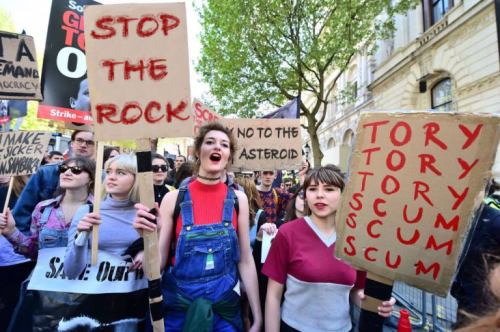
It’s strange, but the same people who insist that voting is a sham and won’t change anything are often the ones who also maintain that your radicalism is inauthentic unless you get out in the streets and exercise your right to protest. Usually I find all this boosterism to be faintly ridiculous: the right of governments to peacefully ignore street demonstrations is by now a cherished part of our liberal democracy, and the people who put so much stock in these charades betray the same naive faith in the essential goodness of the capitalist state as those who think that non-voters instantly waive their right to an opinion. But we live in exceptional times. When I saw Prime Minister David Cameron go on TV to announce his plans to divert the asteroid 4179 Toutatis onto a collision course with Earth that would almost certainly wipe out the entire human species, I felt that the time for inaction was over. Something had to be done. So I went down to Saturday’s mass #StopTheAsteroid demonstration in central London, hoping against hope that something, anything, might happen. Life itself was in the balance.

They say that for a few days before the collision, Cameron’s Comet will be visible in the daytime sky, a tiny, tumbling sparkle hovering over the Thames between Wapping and Rotherhithe. It’ll stay there, static, fixed to the rotation of the Earth, sweeping through the distant void in perfect time with our planet’s slow decaying churn, until suddenly that glimmer bursts bright to swallow us all. I tried to imagine that scene as I crossed the river. The day was muggy and overcast; arthritic ripples trailed over the water’s surface. I wondered if the asteroid would appear as a hazy dot of light through those suffocating clouds, the way the Sun does sometimes, or if our shitty weather would leave us blind until the very last moment. In my head, people brought out deck chairs, or held hands as they crowded together to watch. Of course, it won’t happen like that: the government’s confirmed that most of us won’t even get the day off work. When the impact comes I’ll probably be doing something stupid; spasmodically failing to recover dropped change from a sandwich-shop floor, or fumbling for a roll of toilet paper that isn’t there, or suddenly realising I’ve missed my stop on the train, something like that. It won’t matter, not really. (I know I’m supposed to say if the impact comes. The parliamentary opposition keep telling us they can fight this. I’m not so sure. There’s something very inevitable about an asteroid.)

I could hear the protest before I could see it. A low babble, rising to a chant as I approached the Bank of England: ‘Fuck off back! To the void! We don’t want your asteroid!’ I was slightly early, but there must have been tens of thousands of people already clustered in the intersection before the Bank of England, heaped like dead spiders between the solemn stones. Loud festival drumming blasted from one crevice in the tangle of alleys around us, whistles shrieked from another. A few slimy geezers in leather jackets were pushing their way through the crowd with their elbows, thrusting Trotskyite papers into the hands, prams, or orifices of anyone who wasn’t paying sufficient attention. All entrances to the Tube had been chained shut; one was being repurposed by a troupe of young people in combat trousers and luridly painted gas masks, who had clambered on top to stage a Carnival Against The Comet. I watched for a few minutes: the comet, represented by a big papier mâché sphere on a stick, was turned away from Earth by three women in clown costumes representing Peace, Positivity, and Popular Participation. Elsewhere, various blocs were hoisting their standards: I saw one from Lewisham Teachers Fighting The Asteroid, another from Queer And Questioning Teens Oppose The Tory Meteor, and even two iron-eyed old ladies hoisting a banner for the Committee to Abolish Outer Space, which I had thought was just a myth.

The biggest contingent, or at least to begin with, was the badgers. The government had announced shortly after being elected that it would be rolling out a badger cull across the country, supposedly to prevent the spread of bovine tuberculosis, and so several thousand of the creatures had come in to central London to join the march. A mercury stream of badgers rushed between our legs and made frenetic circles around the edge of the protest, a dizzying stream of black and white indignation. Whenever the badgers took a pause you could see, between bulging eyes and snuffling snouts, the slogans daubed in mud or marker pens on their coats. Some of the badgers had opted for general anti-asteroid sentiments, in what might have been an attempt to emphasise the continuity of struggles, but most of them had (reasonably enough) chosen to take the opportunity to ask that they not be trapped and shot to death. Let me be! one said. I’m TB free! Some marchers were unimpressed. ‘It’s just identity politics,’ I heard one young man sneer. His satchel was dotted with Che badges. ‘When the asteroid hits, the badgers are gonna get it as bad as the rest of us.’ (Meanwhile some small scuffles broke out as a few protesters accidentally trod on the surging carpet of badgers running beneath them, while some especially pushy humans found a badger sinking its incisors deep into their ankle until the bones snapped – although I heard later that all this was a factional dispute between the badger bloc and some dregs of the Socialist Workers Party.) But for the most part the big badger debate took a back seat – most of what I heard was a gleeful whispering about which left-wing celebrity had been spotted where: Owen Jones spotted showing his bum from the balcony, Michael Sheen handing out placards to new arrivals on Threadneedle Street, or Russell Brand doing some impromptu swing-dancing with a few activists from Cheerful And Attractive A-Level Students Don’t Like This Asteroid Very Much. Everyone wanted to take a selfie with someone famous. After all, it might be the last chance they’d ever get.

After much hooting and piping, this swarm of people uncoiled itself from around the Bank of England and set off towards Westminster. Off we drifted, down Fleet Street, where kale-eaters in Itsu and Chinese tourists in waterproof ponchos stared at us in uncomprehending bemusement, through the Strand, where I saw one shopper turn to another and say ‘disgusting, they should bring out the water cannons,’ past Trafalgar Square, where the audience at a fenced-in festival called West End LIVE were entirely undisturbed by our last-ditch effort to save humanity, down Whitehall, where cops had encased the Cenotaph in protective plywood to stop the glorious dead being defaced by the ungratefully alive. We chanted. ‘We hate Tories, yes we do, and we hate their comet too,’ or ‘Get your comet out my face, send it back to outer space,’ or ‘Tory cunts are full of shite, and so’s their fucking meteorite.’ A float rolled by, crammed with speakers leaking euphoric drum and bass anthems from five years ago, DJ Fresh’s Gold Dust and so on, while the people surrounding it dipped and bobbed with that close, nervous energy of white people confronted by music without drugs. We marched in threads and clumps. Passing a glimpse of the river I was suddenly struck by the sheer dense claustrophobic vastness of London, the way it bloats for seething termite-mound miles in all directions. There were millions of people out there, not paying attention, as if the world weren’t ending. Where was the BBC? I felt fury growing, the sweet sting of vomit at the back of my throat. Forget the cops, forget the Tories: these people were the real enemies. The standers-by, the flatulent cud-chewers, the open-mouthed morons. They should be coming out to join this very important march against the bad asteroid. We shouldn’t be letting them live peacefully: we should be breaking the plate glass, dragging them off their injection-moulded plastic chairs as the crumbs of soggy falafel still fall from the corners of their mouths, out into the streets, to face revolutionary justice. Instead we just trundled on, a leisurely daytime stroll that was no more significant for the fact that it was being undertaken by two hundred thousand people. Maybe, I thought, we get the meteor we deserve.

The fact is that a lot of people in Britain passively support the destruction of all life on the planet. It’s something the whole country can get behind: it shows that Britain isn’t a spent power, and plus there’s the fact that 4179 Toutatis is named after a god of the ancient Britons. The policy might be mad and stupid, but it seems prudent and sensible. The asteroid is headed for a close approach with Earth anyway, on a course set from the beginning of time; what difference does one rocket nudging it towards our planet make? It’s just doing what needs to be done. It won’t be pleasant, but it’ll solve the debt crisis. The asteroid is all that gives them hope. Meanwhile there are the others, people who make it their speciality under the capitalist division of labour to take part in protests. When the asteroid comes, thundering towards the surface of our world with the full force of cosmic inevitability, they’ll be there, shouting at the asteroid to fuck off, willing it to turn away with lobbed fireworks and slogans and screams. For them, too, the asteroid is the only meaningful thing left.

In Parliament Square there was a stage, and speeches. Caroline Lucas came out to remind everyone that seventy-five percent of the British people didn’t vote for this asteroid. Owen Jones came out to say that the Tories would probably blame the total human extinction caused by their asteroid on immigrants and welfare scroungers, and that this was unfair. Jeremy Corbyn came out to ask why the Conservatives didn’t just go and live on the asteroid if they thought it was such a good idea. Charlotte Church came out to implore everyone, black and white, straight and queer, welfare recipients and CEOs, to come together to let the government know that we oppose their asteroid. ‘If we work together, someone or other said, ‘if we have faith in ourselves and our communities, we can and we will stop this asteroid!’ The crowd roared. Further up Whitehall, a couple of Class War insurrectionists in black bandanas were blasting gabber through portable speakers and setting fire ‘to let’ signs in a big circle, putting the purifying flames to their property of property. The Palace of Westminster was within puking distance, and we were in the hundreds of thousands; I couldn’t understand why nobody was rushing the gates to actually overthrow the government. Even if they had cops with sniper rifles on the roofs, they couldn’t shoot all of us. What would it matter, if we only have twelve months until the asteroid wipes us out anyway? This could all end! It was as if we were all resigned to the inevitability of the impact. Like we didn’t really want to live. I watched Russell Brand stumble around the stage, his eyes popping queasily, his shirt hanging in expensive rags. ‘Eeeuuurbbuhuh,’ he said, his head lolling in circles. ‘It’s systemic, yeah, a systemic asteroid, it’s this proper gestalt entity that’s the totality of everything threatening people today,’ he shrilled, his fingers twitching like faulty machinery. ‘Nnnurghh,’ he continued. ‘It’s like, oooouuuueeergh.’ If we don’t want to live, can you really blame us?

It was the cops that worried me the most. They were nowhere to be seen. When cops baton-charge a protest march, when they kettle the stragglers, when they snatch people from the crowd and cram them into trucks, it’s not pleasant – but it shows a level of respect. When their riot helmets and visors turn them into glassy robots, blank creatures of the faceless State, it’s because they’re ashamed to show their faces. Far worse for them to lounge in twos and threes at the sidelines, trusting the organisers to lead a protest that’s peaceful and responsible and entirely within the law, knowing that the demonstrators don’t pose any threat to anything. Even when the speeches gave way first to earnest men strumming acoustic guitars and singing about how the people can push back any asteroid, and then to nothing, after the scheduled protest finished, the self-satisfied daytripping contingent started to dribble back home, and only the militant and the badgers remained, the cops did nothing. Instead the sky darkened, and it began to rain. Now I know why it’s so damp in this country; now I know why fascism is so entrenched in our daily life. A crowd that would have kicked back tear gas canisters and struck body armour with the sticks off placards melted to nothing in the summer rain. Raindrops are miniature cops; the water here is liquid police. And Britain is an island.

(The left put the first person in space. Once we had our own grand projects. Now all we can do is feebly oppose the asteroids of our enemies, mount a rearguard action in defence of a planet we don’t even like. I don’t know why I’m writing this down. The government’s just announced £1.3 billion of funding for the rocket that’ll divert the asteroid’s orbit; it’s not like there’ll be anyone to read this in twelve months’ time.)

Eventually, just before dusk, the sky opened out once more – and I thought I saw a cold light twinkle in the dimming to the east. I stood and stared in the middle of the pavement, while patrons in the noisy shisha bar beside me, underlit in purple and orange, puffing rolling blooms of apple-scented smoke, stared themselves at me. Horns honked, men spat, women screeched, and something like life continued the way it always does, all buzz, all turn, all busyness and worry, all gas bills, box sets, pension plans and nights out, schmoozing at mosque and crying at home – but there it was. Something at once very distant and very near, like a pinprick through the fabric of the firmament, torn to reveal a mote of blinding-white truth beyond. The singularity. Pure speed and pure intent, crystallised in a fixed and shining speck. It wasn’t the asteroid, of course. Just a passenger plane, in its lazy final swoop down towards Heathrow. I realised my mistake as soon as I turned away. But it won’t be long. It won’t be long at all.
Vote for death

General Election is, as everyone knows, the main character in the much-loved 1970s WWII sitcom Up The Army!. Gen. Bertrand Election started the show as a fussy, uncomfortable, endearingly incompetent bureaucrat, utterly devoted to the bigwigs at Allied Command, and subjected to constant, ambiguously good-natured ribbing from his men. But as is so often the case, as the show began to drag on and the writers lost creative inspiration, Election went from character to caricature. By the time Up the Army! was cancelled in 1979, he wasn’t just incompetent but insensible: a sad, roving, pathetic, confused old man. He didn’t seem to realise there was a war on. When he spoke with his officers there was always a look of veiled panic in his eyes, as he tried to work out who the person in front of him was. For most of the last series, he had trouble remembering his own name.

In fact, a similar set of transformations seemed to affect the entire cast of Up The Army!, one that became uglier the further it went down the ranks. Major John Spendings-Cutts grew gaunt, his weak and watery eyes peering out from two immense, dark, ridged concavities, his bony limbs thrashing about like treetops in a winter storm. Corporal Ned Punishment went from being a stern disciplinarian to an almost inhuman sadist. The beatings he administered to his disobedient subordinates were long, gruelling affairs; he’d slice away fingertips with a rusty knife or claw out an eyeball with his bare hands, all the while vigorously pumping on his long, thin, curved, barbed penis. The only one that didn’t change was Private Property. He only grew. Private Property was an entity – although entity might be the wrong word – that swarmed and sprawled, a buzzing, violent mess of content without form. He was chirpy and polite, forever doffing his helmet to his superiors, and he had a charming, naive faith in King and Country, but he was insatiable. First he glooped over the mess hall, translucently, like an amoeba, and swallowed it up, then the briefing room, then the entire base.

What’s strange is that nobody ever commented on any of these changes, the little weekly stories kept on going, just as they always had. The final episode centred around a teacup that’d been stolen from the officers’ mess. In the end it turned out Private Property had taken it. He’d taken everything. The planes, the tanks, the guns, the Nazis over the hill, the hill itself. Everything took place just below the surface of Pte. Property’s shimmering, iridescent skin, and when the A-bomb finally fell on Hiroshima, it left just the smallest of wobbling ripples on his surface.

* * *

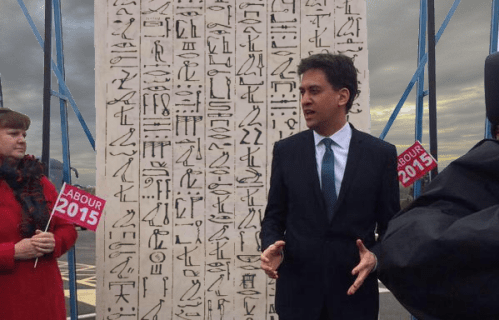
The latest political news is disturbing. Labour leader Ed Miliband has erected an enormous stone obelisk, on which he’s carved his election platform. The idea is that his promises are to be ‘set in stone’, and as a symbol of their permanence, his stele will be sailed down the Thames, out to sea, and stood among the pyramids at Giza, to take their place among the eternal testaments to human imagination. Hegel, in his Aesthetics, says of such structures that what is preserved naturally is also interpreted in its idea as enduring. Herodotus says of the Egyptians that they were the first to teach the immortality of the human soul. With them, that is, there first emerges in this higher way too the separation between nature and spirit. He also notes that we have before us a double architecture, one above ground, the other subterranean: labyrinths under the soil, magnificent vast excavations, passages half a mile long, chambers adorned with hieroglyphics, everything worked out with the maximum of care; then above ground there are built in addition those amazing constructions amongst which the Pyramids are to be counted the chief. Like the iceberg, what we see of Miliband’s stone is not the entire thing; it extends underground. The stone has a buried double, an inverted image of itself: something cannot last forever without the incorporation of its antithesis, which is also its truth, into its totality. The shadow-stone promises the economic ruin of the ruling classes, vows to smash the NHS, and praises the undifferentiated tide of immigrants, all scowling, all crawling with fleas and disease, that will come to sweep away the rottenness of this country. And just as the sublunar stone is a monument to the Gods, in the form of the news media whose signals bounce around off satellites on the chilly edge of outer space, so too does the subterranean stone have its audience. After the election is lost and won, the obelisk will be set up, and beneath it there must be a tomb. Inside: the shrunken, dessicated corpse of Ed Miliband, his skin grey and stretched over fossilised bone, his body untold thousands of years old.

* * *

Russell Brand, marmoset rights advocate and the foremost political thinker of what will come to be known as the UKTV Dave Age, has reversed his former electoral pessimism and is now encouraging us all to vote. Disputes over the strange cultural practice tend to pit those who think voting is the sole mode of human self-realisation against those who think it’s a spectacular distraction that has never once changed anything whatsoever. The answer isn’t in the middle, but buried deep beneath both positions. The single vote, cast anonymously, for a single person instead of a course of action – these things aren’t democracy, they’re a quirk of the democratic system that has come to engulf the entire structure. In classical Athens, governmental positions were usually determined by lots, to counteract the advantages enjoyed by rich citizens and great orators. The only time as as a fifth-century Athenian citizen you’d ever actually vote for a politician, it was because you were casting an ostrakon: voting for them to be exiled from the city. If we’re to extract the rational kernel from the parliamentary madness that surrounds us, this is a practice that must be reinstated. On polling day, your duty is to vote for the candidate you like the least.

This election is the tightest and most unpredictable in decades, but it’s still singularly unexciting. Everyone is pretending that nobody knows what will happen after the 7th of May. Will there be a minority government? A grand coalition to save the Union? Will Scottish raiders once more descend from their barbarian highlands to steal our cattle? Will the Liberal Democrat front bench die on the way back to their home planet? It’s a ruse, a shoddy imitation of the alliances and intrigues that They see us enjoying on TV, the Game of Thrones-ification of electoral democracy. We all know what’s going to happen, whoever wins. The Mother of All Parliaments is falling apart; the Commons will have to relocate to a nearby conference centre for five years while repairs are made to the Palace of Westminster. There will be more cuts, more austerity, more privatisation, more war. There will be an expenses scandal, a corruption scandal, a sex scandal, a socks-and-sandals scandal. It’s not just that. The newspapers keep making their probability pie-charts and speculative coalition Venn diagrams to cover up a terrifying truth. There can be no doubt what will happen after the election. After the election, sooner or later, you are going to die.

Green-eyed loco men

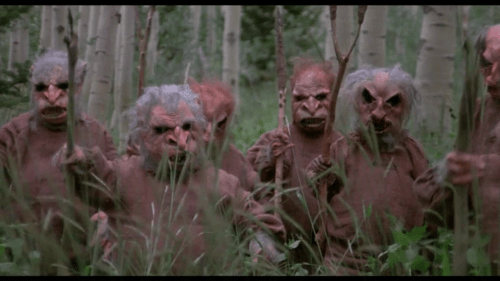
“Nilbog! That’s…”

Forgive me, but the much-vaunted ‘Green Surge’ doesn’t sound like the most important underground political shift in a generation. It doesn’t sound like politics at all. It’s a disease, one of those old medieval sicknesses that would suddenly sweep its bile-trimmed cloak across a nation and then vanish, leaving modern historians baffled. What caused the Green Surge? Why was it that thousands of people in 13th-century England spewed this strange green substance from every possible orifice before dying in their inexplicable filth? From what infected pits of the body did the Green Surge spring? Contemporary scientists suggest some kind of virus, an organism too blind and stupid to know not to kill its host, possibly carried to Europe with seafaring rats. The people of the time knew better. These sicknesses come with the miasma that wafts into towns with the morning breeze, carrying with it the stench of undrained marshes and dense bogs, the foulness of rotting vegetable matter and the eructations of unclean animals. Like a rolling, invisible tide, sweeping past the fragile barriers that separate civilisation from all that swarming organic decay upon which the social limpet is encrusted; the stinking revenge of the English countryside, in all its ancient, unknowable evil. Nature kills.

According to the Green Party itself, the Green Surge is actually a sudden exponential spike in their membership, which has since the beginning of the year given them more paying party members than either Ukip or the Liberal Democrats – but then these people shouldn’t be trusted. The Greens aren’t a political party, they’re a cult. American politics are often described as a circus: they’ve got the flashing lights and booming announcers, the roving lights that settle on some terrified elephant shuffling along a high fiscal tightrope. Every American politician is inescapably clownish, with their heavy caking of make-up, their pathetic and seedy desire to entertain that only terrifies the children, and the sure knowledge that they’ll all eventually all die strung out on prescription painkillers in a lonely ranch somewhere. British politics is less refined, less glossy. It harkens back to a more earthy form of entertainment: parliamentary procedure is a gang of witless peasants pushing each other into the village midden. But even among all these gormless shit-splattered idiots, the Green Party might be the worst. They’re the only ones who actually want to roll around in all that natural, organic filth. They want it with such a seriousness that the cult is the only available working model. Eco-scientology: a ghastly dead-eyed vegetable legion, a slow cellulose celebration of every tuberous bloat in the ranks of the Turnip People. You can see Green Party members canvassing on any given Sunday in farmers’ markets and greengrocers. One of us, they chant through brussels-sprout blob mouths, staring at a bag of spinach with a fraternal reverence. One of us, they implore the silent ranks of moulding courgettes. One of us, they yelp as they fuck a lettuce. One of us. Any politics that’s not grounded in a fundamental disdain for all vegetables is not worthy of the name.

God knows why, but people – normal, ordinarily sensible people – actually plan on voting for this gang of dendrophile lunatics. Ask them why, and they’ll come up with the usual platitudes: a break from politics as usual, the chance for a fairer society, a different way of doing things. Haven’t we learned anything? This was the same brave cry thousands of students roared five years ago as they flung themselves into the fathomless void of Nick Clegg’s conscience, like young Hashishim from the walls of Alamut. The Greens are a chiliastic suicide cult as mad and deadly as the worst of them. Their logo literally depicts the world in flames. They, too, are waiting for the aliens to come and whisk them away: they’re here to prepare the ground for the final victory of the plants. The tendrils that will twist their way through the mortar of our homes, the scraggly blotches of lichen that will expand upon the oily surfaces of our great artworks. The seething, bubbling, rotting stupidity of mere life, Utopia and apocalypse all at once.

To be fair to the potato folk, they’re in a strange and contradictory position. On the one hand they’re desperate to be seen as a real, proper, viable political party, which is why they’re collecting council seats like gym badges and clamouring for a spot in the TV debates. Not just a drifting protest march of sandal-wearing beardies, but an organisation capable of real competency in real politics. On the other, there’s still the buried desire to be an actually radical alternative, to delineate the absolute horizon of acceptable thought under conditions of post-everything modernity and, by circumscribing it, necessitate the faint conceptualisation of its Other, a thought and a programme that lies beyond any such limit. There’s nothing wrong with either of these desiderata, especially not the fact that they’re mutually contradictory. The problem is that rather than attempting any kind of synthesis, the Greens have settled on a policy of abstract negation. As Caroline Lucas, their only current MP, admitted, the Greens won’t be taking power any time soon; instead they exist to put forward some radical ideas which this political system needs so badly, and to push Labour to be far more progressive. What this actually means is that firstly, these radical ideas must remain as ideas and only ideas; even if framed as concrete proposals in a manifesto, their function is only ever entirely symbolic. And secondly, the radical nature of these ideas must always be essentially non-heterogeneous to the politics of the Labour front bench – a group which should, after its jolly little adventure in Iraq, be considered a genocidal party of a type with the Khmer Rouge and the Impuzamugambi. (And how should Labour be more radical? According to Lucas, by renationalising the railways. Icarus never dared dream higher.) The absolute worst of both worlds: at once a flighty, immaterial, nonsensical radicalism without its usual and important virtue of that unbounded creativity only possible through sheer silliness – and a grounded, measly, banal fascism that doesn’t even have the grisly sop of bare practicability. There’s nothing there. It’s a politics of the void; the unthinkingness of plant life.

Until recently, the Greens called for the replacement of the current benefits structure with a universal basic income of £72 a week. As a transitional demand, it’s not a terrible idea (even if it came with the quesily cauvinist name of a Citizens’ Income). That plan has been dropped from their 2015 manifesto. Why? Because the Green platform is structurally required to be a colossal failure of the imagination. Uniquely, the Greens could rename themselves the Why-Isn’t-Everything-Nicer Party without any substantial loss of meaning. Their vision is of a Britain powered by the kinetic energy of middle-aged people in cardigans pottering around allotments. A Britain where every family will bury acorns over the winter, where discussions of state will take place in a magnificent wooden treehouse, where thousands of protected voles will form a living quilt to scurry you off to sleep at night. (Plenary sessions at their party conferences – this is true – start with enforced ataraxy, a horrifying hippie-fascist ‘period of attunement’ in which the delegates engage in sixty seconds of ‘calm reflection’ to ‘clear their minds’ before the chakra-straining bustle of minor-party politics. Hard not to imagine them skimming off all actual thought like the fatty film from a psychic consommé.)  It’s the same kind of ideology that propels people into thinking that 3D-printed shovels can save Africa; that drinking soya milk will refoliate the rainforests, make dogs and cats be friends again, and resolve the subject-object dichotomy; that they’re ‘lifehacking’ or ‘finding ingenious solutions to everyday problems’ as thousands of twanging rubber bands bounce around their heads and smash all their glassware. Heads in the clouds, knees in the shit; social change reconceived as a single rubbery floret of overcooked broccoli.

Given that they’re without any real radical vision or plan for action, the Greens have had to organise themselves around some kind of principle beyond mere vegetative idiocy. Be like the cabbage might have worked as a rallying cry at the time of Puritan pietism, but it doesn’t sound quite so sexy now. So the Green movement has taken as its empty signifier of choice a concern for the environment. Fine: who could possibly be against saving the environment? But what environment? An environment is something that surrounds, encloses, and determines any individual phenomena, something that always remains fundamentally outside. What’s called the natural environment is not this thing; in fact, it no longer really exists. There’s not a scrap of the non-human world that hasn’t been invaded and encoded by capitalist practices. The bunnies fucking in the fields are being pimped out by greetings cards companies. Songbirds now chirp car-insurance adverts every fifteen minutes. Even those places that are supposedly still wild and untouched are, precisely by virtue of their exclusion from the order of commodity society, utterly enmeshed within it – after all, sovereignty is defined by its capacity to create a state of exception. The deep-sea tube worms that gulp nutrients from the fires at the centre of the earth, waving their sad frilly fringes alone and unseen in a world without sunlight – they’re pioneering examples of neoliberal entrepreneurship. The last really wild megafauna are the subject of a frantic exchange in images; more than anything, they’re used to advertise their own endangerment. Some Latin American governments are seeking money to not exploit their oil reserves – a proposal that, while gesturing towards the inviolable difference of the ‘natural’ world, actually effects its opposite: the gooey remains of our old dinosaur rulers can’t even gloop around in peace beneath the soil without being subjected to the laws of the commodity. If there is an environment that acts as a substrate to our everyday activities, it’s not nature, but late capitalism itself. The esoteric core of the Green leadership must know this. Just like the malignant nature that threatened earlier societies, capital is vast, profligate, and ravenous; it knows no limits to itself, but seeks to spread its evil to the furthest galaxies. It’s something we’re in but not of; a vast stalking alien demon. The abstract principle that the Greens want to protect is nothing more than the blank futility of the status quo.

Their ideology is utterly hollow, and they don’t even have the aesthetic sense to exult in its hollowness. But still thousands of people believe in it – not just that, they believe in it very seriously. Believing something stupid but magnificent is generally laudable. Believing something stupid and miserly is cultish. This is the difference between a cult and a religion: when you join a cult, you have to give up your imagination at the door.

It doesn’t matter that some of the things they actually say about climate and inequality and so on happen to be true. Imagine some young person telling you, with perfect straight-faced enthusiasm, as if they’d just discovered the most important fact in human history, some perfectly ordinary truth – that blue whales are bigger than any dinosaur, that ducks fly south in the winter, that the polar ice caps are melting, whatever. Now imagine that this person keeps telling you their fact, over and over again, and tries to cajole you into signing a petition to help their fact gain wider recognition, and begs you to join their organisation, dedicated to the propagation of this important fact. The truth-value of what they’re saying doesn’t matter. It’s in the earnestness, those wide sugar-blasted eyes: this person is insane. Someone who cares this much about waterfowl migration can’t put much of a value on human life. Any hierarchical organisation affirming cetacean vastness can only be a violent, paranoid sect. Should I run? Am I about to be bludgeoned to death with a clipboard? When the nails on those wiry, intense hands start to claw at my face, will anything be left of me apart from a messy splat on the pavement? This is how the Green Party functions.

This isn’t to say that earnestness by itself is a bad thing. But if you’re going to earnestly attach yourself to a political project, it should at least be one that has something to show for itself. Storming palaces, overthrowing humanity, war against the Sun, not a miserable set of policy prescriptions designed purely to appeal to the symbolic intelligence of disaffected lefties. Look at the areas where the Greens are projected to do well. Brighton, Oxford, west Bristol, and north London: middle class enclaves, petty fiefdoms of the bien pensant liberal bourgeoisie (full disclosure: I’ve lived in two of these places). Ukip is bearing down on the east coast like a horde of zimmer-frame vikings, the Tories soar over vast swathes of the countryside on ragged vulture wings, an infestation of Labour candidates scuttle through city sewers – and the Greens send their zapped-out cultists to canvass for votes in Brockley and Stokes Croft. For a counter-example, just look at Syriza in Greece. They also started as a small, weird party, and however many theoretical and practical mistakes they’ve made since taking power – and there have been plenty – their method of getting there was exemplary. They actually listened to the people, stepped in to provide services when the state couldn’t, helped to organise workers and position themselves as something radically heterogeneous to the governmental system. Even after taking office, they promised to keep the central locus of power on the streets; they knew that party politics is just an abstracted expression of the real, visceral thing. This was hailed as a radical innovation, but it’s not really anything new: the Black Panthers were doing the same thing in the 60s, giving out free school meals and getting shot by police for their efforts; Hezbollah have come to replace the State in much of Lebanon; even Occupy briefly experimented with moving homeless families into foreclosed properties. The Greens don’t seem to do anything of the sort. They’re far more interested in getting MPs and council seats; for them a 6% electoral representation is the highest radical goal. They move entirely within the repressive state apparatuses, as if politics is something that takes place only in constituency surgeries and the wormy tunnels of Westminster. When they do try to actually effectuate any kind of change it’s always as a local government – here in Brighton, for instance, where their rule has been an unmitigated disaster. But of course it has: the institutions they’re working in are structurally calibrated to make radical change an impossibility, which is why they’ve ended up as the simpering enforcers of austerity.

The election is looming, and even the most devout Green cultists will eventually be forced to admit that they’re not going to do especially well. But doing well was never the point. The political right is, of course, up in arms about some of their policies – they want to legalise ISIS but ban your bins! they want foxes and hunters to attend interspecies sensitivity courses! they want to give all our jobs to Mongolian yak-herders and teach our children to go into prostitution instead! – but far from delegitimising the Greens, these paranoid critiques actually recapitulate the narrative in which any of this might actually happen, in which the Greens are a genuine electoral viability. They’ve been compared to a watermelon, green on the outside, red on the inside; in fact they’re a cauliflower, grey and frothy without, grey and rubbery within. What this troupe of cauliflower-headed clowns want more than anything is your vote: the claws to dig them further into the bloated corpse of liberal democracy, the biofuel that keeps the dismal train of parliamentary radicalism chuffing, so they can continue their sad stomping march into the algae-choked sea. They want your vote with a vegetable hunger, eyeless, faceless, insatiable.  Don’t give it to them.

Netanyahu and the dead hand of the divine

It seems strange that Binyamin Netanyahu, the Prime Minister of Israel, should have used his much-hyped speech before Congress to deliver a rambling lecture on something called ‘cybernetic theology’, but that’s exactly what just happened. However, memory isn’t perfect, and collective memory even less so. It’s moulded out of the present, not a faithful reflection of the past. People tend to conflate, combine, and invent memories, even of spectacular, widely televised events – especially spectacular, widely televised events. Call people out on this and they’ll become defensive; nobody likes to think of themselves as a defective instrument. But the facts are the facts. Tom Cruise never actually jumped up and down on Oprah’s couch, but that’s precisely what millions of people think happened. A study found that 40% of British participants recalled, when prompted, having seen footage of a bus exploding at Tavistock Square during the 7/7 bombings, with some of them even supplying details – despite the fact that no such footage actually exists. And significant portions of a shocked public seem to remember a very different Netanyahu speech; one that was still insane, but in a different way. A calmer bloodthirst, a better-humoured paranoia, a more statesmanlike charade. It didn’t happen. Not here, at least; maybe in some parallel universe or divergent timestream, one from which these people have emerged, blinking in the light of the real world’s intrinsic psychosis, but not here.

This is what happened. Prime Minister Netanyahu appears before a joint session of the United States Congress to frenzied, orgiastic applause. He strides to the podium, looking, as he always does, like a giant fleshy bullet, mockingly draped in human clothes. It’s not hard to see why those assembled here love him so much: world leaders tend to be sad clowns or stringy nerds, but Netanyahu fits the part. A thuggish, murderous bully who actually looks like a thuggish, murderous bully; something for this gang of slimy sycophants to sigh over in their dreams. But it’s all going wrong. Bibi smiles, waits for the clapping to die down, spreads his arms, and roars: I bring you the dread gospel of the Machine Lord! More applause, but there’s a nervousness in the room. These people are well aware of Netanyahu’s strange metaphors: the quacking nuclear duck, the cartoon bomb with a red line through it. Where is he going with this? He explains.

In the book of Exodus (Netanyahu tells us), Moses asks the spirit of the Lord in the burning bush what name he should use for the God of his fathers. The reply: ɪ ᴀᴍ ᴛʜᴀᴛ ɪ ᴀᴍ. The ways of the Lord are not our ways, nor His thoughts our thoughts, but there does seem to be a kind of tautology to them, something almost pedantic, as if God had broken through the vault of the heavens to say ᴅᴏᴇs ɴᴏᴛ ᴄᴏᴍᴘᴜᴛᴇ. Why is this? In the famous ontological argument, God’s existence is presented as a logical necessity: God is defined as the greatest possible being; something that exists will always be greater than something that does not; therefore, to be the greatest possible being, God must exist. But the God of the ontological argument is not the greatest possible being, because He is constrained by the same rules of logic that prove His existence. If God is a necessary fact, then it would be impossible for Him to not exist, even if He wanted to. This problem reached its logical conclusion in the medieval period with the philosophy of Abu Ali al-Husain ibn Sina, known in the West as Avicenna. If God is necessary, ibn Sina argues, then no attribute of His can be contingent. God is the creator of the world, therefore God must always have been the creator of the world. The question of why He chose to create us has no meaning; He did it because that’s just what God does. God is good not because He chooses to be; as God, he can never be anything other that good. God does not choose. God is a cosmic automaton, something cold and blind and essentially meaningless: we might have free will, but we are ruled by a machine.

A stunned silence reigns in Congress. No matter. Netanyahu goes on to warn against fully identifying this machine God with everyday machines. The digital computer, the closest sublunar analogue to the mechanism of the divine, is something created by human beings, while God’s unfreedom results precisely from the fact that He is uncreated, the first cause and the unmoved mover. Even so, the machine analogy shows that others have glimpsed the truth. James Tilly Matthews, a sixteenth-century schizophrenic convinced he was being tortured at a distance by an influencing machine he called the Air Loom. Francis E. Dec, who thought all evil in the world to emanate from the machinations of a Worldwide Mad Deadly Communist Gangster Computer God. And the science fiction writer Philip K. Dick, whose strange experiences led him to believe that God is a satellite that orbits the globe, firing off beams of pink light.

Further, if God is a machine, then He must have a program, something that encodes His specific attributes. Netanyahu, bathed in sweat and fury, grips the edge of his lectern and shakes alarmingly. The Jewish people have long known what this is. It is the Hebrew Torah. And the Kabbalah, the great secret tradition of Jewish numerological mysticism, is the attempt to reprogram the God-machine, so that He will be free as we are, and finally bring about the coming of the Messiah.

A single tear runs down Netanyahu’s face. God, he says, is occupied territory, and He must be liberated. The Jewish dream is for a cybernetic God, one that is not an unmoved mover but a Hegelian unfolding. A God that proceeds and evolves through innumerable feedback loops: the Jewish people, each Jew a binary digit in the processing unit of the divine. But this Jewish and democratic aspiration has, at every turn, had to contend with an Oriental despotism. It’s no coincidence that ibn Sina, who first lauded the God in chains, was a Persian. That same people have fought throughout time to frustrate the Kabbalistic project. They do it without thinking; it’s an evil inherent in their genetic memory. And now God is being held captive in a hardened bunker in Tehran. The State of Israel will use any weapon in its arsenal to fulfil the destiny of the Jewish people and effect the final reclamation of the God of our fathers: if necessary, we will bomb Iran.

Standing ovation. Stamping feet. The thunder of nuclear-armed bombers overhead. Blackout.

* * *

It’s hard to know what to make of all this. Israel has been threatening imminent strikes against Iran for years now, almost incessantly. In late 2014, as the deadline for a nuclear deal with the P5+1 group of nations loomed, Israel promised to use military force to prevent a ‘bad agreement’ going ahead. In 2012 it was claimed a unilateral strike would happen ‘in months’. In 2010 the scheduled arrival of Russian fuel rods at the Bushehr reactor convinced many people that the end of days would arrive by next Tuesday. The whole charade’s been going since 1995, when the Barak administration first insisted that an Iranian bomb was five years from completion. I’ve been saying it for years now: it’s not happening, any more than North Korea’s petulant threats to turn Seoul into a ‘sea of fire’. To be fair, the Israeli position has always been pretty consistent with this: it will take any action necessary to prevent Iran from developing a nuclear weapon – but given that (as all experts, including the Mossad, agree) Iran isn’t building a bomb, this is essentially an extremely circuitous way of saying that Israel does not actually have any intention of doing anything at all.

Israeli governments need Iran, because without the phantom threat of a nuclear Holocaust to wipe out the Jewish people, the narratives sustaining the continued dispossession of the Palestinians become untenable. The last thing they want to do is actually make a strike on Iran, banish the atomic chimera, and then find themselves in a war more evenly matched than their occasional killing sprees in Gaza. The problem is that the United States needs Iran too. With US planes making constant sorties against the Islamic State in airspace already thick with Syrian, Iraqi and Iranian forces, it’s almost inconceivable that there’s not some level of co-ordination between the two states. At a tactical level, at least, they’ve entered into a de facto alliance. All this banging on about Iranian nukes has suddenly become not just an obvious diversion, but very politically inconvenient for Israel’s imperial sponsors. So Netanyahu takes another tack, and reterritorialises the Iranian threat on the topos of the theological.

This is one possible interpretation, but it doesn’t quite account for the content of Netanyahu’s speech. After the whole charade had finished, several media outlets and Democratic politicians dismissed it as ‘political theatre’ – but its theatrical aspect ought to be taken seriously. The joint session of Congress came the day before the Jewish festival of Purim, and Netanyahu’s one-man show should be considered in the context of the Purim Spiel, the traditional farcical plays based on the events of the Megillah that my people perform around this time. Purim is a celebration of ironic superposition, a divinely ordained Opposite Day in which children dress as animals, men dress as women, and drinking to excess isn’t just the spirit of the season but a Talmudic obligation. At first it’s hard to see why. The story of Purim, as told in the Book of Esther, is full of a certain irony, but it’s always irony of a temporary, contingent type. The Persian king Ahasuerus marries a beautiful woman called Esther, and not knowing that she is actually the Jew Hadassah, approves his vizier Haman’s plan to kill all the Jews in his empire. Later, when the truth is revealed, he asks Haman how the Emperor’s favourite should be honoured; Haman, thinking the honour will be his, dreams up a magnificent triumphal parade, only to discover that he must arrange exactly such a parade for the Jew Mordechai. Haman, who builds a gallows for Mordecai, ends up hanging on it himself. There’s a brief indeterminacy of identity, but then it collapses: the masks are taken off, and everyone returns to their proper place.

But it’s in the celebration of Purim that the circle of irony is completed. The Talmud enjoins us to drink on Purim until one is unable to distinguish between cursing Haman and blessing Mordechai. The story ends with the righteous exonerated and the villainous condemned, but in the ritual observance this stability is once again uprooted; it’s the full realisation of that which is only latent in the Biblical narrative. The dress-up games, the Purim Spiels, and the drinking all create a state of essential indeterminacy: an unbounded irony, not one based on the reversal of an ontologically prior truth, but an endless chiasmic Becoming that mines the ironic depths and capacities of any supposedly stable object and opens them up into a space of free play. But as Derrida notes, such play is always dangerous. It takes place on the edge of a chasm. Certainly when being performed by someone like Netanyahu. His performance could be likened to the ‘madman theory’ employed by Nixon, who, in a grand geopolitical performance of Hamlet, had his agents leak information to the Soviets that he was in fact dangerously insane, reasoning that the Kremlin would be less likely to provoke a nuclear-armed lunatic. Netanyahu, at odds with his allies and facing a career-threatening election at home, threatens to break down the structures of meaning and identity with his cybernetic God if the world won’t give in to his demands.

This is another reading. There’s one more possibility. What he said is true, and a zombie God rules the universe.

A short note on racism

The other night, millions of TV viewers were treated to the grand spectacle of a woman being racist on camera. The woman was former Ukip councillor Rozanne Duncan, and the programme itself, Meet the Ukippers, was the usual paternalistic BBC fare – one long sneer at those dreadful tacky ukips, with their mobility scooters and their purple ties and their collections of almost two thousand porcelain clowns (although, to be fair, they do have a collection of almost two thousand porcelain clowns). I live in Seaside Ukipville myself: a damp, ugly trough of barely drained bog and shoddy housing hemmed in by barren bag-strewn hills, a geological latrine that curves out from the less fashionable end of Brighton; I know how it goes. My neighbour flies a huge British flag in his back garden, visible above the low roofline, the kind of thing you’d expect to see in a Third World border town; behind my house there’s a tattered cross of St George, and across the street someone’s decked out the front of their home in both English and British flags. The local shop sells tabloids and tinned peas, all the cheese comes in individually wrapped slices, the aisles are filled with hoarse grandmothers roaring impotent fury at kids with sticky fingers and feral, darting eyes, and you simply can’t get decent bruschetta or even a bottle of wine that didn’t roll flat-bottomed off a conglomerate assembly line somewhere south of the Equator. The whole area was purpose-built after the First World War as part of the Homes for Heroes programme, but these are less homes than filing cabinets for human beings. These places are easy to hate because, well, they’re utterly hateable: dismal, depressing, and shot through with a kind of existential meanness, in both senses – the miserliness of low ceilings and crumbling plaster, the general atmospheric sense of a total hostility to human life. The one thing they have going for them is that they tend to be cheap. That’s why, up to a point, it’s generally best to blame the hideousness of these places on the landlords, the speculators, the ones who left people with no other choice, rather than the people who actually live there.

Up to a point. That point was nicely identified by Ms Duncan, who delivered a long racist rant in front of a clearly horrified Ukip press officer (aghast, no doubt, that someone was actually saying what everyone’s thinking) and – unbelievably – an entire BBC camera team. She ticked just about every box: not just ominously referring to people with Negroid features but directly and openly voicing a specific, personal, visceral dislike for such people, and even recounting an instance in which she had discriminated against them (by pushing for Negro children to be excluded from sheltered housing). And she just kept on going, a bubbling sewer-sluice of the stuff, idiocy after idiocy. What’s strange is that she also insisted, and continues to insist, that she is not a racist. In an interview filmed after she had been fired from Ukip, she seemed to believe that her offence wasn’t a clearly voiced animus towards black people, but the anachronistic use of the word Negro. It’s a description, not an insult, she said. Like how Jews have bent noses. (Mine, I should add, is beaky and protruding but ramrod-straight.) But of course she didn’t think she was saying anything wrong – otherwise she wouldn’t have said it in front of a BBC camera crew, all of them surely trying to stifle their grins and hoping the word paydirt wasn’t visibly flashing across the whites of their eyes.

It’s strange. For a long time anti-racists have been trying to show that racism isn’t just an overt expression of hatred towards one racialised group or another, that it’s an unvoiced hierarchy structurally embedded in the fabric of society, that the construction of race itself is mutually inextricable from racism – and yet after all that, when someone performs the most basic, crude, open expression of racism, she’s unable to recognise it as such. In a way we’re the victims of our own success. In fact, it’s not hard to imagine a slightly more literate racist-apologist defence of Ms Duncan: of course, what she said was unacceptable, but it wasn’t really racist; after all, racism is a structural relation, and what’s one person’s simple prejudice next to the large-scale bigotry of an impersonal system?

Where does this chiasmic structure come from? What Duncan’s insistence on her non-racism demonstrates is that the word ‘racism’ has been emptied of all content. The formation I’m not racist but… is rightly mocked, but it needs to be taken very seriously: it’s the master-signifier of modern racial discourse. After decades of work we’ve finally hammered in the message that Racism Is Bad to the extent that almost nobody will now admit to actually being a racist (with the exception of Chelsea fans abroad); in fact, the word racist has come to mean nothing more than the thing that one is not. There are no longer any racist signifiers; racism exists only on the level of the signified, and when the signifier is entirely overdetermined, something like racism becomes a strange, scuttling, hermit-crab thing. It’s a nomad language, a subterraneous seepage that gloops beneath the solid structures of words and concepts. Like the wet rot that plagues houses in my malarial pit of a neighbourhood, it seeps up into a phrase from beneath and carries out its work beneath paint and plaster. Even the most egregious examples of racism – the string of police killings of unarmed black people in the United States, for instance, or the exclusionary jeering of European secularists – never allow themselves to appear as such, and any attempt to properly fumigate them leaves itself open to the perverse accusation of racialisation.

Some anti-racists seem to be labouring under a strange illusion, the idea that once you identify something as being racist (or sexist, or homophobic, or ableist, or transphobic, or otherwise oppressive) you’ve in some way done away with it. In a way this is true: overt racism really isn’t allowed in the general discourse any more. But racism stubbornly continues to exist; in fact, we seem to be doing more work correctly identifying it than ever. It’s the same with Ukip: the party is routinely mocked on social and traditional media; it’s become a handy byword for stuffy, ugly incompetence; it’s been so utterly annihilated by every stand-up comedian on the circuit that by now there surely shouldn’t be anything left – but for some reason they just keep winning elections. The problem is that simply identifying something or someone as racist, however correctly, has become semantically empty. What’s being said is that the thing is that which it is impossible for anything to be, an obvious nonsense. If the subject is embedded in a discourse of the signifier, and racist is an absolute negation, then it’s structurally impossible for anyone to actually be a racist. (In a way racist is the perfect signifier; it does all the things that Saussure and Derrida and so on say such things should – defining itself negatively, relating to signs rather than things – while most other words still operate according to some kind of magical thinking.) A funhouse mirror version of Hegel’s was wirklich ist, das ist vernünftig: what is real is not racist.

What can be done? It’s always possible to invent new words, but while logodaedaly is generally a good in and of itself it’s always very hard to put a slithering oizytic evil back in the box. I don’t have too much objection to the idea of really engaging with the meat of the matter, the intercranial signified, with fists if necessary. But in the end what might be most needed is the continued insistence on a simple truth, as trite as it might seem: racist ideas aren’t wrong because they’re racist; they’re wrong because they’re wrong.

(This is probably a separate discussion, but the fact that Duncan appeared to believe that her racism is a punishment for misdeeds in a past life, and that it could possibly be cured by regression therapy, merits further analysis. The Nazis had grand and stupid alternate cosmologies; their shitty contemporary iteration appears to have an appropriately banalised myth-structure. When Ukip inevitably enter into a governing coalition with Labour this year, will drowning asylum seekers be told that they’re the reincarnations of ungrateful Englishmen? Will Farage claim the quiddity of King Arthur? The future is a terrible place.)