Mirrors and copulation are abominable, because they increase the number of man. Jorge Luis Borges
Seven years old, alone and bored in the flat, Yusuf K. (1) walked through the mirror to the other side.
He hadn’t been told not to, after all, he reasoned. His mother had told him not to watch TV and to do his colouring or read a book instead. He’d disobeyed, of course, but there’d been nothing good on; no cartoons, only boring grown-up programmes where people just sat and talked. It was his own fault, he knew; if he didn’t keep getting suspended from school he wouldn’t be so bored the whole time. But it was his mother’s fault too: how could she leave him alone there, with nothing to do? She had a job, but she also had a son; he should have been her first priority.
He watched the mirror for a while before he went in.
“Come on,” said his mirror-self. “Or are you scared?”
Yusuf K. (1) wasn’t scared. So he walked through.
For a while he and his mirror-self lay on the sofa and talked. His mirror-self wanted to show Yusuf K. (1) some of his books, but the writing was all backwards and he couldn’t understand it. Then they played noughts and crosses.
“You’ve got your pen in the wrong hand,” said Yusuf K. (1).
“No,” said his mirror-self. “You do.”
“No, you.”
And so on.
Eventually they heard the sound of the key in the lock. Yusuf K. (1)’s mirror-self dragged him behind an armchair.
“Well,” said his mother as she walked into the room, “Have you been good?”
“Don’t make a sound,” whispered the mirror-self.
“Oh,” said his mother. She left the room and called out into the hallway: “Yusuf!” There was the sound of a door opening. And then again: “Yusuf!” Wardrobe doors slamming. “Yusuf, this isn’t funny! Come here at once!”
By the time the police arrived Yusuf K. (1) was starting to feel a little guilty, but his mirror-self pulled on his sleeve whenever he made a move to come out from behind the armchair. His mother was almost in tears.
“He doesn’t have a key,” she said. “I can’t bear to think what could’ve happened.”
A policeman put one hand on her shoulder. “Can you think why he might have left?” he said.
“Oh, he was angry at me. Because I’d left him here. He was suspended from school, you see. Oh, Yusuf. I’m so sorry.” A tiny, hiccoughing sob.
Yusuf K. (1) poked his head out. In the mirror, one of the policemen suddenly looked up. “Oi oi,” he said. “You might want to look at this.”
Yusuf K. (1) met his mother’s gaze across the glass. She ran up to the mirror. “Yusuf!” she shouted. “You come out of there right now, do you hear me? Do you have any idea how worried you’ve made me?”
Reluctantly, looking downwards, Yusuf K. (1) crawled out from the mirror.
“I’m so sorry to have wasted your time,” his mother said to the police. “It won’t happen again.”
After that, Yusuf K. (1) wasn’t allowed to watch TV for a month. His mother also threw out all the mirrors in the flat except a little one in her bedroom. He didn’t really mind. It had been diverting, but he didn’t really like his mirror-self all that much. He was such a crude boy.
Walking to the bar, Yusuf K. (2) couldn’t help but glance at the mirror on the far wall. Reflected, the Brute glanced back.
“You know,” said Amina, smiling wryly, “you are one vain motherfucker. You can’t walk past a mirror without checking yourself out.”
“I’m not checking myself out,” said Yusuf K. (2).
“Oh yeah? What are you doing then?”
How could he explain? It was only their second date; he didn’t want to lay any heavy shit on her. She certainly didn’t have to know about the Brute.
“Nothing,” he said. “It’s just a mirror, innit?”
Behind the bar and the rows of blue and green bottles was another mirror. Yusuf K. (2) tried to concentrate on the barman. Misinterpreting the intensity of his gaze, the poor guy hurried over with an obsequious grin. “And what shall I get you, sir?”
“Pint of Foster’s, mate,” said Yusuf K. (2). “And…”
“Gin and bitter lemon, please,” said Amina.
“Gin and bitter lemon,” he repeated.
He stared at his pint as it was poured, ever aware that the Brute was waiting for him just a few metres away, watching with him. He gripped the rail along the bar until his fingers felt numb.
“Are you OK?” said Amina. She laughed. “Dude, don’t get all nervous now.”
Why did she have to mention the mirror? Everything could have been fine, but she had to be so perceptive… the fucking bitch! And there his will broke; his head jerked up, and he looked into the mirror. Amina was there, all delicate points and feminine curves, a look of faint worry exquisitely torturing her round eyes and little pink-painted lips… and standing next to her was the Brute. The Brute’s jaw jutted out, his stubble was thick and barbed, his eyes looked straight at Yusuf K. (2) not with any murderous evil but with a simple base animal incomprehension. The Brute’s face wasn’t really a face, just a mess of skin and orifices jumbled together without any unifying principle beyond its own dissonance, its own ugliness, the propulsive power of its own empty threatening stare. And there it was, the now-familiar shock of non-recognition. This was what he – he, Yusuf K. (2), a thing of light and thought – looked like to other people, this was the face Amina saw when she talked to him. She was such a nice girl! How could she bear to go for an intimate drink with the Brute?
“Seven pound twenty, please,” said the barman.
He should have taken her somewhere else, somewhere without mirrors, somewhere the Brute couldn’t find him. Too late now. The Brute was reflected in Yusuf K (2)’s eyes. Without saying a word, he turned around and left.
“And the bottom line?” said Dr Quigley.
“A, G, K, X, Q,” said Yusuf K. (3).
“That’s right,” said Dr Quigley. “For a man of your age, your eyesight is close to perfect.”
“I could have told you that myself,” said Yusuf K. (3). “Don’t need a Harley Street doctor to let me know I can see just fine. Can I go now?”
After Yusuf K. (3) left, Dr Quigley wrote in his notes: Based on his medical history, the Mirror Man’s eyesight appears entirely unaffected by the change. His pen dithered for a moment over the paper. Nonetheless, he wrote, looking into the Mirror Man’s eyes is a profoundly unsettling and anxiety-inducing experience.
The Daily Eye might have paid for the expensive ophthalmologist, but they weren’t about to chauffer Yusuf K. (3) around the city. He still had to take the bus home, and that meant having to deal with people. When his eyes had first changed, people had started giving him strange, startled looks; it wasn’t until he saw himself in the mirror at home and saw the perfectly reflective globes where his eyes had been that he realised why. Then, when the Daily Eye had run the story on him, he’d become a celebrity overnight. He’d never had so many free pints poured for him; people would walk up to him on the street and ask him – him, of all people! – for an autograph. They’d always seem a little disappointed on receiving it, though. They didn’t want his own name; they’d wanted him to sign as the Mirror Man. That had been two weeks ago. Things had changed.
A few days before, a kid in a hoodie had punched him in the face as he stood on the bus. “Don’t look at me!” he’d bellowed. “Don’t you fucking look at me with them eyes!” It wasn’t just the young and aggressive, though. He’d crossed paths with a group of businessmen; they’d jabbed him with their umbrellas and slapped his legs with their briefcases. As he fell down one of them had given a swift hard kick to his ribs. They hadn’t said anything, they’d just walked on, as if nothing had happened, not even breaking the flow of their conversation.
He could have worn dark glasses, he could have walked the streets unmolested, but something inside him rebelled instinctively at the thought. On the bus he looked out of the window for a while; he flitted between the faces of his fellow-travellers. He got off fairly lightly, really. One passenger standing next to him beat him around the head with a newspaper when their gazes met for a fraction of a second; another kicked him in the shin. Nothing too bad.
As he walked down the street to his house, he was aware of a loud commotion. A large mob of all ages, ethnicities and social classes surrounded the low suburban home, shouting obscenities about the Mirror Man. A few bricks and stones arced up from the mass of people; the thin line of black-clad police protecting his front door tried to bat them away with their shields but without much success. All his windows were broken. The smell of burning was in the air; the chants were witty in their invective; those on the outside of the mob were laughing and chatting happily; there was, in general, a thoroughly pleasant festival atmosphere.
As Yusuf K. (3) approached the crowd he saw the riot police make a desperate dash for him, but it was too late. The crowd was already on him: screaming, flecking him with spittle, lunging at his chest. Their stampeding force knocked him to the ground. Hands, seemingly independently, scrabbled at his face. Yusuf K. (3) knew what they wanted. “Take them!” he shouted. “Take them away from me! I don’t want the things!”
Yusuf K. (4) had painted four parallel lines in bright blue on a primed canvas. They were called Untitled Meditation 8. He sat looking at them. He wished he could scrub them off, sell the canvas back, use the money to do something he actually enjoyed.
Taped to one wall of the studio was a cutting from a review of his exhibition at the San Francisco Museum of Modern Art. A new and terrifying force in contemporary painting, the headline said. That had been the opinion of just about everyone. Yusuf K. (4) had been a new and terrifying force. The article went on: Yusuf K. (4)’s works challenge both the lazy conventions of fashionable abstraction and throw down the gauntlet to reactionary realists. His stark, restricted-palette paintings beguile you with their dense swirls of shades and textures; it is only after you have been contemplating their intricately composed harmonies for some time that they coalesce – as if by pareidolia – into recognisable forms, at turns bucolic, erotic, and threatening. Armies of horsemen with demoniac grimaces charge through his paintings, reclining nudes give sultry glances from below the paint, sublime landscapes hover just this side of intelligibility. Yusuf K. (4) gives us the entire history of Western art, recontextualised into something entirely new. From this magnificent exhibition, it’s not hard to see why the established art world is both terrified and entranced by him. That had been in 1968.
He’d never quite known how he’d done it, exactly. He’d wanted to make abstract art, but before he’d even finished his pencil sketches a shape had always risen out from the mist of curving lines to stare him in the face. At first he’d tried to ignore them; he’d been successful at this for a while, and lived on bread and cheese for months. Eventually he gave in, and became famous.
He’d had a strange gift once, one he’d acquired without ever asking for it. It had stayed for a while, and then gone, and now Yusuf K. (4) was reduced to painting blue lines on white canvases, like the peddlers of lazy abstraction who had once found him so fearsome. Except, as all the critics agreed, Yusuf K. (4)’s blue lines on white canvases were without much merit. They had to review his exhibitions, in smaller and smaller galleries, on account of his name, but when they did the verdict was always the same. His works didn’t suggest anything, they didn’t conjure anything, they didn’t reflect anything. Yusuf K. (4) just wasn’t a very good artist any more.
My year studying literature at UCLA was academically pretty satisfying. Without having to follow any structured degree course, I was free to abandon actual literary works altogether and indulge myself reading obtuse Continental theorists. Most importantly, the grades I received didn’t impact my overall degree, which allowed my work to sometimes veer away from strict academic tone (I referred to Shakespeare as ‘Shakey P’ throughout one paper) and into areas of questionable bad taste, as in the essay below, which I’m posting in commemoration/memoriam of yesterday’s anniversary. I’m not sure if I agree with everything I’ve written; certainly not with the rather Arendtite equivalency I appear to be drawing between Nazi Germany and the Soviet Union – but I rarely fully agree with anything I write, even the stuff that I put up on this thing. There was also more I wanted to say: I wanted to discuss in greater depth the revolutionary potential of reactionary ideas such as those of Burke in a postmodern age, I wanted to more thoroughly deconstruct the aesthetic effect of the attacks themselves. The piece does end quite suddenly; I suppose I had other things to do. I’ve decided after some reflection not to amend or expand it (I’ve got other things to do). Here ya go.
In his 1757 essay A Philosophical Enquiry into the Origin of Our Ideas of the Sublime and Beautiful, Edmund Burke developed a theory of aesthetics based on two opposing principles: the beautiful and the sublime. The beautiful is that which is pleasant and well-formed (although he disputes the notion that a sense of proportion is intrinsic to beauty). The sublime, by contrast, is considered to be a far more powerful force: it is that which induces fear and awe. Central to sublimity is the experience of vastness, infinity, and danger. While a sense of terror is essential to an experience of the sublime, the danger must not be immediate – Burke uses the example of a viewer on shore watching a ship being tossed about by a storm.
Although extensive use was made of the sublime in the art and politics of the Romantic period, its importance appears to have diminished during the modern era, and especially since the First World War.. It is arguable that elements of the Burkean sublime persisted into the politics of the twentieth century. In his Commentary on the Society of the Spectacle, Guy Debord distinguishes between two forms of spectacularity: the concentrated spectacle of Nazi Germany and the Soviet Union during Stalin’s premiership, and the diffuse spectacle of American capitalism.[1] It is arguable that the first form is heavily reliant on the sublime: Burke argues that the ‘succession and uniformity of parts are what constitute the artificial infinite;’ and such succession and uniformity formed a prominent element of Nazi and Stalinist mass demonstrations;[2] meanwhile the Lichtdomen designed by Albert Speer for the Nuremberg Rallies produced at once the extreme light and extreme darkness which are ‘both, in spite of their opposite nature, brought to concur in producing the sublime.’[3]
However, as Debord points out, the concentrated spectacle has been entirely vanquished by the diffuse spectacle, in which ‘wage-earners [are driven] to apply their freedom of choice to the vast range of new commodities now on offer.’[4] If the organising principle for the concentrated spectacle is the sublime, for the diffuse spectacle it is the beautiful – sensations of awe and terror rarely lend themselves to the consumption of consumer goods. As Foucault points out, the master-signifier of morality in late capitalism is ‘our feelings’ – while in classical Greece the good life was considered to be that which accorded to aesthetic principles, with ethics and aesthetics considered to be non-contradictory, in contemporary society the conception of the good life is inextricably bound up with the fulfilment of desires and the maintenance of pleasant feelings and a positive emotional state.[5] In such a society the sublime can not, as in the ‘totalitarian’ societies of the early twentieth century or the monarchies of the eighteenth century, help prop up established power. Rather, by its very nature, it constitutes a threat.
While Debord claimed that the two forms had reached a kind of Hegelian synthesis in the ‘integrated spectacle,’ which was claimed to have been pioneered in France and Italy, any examination of the administrations of Sarkozy or Berlusconi (or, for that matter, Hollande or Monti) reveals that, to whatever extent Debord’s integrated spectacle actually realised itself, the sublime is not among its attributes.
With the decoupling of the political and the aesthetic, the sublime has found limited articulation in certain cultural artefacts. Recent innovations in the technologies of computer-generated imagery have allowed for the creation of landscapes and environments calculated to induce a sensation of the sublime, and whose effect is arguably greater than those found in the natural world. In the 2009 film Avatar, for instance, director James Cameron created the fictional planet of Pandora, complete with craggy and vertiginous landscapes and fantastical, threatening wild creatures. The aesthetic effect of the film was such that some viewers reported experiencing depression after watching it, with some contemplating suicide, as the world depicted was not real and could not be experienced directly.[6] While on the one hand the success of the film indicates a continued appreciation for the sublime on the part of contemporary populations, at the same time it highlights the discontinuity between the sublime and quotidian existence: the sublime has been so thoroughly purged from the modern world that it can appear only on distant and fictional planets.
As such, when the sublime does intrude into the organised banality of the contemporary West, it can only do so through sudden and shocking acts of violence. It is arguable that the most notable reappearance of the sublime in the modern world was the terrorist attacks of September 11th 2001 in New York. While for its victims and those in Manhattan during the attacks the distance from danger necessary for a sensation of the sublime was obviously not present, the significance of 9/11 transcends their immediate location. News footage of the attacks was viewed around the world, and images of the World Trade Centre and its collapse have since been endlessly reproduced in a manner that speaks not only to the political import of the attacks but a grim fascination with their aesthetic effects. Many of the aesthetic qualities described by Burke as producing the sublime are present in such representations: aside from their suddenness and sense of terror they induce, the attacks made rugged the smooth faces of the Twin Towers; their vertical collapse heightened their vastness and perpendicularity.
[1] Guy Debord, Commentary on the Society of the Spectacle (Verso: London 1998)
[2] Edmund Burke, A Philosophical Enquiry into the Origin of Our Ideas of the Sublime and Beautiful(Oxford University Press: Oxford 2007) p. 132
[5] Michel Foucault, ‘On the Genealogy of Ethics: An Overview of a Work in Progress’, in The Foucault Reader, ed. by Paul Rabinow (Vintage: New York 2010) pp. 340-372 p. 352
SLAVOJ: Yes. My god. This question, I claim, it is inevitable, but I had hoped that it would be inevitable in the manner of Derrida’s messiah which is always coming but never comes, not in the manner of the inevitability of socialism. I should begin, I think, by saying that I have not read this book. In my house in Ljubljana, I have a hundred copies of each of my own books, there is no room for anyone else’s. It is a field of pure madness, pure narcissism, in the Lacanian sense, of course; it is the perfect image that constitutes the Subject. I may as well have made every wall a mirror. This book, it starts on the Internet, no? People are reading more than ever before with this technology, it is disgusting, wholly degenerate. I think the only true literary figure of our times is Katie Price, you know this? The woman who has written more books than she has read. She forms the highest critique of literature – and I do not mean this in the liberal nostalgic way of the culture is declining, everything is becoming commercialised, and so on, and so on. No! What she does is very important, I claim, she reveals the truth that was always there, that reading books is a worthless activity. There is an excellent line in Nietzsche, he says: at the dawn of one’s strength, to read a book – I call that viciousness! So I claim, the problem with this book is not that the author has not read enough, it is that she has read anything at all. My god. But this book, it is simulated sex, no? It is pure pornography. But that is not what is obscene about it; all literature is pornography, after all. No, what is obscene is the reaction. This is the difference between the modern and the postmodern: when that other pornographic book was published, Lady Chatterley’s Lover, it was banned at once. This is good, very healthy indeed. Pornography that is not banned at once, you know, it is like coffee without caffeine, beer without alcohol, a proletarian movement without the Absolute, and so on, and so on. But this book, the Fifty Shades of Grey book, it is embraced openly, the women read it on public transport, and so on, and so on. It is the Other without Otherness, utterly obscene. In the liberal society, everything is permitted, every kind of sexuality; not only permitted, it is mandatory. The command everywhere is this: you must Enjoy! The truly radical act, this I claim, is to not enjoy. The revolutionary is the real hedonist of the twenty-first century because he puts Communism over his own jouissance. It is this which is unacceptable. I am reminded of an old Soviet joke: Marx, Engels and Lenin take turns buggering a peasant woman in a field. When they are done, Marx kisses her cheek, Engels kisses her mouth, and Lenin has been stealing the wheelbarrows. I claim: if you do not get this joke, you are a fascist.
I’m convinced that it would be relatively easy to programme a computer algorithm which, given sufficient input in the form of pop culture and political events, would be able to churn out fully formed Žižek books at the rate of three hundred a second. The man himself already lies deep within the Uncanny Valley: like Marxism and eschatonic Christianity, he exists only to prefigure his own redundancy.
The monotheistic desert is a passageway through which the Earth’s ultimate blasphemy with the Outside smuggles itself in and begins to unfold. The apocalyptic desert is a field through which the Tellurian dynamics of the Earth can be ingrained within anthropomorphic belief systems. In which case, there is no worse blasphemy than ‘Thy Kingdom come.’ Reza Negarestani, Cyclonopedia
In my last days in California, I went to Disneyland. What I found there troubled and fascinated me. After my return the same images kept on flashing through my mind: the running children, the laughing children, the children bellowing in fury as their parents dragged them through the exit, the omnipresent insistence on happiness, the cold blank faces of the animatronic puppets, the bloodshot eyes of the actresses playing the various princesses. A lot of it had been unproblematic fun: the rollercoasters, the shooting ranges, the meticulous detailing – but there was something pervasively sinister about the park. Mr Toad’s Wild Ride ended implausibly with a descent into Hell, where he presumably now suffers for eternity. The robotic vultures in Splash Mountain cackled over my impending death. The ‘happiest cruise that ever sailed’ seemed intent on slowly driving me insane with each repetition of its shrieking refrain. I had to find an explanation for what I had seen. I started to read up on the place.
There was plenty to read: so much has been said about Disneyland. The lingering racism of Adventureland has been thoroughly picked apart, the progression of Tomorrowland from naive liberal utopianism to ironic steampunk to brushed-aluminium iFuturism has been exhaustively documented, the strangely totalitarian way in which the Haunted Mansion’s automated cars ensure a uniformity of experience for all visitors has been subject to an excess of theorisation. Everyone already knows that if you stand to one side of the statue of Walt and Mickey on Main Street USA, Mickey’s snout looks like Walt’s erect penis. Baudrillard was fascinated by the place, devoting much of America to a meditation on it. Eco famously compared a cruise down the Mississippi unfavourably to its imitation in Frontierland. But in my research, I found myself heading down entirely unexpected routes.
The theorists of Disneyland all make the same category error: they all approach Disneyland and its projected reality as an intrinsically modern – or indeed postmodern – phenomenon. They’re wrong. Walking into the park, a sign informs you that ‘here you leave today and enter the world of yesterday, tomorrow and fantasy.’ The sign is more accurate than most visitors realise. When you go through the gates of Disneyland you enter the bowels of something sublimely ancient, something whose avaricious fantasies have shaped the nature of our world for centuries, something grasping to claim our future.
The notes that follow are the result of weeks of frenzied research. The employees at the British Library know me well by now: I’m always already there when they open in the morning, pacing up and down in front of the building in the chilly dawn light, taking quick nervous drags from a cigarette. I’ve been growing steadily more neurotic. The sound of helicopters has me slamming down windows and pulling curtains. My hands shake uncontrollably, even as I type. Still, I feel I have to share what I have learned. I’ve tried to present my findings as objectively and as comprehensively as possible, but it’s not always easy to maintain an academic tone when under such stress. This is the true story of Disneyland.
The Cult of Penew-Nekhet: an overview
The story of Disneyland begins in ancient Egypt, with the Cult of Penew-Nekhet, or the All-conquering Mouse. While animal cults such as that of Apis the bull at Heliopolis date back six thousand years to the predynastic period, that of Penew-Nekhet appears to be comparatively recent. While it may have been operating clandestinely for some time beforehand, its existence is first documented during the reign of Amenemhat II around 1923 BCE. In contrast to other Egyptian animal religions, the Cult was not demotic in character: public ceremonies were rare, with carvings attesting to only one: a monument to Sobekneferu at Gezer records among her few achievements during her three-year reign the ‘inauguration of the games of the Mouse.’ Instead its practitioners were drawn almost entirely from the aristocratic nomarch-class, with rites performed in secret in their provincial estates. The Cult was also unique in that the archaeological record gives no indication that ritual burials and mummification of mice ever took place: rather, Cultists would adorn the inside of their houses with imagery of mice shown enjoying positions of luxury, often being waited on by cats, as in the ostrakon above. That no mouse-related imagery has been found on the outside of palaces or funerary complexes attests to the shifting nature of the relationship between the nomes and Pharaonic power during the Middle Kingdom: at times the Cult was tolerated or endorsed, as was the case under Sobekneferu; at times it was suppressed – whatever the political situation, its practitioners did their utmost to conceal their secret religion.
The unique character of the mouse-cult can to some extent be explained by the unique character of the mouse in Egyptian thought of the time. In the ancient Egyptian language, the word penew was always singular. Records do not describe an arov penewt, or plague of mice, but always an arov penew, a plague of mouse. Mice were conceived of as a single substance; like flies or worms, they were presumed to emerge from spontaneous generation, with the murine principle of Penew-Nekhet directing their abiogenesis. This is why members of the Cult continued to keep cats and lay traps for mice, while in other cults the killing of the sacred animal was taboo: the object of their worship was not the individual mouse but mouse in the abstract. Mice, which caused famine by eating grain in warehouses, were commonly recognised as a symbol of death, while with their subterranean burrows they were thought to have a privileged connection with the Underworld. The Cult of Penew-Nekhet could therefore be considered as an incipient Satanism in an era preceding such Manichaean moral divisions: the image of the cat waiting on the mouse indicates a total reversal of the accepted moral order. The focus on imagery and representation over the Real is also significant: in such images the seed of Disneyland’s spectacle can be seen.
It is not known exactly when the Cult of Penew-Nekhet spread to Greece, but it was well known by Homer’s time. In the Iliad he describes Chryses as being among its numbers:
Now Chryses had come to the ships of the Achaeans to free his daughter, and had brought with him a great ransom: moreover he bore in his hand a sceptre crowned with the symbol of the mouse and he besought the Achaeans, but most of all the two sons of Atreus, who were their chiefs, and who too were worshippers of his cult. “Sons of Atreus,” he cried, “may the gods who dwell in Olympus grant you to sack the city of Priam, and to reach your homes in safety; but free my daughter, and accept a ransom for her, in reverence to Apollo, son of Zeus, and to the image of the Mouse, before which we prostrate ourselves as one.”
While the secrecy of the Egyptian cult and the lack of any records concerning its rituals make it hard to ascertain to what extent the Greek manifestation was continuous with it, the same themes (inversion of morality, adoration of images and representations, the chthonic) are present in accounts of Penew-Nekhet rites. As in Egypt, worshippers of the Cult were drawn from the aristocracy, and it intermittently stood as a vehicle of aristocratic class solidarity against monarchical power. Unlike the contemporaneous Bacchanalian mysteries, practitioners were uniformly male, and there was no element of eroticism. In one fragment from Herodotus, a ritual in Epheseus is described:
The supplicants, wearing the crowns and masks of a king, then threw themselves to the ground before the statue of the mouse, and wailed, “O destroyer, O bringer of famine, may your desolation stretch across the world!” As their wailing grew louder it was joined by the beat of a drum and the sounding of a salpinx [trumpet]. At this point two slaves put the torch to the pyramid of grain that had been built on a stone altar in the centre of the circle and it leaped instantly into flame. The initiates then gathered around the fire, but did not dance to the drum. Instead they cried bitterly, pulling at their hair and clothes, and lamenting the loss of their grain. When I asked why, I was told, “We are rich men, and we have no lack of grain; but during the rite it is as if we are peasants, and our sorrow is real. This sorrow is felt by Nikheis Pondiki [Penew-Nekhet] and by the Earth, and we gain many great powers.”
References to the Cult during later antiquity are patchy. The early Christians were aware of it: the apocryphal Gospel of Munimius cautions ‘Therefore be not as the hypocrites, who make sacrifices for the eyes of the crowd, nor as the rich men, who in their mansions bow in unison before the Mouse, but worship alone according to the guidance of the Holy Spirit and not theflesh.‘ It is known that the emperor Elegabalus had the town of Croceae razed to the ground and its inhabitants slaughtered in 218 CE after he applied to join the Cult there and was rejected.
This antipathy between the Cult and Christianity, and the far more established enmity between the aristocratic Cultists and Pharaonic and royal power, melted away with the Donation of Constantine. The first Christian Emperor was drawn from a respectable lineage of Cultists – his grandfather Eutropius was an Illyrian nobleman who, as the Historia Augusta describes, ‘Held in his villa secret gatherings of the gentry, for which the city of Sminthium [city of the mouse] in Moesia Superior,which he founded, was named.‘ Indeed, in some depictions of the conversion of Constantine to Christianity before the Battle of the Milvian Bridge, such as the one shown above (which is now housed in the Vatican’s private collections), the sign appearing in the sky is not that of the cross, but the trinod, or thrice-weaved circle, of the Cult of Nikheis Pondiki/Penew-Nekhet. As many modern historians have concluded, Constantine was in all likelihood not a genuine adherent to Christianity, but one who saw in this supposedly subversive new faith the potential to build a more unified empire. However, doing so would require the neutralisation of much of extant Christianity. Following from his incorporation of the Christian faith and Imperial power with the Council of Nicaea, Constantine instigated the removal of Arians and other Eastern heretics from the Church hierarchy, replacing them with trusted members of the Cult. Christianity proved a far more amenable vessel than chaotic paganism for the furthering of the Cult’s secret plans: institutional Christianity quickly set about suppressing the unbridled, sexualised Dionysian cults, declaring them as Satanic; meanwhile the properly Diabolic mouse-cult was embraced as a means of control.
The period from 325 CE coincides with a spate of church-building across the Roman Empire. New churches appeared in every major city, often built using Imperial funds and government-approved architects. Their design differs markedly from that of previous churches. During the period in which Christianity was persecuted, churches were informal, with prayer being carried out in private homes marked with the symbol of the fish or the Chi Rho. Services were held in the colonnaded atrium, and prayer rites were conducted without a cantor or leader; much of the prayer was silent. While the new, public basilicae featured a nod to earlier forms in the cloister, a walled garden at one end of the building reserved for use by the clergy, the church itself was dominated by the bema, a raised platform in the centre of the transept from which priests could direct their congregation. Liturgy became highly contrived, with themes of sin, worthlessness and abjection predominating. The burning of grain was replaced by a similar ritual, in which a wafer is consumed by congregants; as in the rite described by Herodotus, food is imparted with symbolic-representative value before being destroyed. This revolution in church architecture signals the first major shift in the development of Disneyland since ancient Egypt: the ceremonies of the Cult of Penew-Nekhet were no longer private, voluntary rites conducted by the elite. Instead, they took on elaborate disguises; large populations were made to participate in them without their knowledge.
The power of the Cult-Church complex was struck a harsh blow by the collapse of the Western Roman Empire. The Arian heresy, banished from the Empire in 325, was upheld by the barbarian rulers that had come to dominate Europe. Under Ostrogoth rule the Papacy continued to function, but without its large network of churches the potency of its rites appears to have waned. Scattered, terrified, and wretched, the Cultists fell back on earlier practices: in the 5th Century, for the first time since the reign of Constantine, private Penew-Nekhet ceremonies reappeared in the homes of the Senatorial class. With the conversion of the Franks to Catholicism the Cult finally began the drive to reclaim its former monarchial power; however this would not reach its goal for several centuries, with the surprise coronation of Charlemagne as Holy Roman Emperor by Pope Leo III in 800 CE. Once again, royal and ecclesiastical authority were unified through the matrix of the Cult of Penew-Nekhet. A suppressed variant of Einhard’s Vita Karoli Magni, unearthed by a Franco-American archaeological team at the Palace of Aachen in 1998, records Charlemagne’s induction into the Cult:
On the most holy day of the birth of our Lord, the king went to mass at St. Peter’s, and as he knelt in prayer before the altar Pope Leo set without warning a crown upon his head, while all the Roman populace cried aloud, ” Long life and victory to the mighty Charles, the great and pacific Emperor of the Romans, crowned of God! ” After he had been thus acclaimed, the pope did homage to him, as had been the custom with the early rulers. At first the king was displeased that Pope Leo should give to himself a power over that of the Augustus, and swore his regret that he had come to his [the Pope’s] aid. However, the next day, the king was called to a second ceremony in the crypts of Rome, whereafter he emerged in a good temper. On his return to Aachen the king then instructed his jewellers that the ears of the Mouse, woven from gold and studded with emeralds, be fixed to his Imperial crown, and sent out inspectors to the churches of his realm to ensure that prayers were conducted in the proper manner as ordained by almighty God.
The history of the Cult through the later Middle Ages is one of degeneration. With the increasing wealth of the Church and European monarchies, the rites of Penew-Nekhet dissolved into empty ritual and spectacle, often focused around orgies and spectacular consumption or destruction of expensive food, lacking the crucial aspects that gave power to the Egyptian and Greek Cultists. Church services based on the old secret grain-burning rites still took place but without a high level of orchestration they lost their value; meanwhile in their private lives the wealthy Cultists tended towards debauched Dionysianism rather than the contrived hyperreality of the early rituals. There were several movements by diehard Cultists to resurrect the true Cult: during the Avignon antipapacy there was a sudden explosion in the use of mice as architectural motifs, such as in the relief on the Palais des Papes shown above. However, the Cult was not fully restored until the 16th Century, with the intervention of Martin Luther.
That Luther was a member of the mouse-cult is incontrovertible. Born into a bourgeois family in 1483, Luther was pressed from an early age into a career in law, one which he found spiritually stifling. In desperate search of the certainty of faith, in 1505 he abandoned his studies and joined the Augustinian friary in Erfurt, under the tutelage of theologian and Cultist Johann von Staupitz.
Seeing the young man’s fierce intelligence, devotion to the Church and hunger for truth, von Staupitz inducted Luther into the Cult of Penew-Nekhet, most probably around 1506. It was in that year, according to Luther’s brother in the Augustinian friary Josef Endelstinus, that the young man began ‘making unexplained absences in the night, wherein he would leave his cell and thunder absent subtlety to the catacombs. There, strange drums could be heard, and among some brothers it was said that they could hear the voices of women, and a chanted prayer unlike any in the liturgy-book.‘ However, what Martin Luther did next was unexpected: rather than being seduced by the earthly pleasures afforded to him by his membership in the Cult, he became fascinated by its long history and the occult powers believed to be bestowed upon its adherents. Endelstinus later wrote that Luther convinced the friar to arrange for a manuscript of Manetho’s Aegyptiaca to be purchased at great expense by the monastery, a copy which he guarded jealously. Eventually, Luther came to the conclusion that the Cult’s degeneration was unacceptable. Rather than reforming it from the inside, he hatched a plan to overthrow it and start again, one that eventually manifested itself as the Protestant Reformation.
While Luther’s early opposition to the selling of indulgences to finance church construction at first appears to undermine the Cult’s programme of church-building, it must be remembered that the churches were by his time entirely non-functional as ritual spaces. The same goes for his frequent assertions that his enemies were part of a sinister, Satanic cult. It is notable that in his many diatribes against the Pope, Luther accused him of every imaginary Dionysian excess imaginable (depicting him as the Whore of Babylon in the woodcut below), yet remained curiously silent on the fact that Clement VII was part of a secretive mouse-worshipping sect. It was not this that aggravated him, it was the degeneration of that sect into a vehicle for mere degeneracy.
In addition to his prodigious work-rate in the production of pamphlets for general consumption, Luther also wrote secret manuals for confidants in his Reformed Cult of Penew-Nekhet. There are many texts purporting to be among this number, many of which are most likely Catholic forgeries. However, one genuine fragment has been found, a palimpsest from among many scraps of waste parchment unearthed at Wartsburg Castle:
We tell them that all men must be able to read the Bible themselves only so that they will believe with ever more vigour that what we tell them is their own belief. It is so much easier to redirect the prayer of one who thinks himself to be acting of his own accord than one who is reading from rote!
Luther’s ultimate project was to once again fuse royal and ecclesiastical power through the Cult: his brand of Protestantism lacked any of the egalitarianism of his contemporaries. When the lower classes of Germany rose up against their landlords in the Revolt of 1524-1526, partly inspired by a misinterpretation of his ideas, he quickly penned Against the Murderous, Thieving Hordes of Peasants, in which he advised secular rulers to ‘kill as many of the blasphemers as is possible.’ In this he was entirely successful: when the smoke of the Reformation had cleared and the scores of bodies it had produced had been buried, Europe was full of Protestant princes eager to take the advice of Lutheran priests.
Having acquired a new, Protestant disguise, the Cult of Penew-Nekhet began to infiltrate as many organisations as possible: trade guilds, Freemasonry, the Illuminati, the newly formed United States government, the institutions of the French revolution, among others. Through these hosts it attempted to wipe out the temporal authority of its former, corrupted home, the Catholic Church, leaving the road clear for the new, invigorated Cult to dominate the world. Eventually, the Church was weakened to the extent that it became susceptible to re-infiltration: although the Cult never again controlled the Papacy, the Society of Jesus was eventually drawn into its influence. With the rise of the public sphere (and despite the Cult’s dominance in the media) secrecy became paramount; it is likely that at any one time there were no more than five hundred people alive who knew of the Cult’s true nature. A few of them can be confidently identified: Viscount Francis Bacon, Oliver Cromwell, Benjamin Franklin, Napoleon (whose coronation deliberately mirrored that of Charlemange), Benjamin Disraeli, the Rothschilds, Rockefeller, Mussolini, Rudolf Hess. Always seeking mass participation in its disguised rituals, prominent Cultists covertly engineered spectacles including the French revolutionary Terror and the Black Hole of Calcutta. The culmination of this new, murderous form of ritual was the First World War. The conflict was deliberately engineered by Cultists including Helmuth von Moltke, Leopold Berchtold and Dragutin Dimitrijević as an elaborately orchestrated pan-European rite of death and suffering. However, during its course something went disastrously wrong. The war, which was meant to be fought to an eternal stalemate, instead sparked a series of unplanned revolutions across the continent, starting with Russia in 1917. This was then followed by a second, yet more ruinous war from 1939, in which Cultists on all sides tried frantically to rein in the destruction to no great effect. A secret conference of high-level Cultists, terrified that the forces of global entropy would continue to erode at their hold on power, was held at Hückeswagen Castle in 1948 to determine a new direction. Most of the minutes and paperwork was destroyed immediately afterwards, but one charred scap of paper was discoved by Hans Ufer, a local peasant:
…maintien de la stase soviéto-américaine et de planifier W.D.
28: The policy of mass slaughter having failed, it is therefore RESOLVED that the full attentions of the Organisation will be given over to maintaining the Soviet-American stasis and to plan W.D.
28: Die Politik der Massenmord…
Ufer was convinced that the documented represented a Nazi plot to continue to enact racial policies, and attempted to bring it to the attention of Der Rhein-Arbeiter, a weekly Communist newspaper. Before it was able to go to press, the newspaper’s offices were gutted in a fire. The British occupying authorities mounted a brief investigation before summarily ruling out arson.
The last direct evidence for the continued existence of the Cult came with the publication of Nixon’s White House tapes:
NIXON: Last month I had to attend another of those things, that god damn Penny Necket thing, bowing in front of the mouse and everything. It’s the faggiest damn thing. The faggiest damn thing imaginable.
HALDEMAN: It’s unavoidable.
NIXON: I don’t like it. All the judges, all the senators, kissing the feet of the mouse for five minutes and then gossiping for fifty. I don’t like to see our guys chanting in Greek with the Democrats. Who isn’t in that thing? Erlichman, surely, I don’t think I saw him. They don’t take Jews, do they?
HALDEMAN: He’s in it, up to the eyeballs. Kissinger too.
NIXON: Jesus Christ.
From these transcripts it’s evident that the rites of the Cult were no longer considered a source of power, but, as in the Middle Ages, had degenerated to the status of fraternity rituals or the cod-spirituality of institutions such as the Bohemian Grove. However, their facile nature did not prompt a purist resurgence. Why? Because by the time of the Nixon administration, the old rituals and the more recent spectacle-terrors had been replaced by something far more effective – the Plan W.D. mentioned in the Hückeswagen fragment: Disneyland.
The Cult & Walt Disney
Walter Elias Disney was born in 1901 in Chicago to a family of disappointed California gold-panners. He was a shy, serious and studious child: rarely an entertainer, he spent much of his time alone, drawing. Only a small portion of his juvenalia has been released by the Walt Disney corporation (most of which covers patriotic themes); much of the rest is kept in a locked vault in Burbank, California. The only clue as to its content was provided in a quote by an unnamed Disney employee to Los Angeles Times reporter James McDowell in 1981:
“What can I say? He was a teenager when he drew that stuff. Most of it was your usual Tijuana Bible-type material. A lot of oversized breasts and so on. Engorged penises. And a few depictions of murder victims, sometimes at the same time… there’s some unpleasant stuff, sure. But nothing all that unusual.”
In 1917 Disney joined the Holy Order of Fellow Soldiers of Jacques DeMolay, a youth Freemasonry society. The same year he dropped out of high school to fight in WWI. Being only 16, he was rejected by the United States Army, and joined the Red Cross instead, arriving in France shortly before the Armistice. Stationed at a church in Saint-Cyr-l’Ecole, a Western suburb of Paris, he was at first highly enthusiastic. However, as described in Scott Gladdy’s unauthorised 2004 biography Walt Disney: A People’s History, his attention quickly turned to other matters:
At first Walt was much like many other young Americans abroad: he was a regular both at the local taverns and the brothels that had sprung up around the military academy. By February 1919 he was almost unrecognisable. Always a staunch Protestant, Walt had taken to spending most of his day in the Église Sainte-Julitte, a nearby church, in the company of the venerable local Jesuit priest Antoine Sourisse. “He changed all of a sudden,” his comrade Roy Michaels recalled later. “He stopped drinking, stopped whoring. He stopped driving the ambulances. We all thought he’d gone queer. But it wasn’t that. All of a sudden he had this great unity of purpose. It was kinda terrifying, to tell you the truth.”
On his return from France in 1919, Disney started drawing cartoon mice.
Why did the Cult choose Walter Disney to carry out the final stage of its plan? It may have been connected with his ancestry. Walt was a distant heir of Hughes d’Isigney, a Norman nobleman who participated in William the Conqueror’s 1066 invasion of England and claimed to be able to trace his lineage to the Merovingian kings of the Franks, and through them, to Jesus Christ. While it’s impossible to say for certain that Hugues was a member of the Cult of Penew-Nekhet, there are several indications. In Disney Through the Centuries, Adriana Villalobos’s exhaustive history of the Disney family, she describes how Hughes took a ‘fanatic interest in the precise procedure in which church services in his new fiefdom were carried out,‘ and seditious rumours spread among the local peasantry of a secret idol kept concealed in the d’Isigney castle. Eventually William (who as an illegitimate child would have been denied membership in the Cult) grew wary of his vassal and lent him a few hundred soldiers for a suicidal campaign, encouraging him to invade France and reclaim his rightful crown. However, it is equally possible that when Antoine Sourisse induced the young Walt Disney into the Cult it was simply because of his skills as a draughtsman and yearning for transcendence. After all, it had to happen to somebody.
The first Mickey Mouse cartoon was released in 1928. Steamboat Willie was an enormous popular and critical success; most audiences were too focused on the short animation’s sight gags to pick up on its disturbing subtexts. Mickey Mouse is a destructive outside agent who emerges into the ordered environment of the steamboat and comprehensively reorders it according to his own schematic principle: living animals are rendered inorganic tools, turned into musical instruments, forced by Mickey to play along to a piece of music that simultaneously emergesfrom them and is extraneous to them. Essentially, Steamboat Willie provides a coded account of the activities of the Cult of Penew-Nekhet since the Christianisation of the Roman Empire.
The Walt Disney company’s growing successes coincided with a sudden paranoia on the part of its namesake. Disney believed that many of his lower-level animators were Communist infiltrators; at times he believed himself to be the last bulwark against a Communist tide taking over Hollywood. As his delusions grew, so did his dream of Disneyland. As his friend and animator Ward Kimball recalled:
Walt was always deadly serious about Disneyland, far more so than any of the movies, even though they were raking in so much money. He insisted on planning every last detail. He was seriously fanatic about it… one time he said to me, this isn’t just a holiday park. This is something that’s gonna change the world. He was always talking about how Disneyland was going to beat the Reds and bring in a new age. Frankly, none of us had a clue what he was talking about.
Ground was broken on what would become the Disneyland site – a placid field of walnut trees in Orange County – in 1954. The entire project took only one year to complete; it was opened with a televised fanfare. Few at the time recognised Disneyland for what it was. Disneyland was never an interactive ‘park’ in which visitors were free to view the attractions at their own pace, but a show as tightly choreographed as any film. All the rides progress in a strictly linear fashion; the banter of the entertainers is entirely scripted; if you drop a piece of litter in the park an appropriately dressed actor (smocks for Fantasyland, jumpsuits for Tomorrowland) will appear from a hidden doorway and silently tidy it away. The guests are forbidden from reinscribing anything onto the text of Disneyland. In fact, the park is constructed in such a way that any deviation from the correct order of things is punished instantly – dozens of visitors who committed the sin of jumping out of cars on rides or trying to cross the lines between the Disneyland simulation and the vast ‘backstage’ areas have been crushed to death by various pieces of machinery. To survive, guests must be entirely passive. Their responses to the park are, at every moment, utterly controlled.
Disneyland is the ritual of the Cult of Penew-Nekhet on a grand, industrial scale.
The truth: Nazi rockets and tellurian dragons
In all this several questions remain unanswered. Why did the nomes of Egypt supplement their public religious devotions with another, secretive faith? Why did the Cult of Penew-Nekhet survive from the second millennium BCE to the present day, when so many other mystery religions faded away? What interest would a four thousand-year-old cult have in building an amusement park? And why build that park in Orange County, home of the US weapons industry?
Essentially, the central question is this: does Penew-Nekhet actually exist?
One of the chief engineers in the Disneyland project was the German rocket physicist Wernher von Braun (shown above with Walt Disney). Responsible for designing the Nazi V-2 rockets that were launched at the United Kingdom during the final stages of World War II, von Braum was brought to America in June 1945 as part of Operation Paperclip, the then-top secret relocation of Nazi scientists to the United States to work on missile programmes targeted at the Soviet Union. As well as being a gifted scientist von Braum was also a devoted mystic: under his leadership, research at the Heeresversuchsanstalt Peenemünde was carried out not only into guidance and propulsion systems for flying bombs but into the potential for the weaponisation of the occult. As well as séances and rituals carried out in Greek and Egyptian, captured French resistance fighters made to perform slave labour at the site’s factories claimed that the HVP team performed child sacrifices. In particular, von Braum was fascinated by the interior of the Earth, telling his friend and deputy Walter Thiel that ‘the quest for outer space and the quest for the subterranean world is one and the same thing.’ Like many Nazi occultists, von Braum believed there was life below the Earth’s crust; however, he did not ascribe to the hollow-earth theories popular at the time which held that the planet contains within it the mystical land of Hyperborea from which the Aryan races originate. Instead, he believed the chthonic world to be as profoundly un-human as the black reaches of space.
Among von Braum’s most prized possessions was a copy of De Interioribus Terrae, a short text by the 16th century mathematician, occultist, and early disciple of Luther’s reformed Penew-Nekhet Cult John Dee. After a discussion of the mystical nature of soil and its Demiurgean power to create life, Dee turns his attention to the centre of the Earth:
While no man of Faith can reason against the reality of Hell, it is evident to all learned Men that Hell does not exist below the Ground, no more than Heaven is to be found among the Clouds, and yet, as is well known, below the Soil there lies a great Heat, and a great Fire, as it is said in the Bible: where the Worm dieth not, and the Fire is not quenched. And indeed the Book is forever unerring, for in this Fire lives the Worm, called also Dragon, formed in delicate Crystal from solid Phlogiston, who with a noble Sweep of his Tail does traverse the Fire below our Seas faster than any Merchant-Ship, and who, far from being consigned to the Pit, is a Creature of Grace, and as Fire to Air or Mercury to Saturn, takes his Place as a Consort to the Angels.
Could this worm exist? Recent geophysical surveys (often suppressed by the government agencies and universities funding them) utilising sophisticated equipment such as the European Synchrotron Radiation Facility have detected fluxes and eddies in the Earth’s magma that are inconsistent with all known models of fluid dynamics, but that are explainable through the presence of large mobile organisms living within the mantle. The presence of life under the crust is not as implausible as it may seem: the mantle is home to untold billions of extremophile bacteria consuming nutrients dissolved in the molten rock. The liquid core of the Earth constitutes over 99% of its volume and much of it is entirely unknown to science; however it is possible to posit with some confidence that the tellurian dragons would have to be very large to survive in the heat of the mantle and to create the fluctuations observed by the ESRF – up to eight miles in length. Without any oxygen, their metabolism would function in a vastly different manner from that of life on the surface; they would certainly be silicon- rather than carbon-based. They would also be largely solitudinous, looping slowly around the Earth’s core in mournful sequestration – given the relative poverty of the subterranean ecosystem, it’s unlikely that a population of more than a hundred thousand could be supported. And given the great age of the Earth’s interior, it is entirely possible that at some point in their billions of years of evolution, the tellurian dragons attained sentience.
In almost all cultures there exist myths of giant worms or dragons, who are generally believed to breathe or in some other way be associated with fire. In ancient Egypt this place was taken by Penewap, a god of the underworld (and, more generally, of death and evil) represented as an enormous serpent. This was not his only form, however; Penewap was also believed to come to the earth’s surface to wreak havoc in the form of the mouse – the morphological similarities between penew and penewap hardly need mentioning. Could it be that the cultists of Penew-Nekhet, so obsessed with obscurity and representation, used the image of the mouse to disguise the true object of their worship?
If the Cult had a Secret that it guarded throughout its four-thousand year existence, it can only be that of how to communicate with – and control – Penew-Nekhet or the tellurian dragons. If contact were to take place, the cultists would find in their hands a weapon of unimaginable power. The dragons could obliterate any enemy: burst the ground from under their feet, send their cities tumbling into the abyss, immolate their armies with molten fire. Given their ability to churn the molten rock of the Earth’s core, they may even be able to affect the planet’s magnetic field, leaving a specific area vulnerable to a cascade of destructive cosmic radiation. Or, perhaps, our magnetic field could even be redirected, used to assault other planets in the solar system or beyond.
Given the ubiquity of dragon-myths across the planet, it is certain that the subterranean worms have, accidentally or not, forced their way into our world. It is not inconceivable that the parting of the Red Sea, the volcanic eruption that obliterated Minoan civilisation, and perhaps even the calamitous 1755 Lisbon earthquake were all precipitated by the Cult of Penew-Nekhet through its various attempts to gain the attention of tellurian monsters. But how can such communication be established? John Dee wrote:
The Worm hears no Prayer, though many who call themselves Witch or Sorcerer have offered up Entreaties to him, rather he understands the Language of all celestial Beings, that is, the Language of Mathematics, the Language of the Imagination, and the Language of Sympathy.
In all the permutations of the Cult’s rites, from private rituals to religious services to orgies of bloodshed to Disneyland, imagination and sympathy – or the emotive – have always been central; and these are precisely the qualities to which the dragons respond. The Cult has always attempted to form concentrated loci of high emotion. In much of its documented history this emotion was sorrow, terror, or abasement, but often accompanied by joy – the redemption of Communion, the cathartic bliss following the grain-burning. Conceivably it is the swing between two extreme emotional states that is most effective: witness the joy of the children as they enter the rides, and their fury as they are dragged away. The fact that Disneyland is aimed at children is significant: children experience emotional states far more intensely than adults; as such they are ideal vehicles for communicating with the worms. Like children, the dragons do not respond to erotic energy (they may reproduce asexually): this is why sexual or orgiastic cults from that of Dionysus to Crowley’s Satanism have sprung up and faded away in succession. To communicate with the dragons requires the assumption of a mindset that is entirely other and wholly unhuman – hence the austerity of the early rites, and the perverse hermaphrodite wholesomeness of Disneyland, filled with monstrous animal-headed figures.
At the same time though, the dragons, who with their cold silicon sentience can imagine no world other than that which they inhabit, are enormously responsive to the human power for imagination, fantasy, and deceit. The rites of the Penew-Nekhet Cult have throughout their history been based heavily on the projection of a hyperreality. The fascination with symbolism and the representative was not just a mechanism for maintaining secrecy: the Greek Cultists really believed that they had been transformed into peasants during the grain-burning rituals; the visitors to Disneyland are invited to really believe that they are in the presence of Mickey Mouse. The map becomes the territory – by imagining another reality, the Cult affects concrete change to this one.
What is Disneyland? Disnyland is a vast machine for the weaving of fiction and the production of human emotion. It was built away from Hollywood because it was never really part of the entertainment industry. It was always a weapon. It is the weapon. It is a signal-beacon for the underground monsters. They swarm there now, miles underneath southern California (perhaps accounting for the frequent seismological activity there), waiting for the Cult to give them their orders. Now it remains only for the Disneyland weapon to be used.
Conclusion
I have recorded the truth. Not in its entirety. My account is, of course, an unacceptably Eurocentric one: it would be absurd to assume that some form of the Penew-Nekhet cult has not developed in China (the fact that the Hong Kong Disneyland is, uniquely, owned by a Chinese corporation and licensed from Disney may well be significant) and the mass human sacrifices in the Aztec Empire have the faint odour of the cult about them. I’ve not been able to work out the exact nature of the cult’s Plan – they have, after all, already been in effective control of the world at several points in history. Perhaps the Disneyland weapon is not meant for use on Earth at all; perhaps the cult is about to drag us, unknowing, into an interplanetary war. But what I’ve written will have to do. I don’t know what’s going to happen to me now. The cult of Penew-Nekhet has guarded its secrets for four thousand years; it has in the past carried out acts of horrific violence to further its aims. It doesn’t matter. The truth is more important.
These people form an appreciable portion of my readership. I hope they found what they were looking for.
in glad zimmerman shot that punk nigger
was deleuze an idiot
real photos from the mutiny on the bounty
slavoj zizek dick penis images photo naked
the weird shape of land in israel
ipod nano 6g watch time to rock
behind the scences crowd entertainment wet tshirt photo
is newt gingrich an idiot
gay marriage is communism
article on two 16inch monster cock police men fuck her pussy full time in the prison
its time to bomb the french
deep blue sea and sky + mindfulness + beach
how i fucked two sisters in cabo mexico for spring brake
is there marijuana in islamic heaven
did kony liberate africans
sarkozy bruni sex tape
is poetry allowed in the bible
inspirational quotes about afterlife
did cameron vetoed the eu treaty or the queen
nazgul jewelry
darth vader jewish conspiracy
is netenyahu gay
where can i get bald eagle john pike tshirt
was lacan an idiot
growth on scrotum
was ronal reagan a marxist
samuel beckett inspirational quotes
absurdum bdsm produktion
do homeless have bigger dick
gay marriage “end of the world” 2012 prophecy
is tea party movement stealth communism
karl marx on zombie apocalypse
was nietzsche idiot
what does it mean “person”
current events in israel holy land apocalypse nuke prophecy
zizek hairy scrotum
why dont we invade greece
wu tang clan photo frame
who is sam kriss and why does he
swarm of the scrotums
bbc leveson marxist conspiracy
christopher hitchens on kony 2012
marathon de la masturbation
africa needs more white people again
free verse about joy
homeless people having sex
naked wet t shirt contest
scrotums pictures
am i an idiot
trayvon suck nigger dick
wild horses running
do socialists go to hell
she wears short skirts im a satanist shes cheer captain and ph’nglui mglw’nafh cthulhu r’lyeh wgah’nagl fhtagn
grinning idiot bubble people
pictures of blonde girls holding dogs
parfum deleuze
scrotum pizza
that nigga kony
bitches hate me wet tshirt contest
hes big hes black he had a heart attack muamba
I started giving cigarettes to the homeless. That’s how it all began.
When I first moved to Los Angeles, they’d terrified me a little. Well, everything had terrified me a little. The flat infinity of the city, the postapocalyptic emptiness of its streets, the harsh blank gazes of the strip-mall windows, the fury of the motorists, the pervasive anonymity and its constant gasping hunger for fame. It was so unlike the familiar crowded clutter of Europe: cities there hold you close in a maternal embrace; often they’re abusive mothers, but even if they’re actively trying to kill you at least they care enough to want you dead. Los Angeles is indifferent. I’d taken a drive through South Central, and what scared me most about the place was how identical it was to everywhere else: the same skeletal palm trees, the same uneven pavements, the same low bungalows with the same architectural inconsistency. But the homeless gave me a special kind of terror: I’d hear them yelping into the night as I walked drunk along Santa Monica Boulevard, howling like coyotes; I’d see their sleeping shapes in shopfronts, looking somehow coiled, ready to spring into a furious assault. There was one man who sat on a metal bench near my apartment, wearing a bulky green overcoat half-shredded into a mess of tangled fibres. He’d mutter softly to himself most of the time; sometimes he’d bark at people passing by. Once, while arriving home, I met his gaze for a single excruciating second. The lines in his face were slimy with grease, his beard was matted with blood and dirt, but his eyes were a cold hard blue and completely clear. I wondered what was happening in his head. I wondered what line separated me from him. I wondered how easy it would be for me to end up like he was. The Californian heat was enough to drive anyone mad; it bred prophets like swampland breeds mosquitoes.
It didn’t last that long. I got used to them. I saw how my new Angeleno friends behaved: people from my office and my apartment building, they were all good people with solid liberal principles, but they acted as if the homeless simply didn’t exist, as if they were drifting phantoms that had hallucinated themselves into being. I felt guilty about it at first, but I started to do the same. The city was packed with ghosts. Sitting impatiently on a bus as it lurched haltingly towards the smog-shrouded spires of Downtown, I pretended to ignore the fat black woman in a hospital gown singing gospel songs and drumming on the stinking plastic bags that carried all her possessions. Walking with groceries, I tried to forget the plaintive looks that emerged from every underpass. I kept my headphones and sunglasses on at all times, I sank into the music, so that the bright scorching world around me faded into a blur. It worked, to an extent.
“Spare a smoke, man?”
I was on Hollywood Boulevard; I can’t remember why – it’s a dump, frankly; I think I’d gone up there to buy some tacky gifts for friends back home. It was a hot day, even in the hills; an oppressive dull gleam shone from every surface, the blue sky throbbed with a feverish intensity. I was smoking, despite the dirty looks I got from Americans on the street, despite the sticky heat in the back of my throat. He was a young man with a short beard, hugging his knees in the entrance to an abandoned souvenir store, an overflowing rucksack propped up against the wall next to him.
“Sorry,” I mumbled instinctually, not meeting his eyes. “It’s my last one.” I carried on walking, quickening my pace a little, stamping on the names of forgotten celebrities, when I felt something shift inside me. Maybe it was my conscience. Maybe it was just the swarm of fat Midwestern tourists flitting about on the street around me with their sweatpatches and their gaping hungry mouths. I didn’t want to be like them.
I turned back. “I lied,” I said. “I’m sorry.” I took a cigarette out of my packet and held it out in his general direction. He took it without a smile.
“God bless,” he mumbled.
After that I started giving cigarettes to the homeless. I never stopped to talk to them, I never even stayed long enough to register their thanks – they still made me uneasy. I knew I wasn’t really helping; after all, I was giving them cancer. Still, it made me feel a little better; at least I wasn’t ignoring their existence.
It was a couple of weeks before I saw him again. The man I had given my first cigarette to was kneeling in a sleeping bag next to a fast food place not far from my apartment building in Santa Monica. It was just past sunset, and in the purple afterglow everything on Ocean Boulevard looked vaguely plasticky and unreal. The rounded white residential towers had an otherworldly sheen; the faux-Tudor ‘Olde English Pubbe’ across the street was mottled with the flickering shadows of palm trees. Tinny music wafted from the pier with the salty breeze, and bass notes were throbbing from a bar, but apart from the constant sound of traffic the street was silent. He was grubbier than when I had seen him before, scabbed and mud-speckled, while the smooth plastic façade behind him looked too clean and too glossy; like a backdrop in a Hollywood studio. He was trying to position a purple-bound book in the dim streetlight.
“Are you hungry?” I said to him.
He looked at me quizzically. “Always.” He peered at me for a second. “Hey. Ain’t you the cigarette guy? I remember a face, man.”
“Yeah,” I said. “Hold on.” I went inside.
I came out with two burgers and sat down next to him. “What’s the book?”
“Oh, it’s the Bible. Got me through a lot of tough times. Better out here than out in combat.”
“You’re a vet?”
“Iraq. Three tours. I saw some shit out there, I can tell you.”
“Yeah?”
“Not like buddies getting killed, you know. I mean, it happened, but I was never there…” He flung up his hands. “I was at Camp Alpha. You know where that is?”
“No.”
“Babylon, man. We built this base right in the ruins of Babylon. It was all reconstructed by Saddam. But still. We’d be getting drunk at night and running round all these ancient buildings, climbing over these statues to gods, and we didn’t even know their names. It just felt like… at night it was like they was staring at you. You could almost hear ‘em chanting, like these deep ancient chants…” He looked down and started to unwrap the burger. “You gotta think I’m crazy. It’s just, you know, I don’t get to talk to people all that often.”
“Not at all.”
“It was just like, shit, I never even finished high school and I’m walking round Babylon. I was a fucking dumbass nineteen year old, and I was meant to be teaching these guys – the Iraqis – about democracy, when it was them that invented the whole thing – architecture, government, writing for fuck’s sake. I didn’t know that. By the end of it, when I kept getting called back, I was pissed as hell. Punched my CO right in the face after he kept going off on some hajji bullshit. Then I got my big chicken dinner – shit; BCD, bad conduct discharge – and, you know, the rest…”
We ate in silence for a while. When I left I reached out to shake his hand.
“You didn’t ask my name,” he said. It wasn’t an accusation, just a statement of fact.
“I’m sorry,” I said.
“You apologise a lot. I’m Brandon. Brandon Leigh.”
Brandon slept on the street in Skid Row. Every day he took the bus up to Hollywood or the Westside to panhandle. I think he must have worked out that I lived in Santa Monica; most days I’d see him sitting on the street not far from my apartment. I didn’t mind. I would buy him some fast food and he’d tell me stories from the war – or one story, at least. Brandon was fixated on a single image: four young Americans cavorting through the ruins of Babylon, and one of them suddenly stopping, feeling a cold breath down the back of his neck, the chill of something vast and hungry and incomparably ancient. He didn’t believe in the gods of Mesopotamia; he was a good Christian, after all. It was something else: a vibe, he said. A terrifying vibe.
“Why do you do this?” he asked one day. “It’s not like I’m not grateful or nothing. But you gotta admit it’s pretty weird. Most folks here just ignore people like me.”
“I’m not from here,” I said. “I don’t know. I don’t like to ignore things. I want to experience everything.”
“You been to Skid Row yet, man?”
“I’ve been past it.”
“If you wanna experience everything, that’s where you gotta go. I’ll show you round.”
Brandon and I took the bus to Skid Row that weekend. We rode in silence through the sterile skyscraper-speckled landscape of Bunker Hill. After that the terrain became flatter; the Art Deco flourishes of the buildings to the West faded into squat white warehouses, car parks, empty lots ringed with chain-link fences in which a few stray tufts of grass shivered. Slowly the streets became more and more crowded: people wandering aimlessly, sitting in doorways, lying supine on the pavement, squatting next to their tents. The low cityscape was broken by the odd old brick building with a spluttering neon sign. The shopfronts were all boarded up. Paint peeled from the facades of the buildings.
“Welcome to America’s only Third World city,” said Brandon as we stepped off the bus.
The stench was overpowering. Rotting waste, sewerage, old urine, body odour. A tide of litter lapped against the kerbside; one woman was waving her hands idly through it, picking out small items and then tossing them back in. The ground was sticky beneath my feet. Leaning against an abandoned shop, a man wearing only a stained boxer shorts and a pair of threadbare trousers hanging somewhere above his knees was dangling a long thread of saliva from his lip. He swayed it from side to side briefly, and then sucked it back up into his mouth with a satisfied gulp. Most of the people that thronged the street stood silently. A few chattered continuously in a low mumble. Through the day’s haze the brooding grey shapes of the towers to the west could just be made out, monolithic and threatening.
Brandon followed my gaze. “I don’t wanna make this a race thing,” he said. “But you gotta admit, most of the folks out here are black. And most of the folks up there are white.”
He’d pitched a tent on one of the quieter streets. Despite the chaos and dilapidation of the place it had a kind of subdued stasis to it. There were few cars, and the people moved only rhythmically, nodding their heads to an absent beat or describing vague circles with their shambling walk. They weren’t going anywhere. As the street faded into the smog the hunched figures leaning against walls and fences took on an austere, ghostly quality: with their bulky clothes and their trolleys they looked less like human beings than abstract sculptures.
Brandon introduced me to some of his neighbours. Some of them mumbled politely. Some were silent; they wouldn’t look me in the eye.
“It’s not much,” he said afterwards. “But it’s a community.”
“More a community than most places in this city,” I said.
“Ain’t that true.” He stood up. “Listen. There’s this church near here, they do shave and a shower… reckon you could just watch my things? Fifteen minutes. Police’ll confiscate it otherwise.”
I waited, reading Brandon’s bible. I was halfway through II Corinthians when I was approached by two people: a tall woman in black jeans with her dark hair cut short and skin as pale and fragile-looking as gossamer, and a scrawny acned guy in a polo shirt slightly too big for him. The woman crouched down next to me. “Hi,” she said. “My name’s Molly and this is Tim. We’re from the Brotherton Foundation.”
“Hi,” I said, and told her my name. I extended a hand. She didn’t shake it.
“You have an accent… are you documented? You can tell us. It’s strictly confidential.”
“Yeah,” I said. “I have a work visa.”
Molly’s brow furrowed. “You’re not-”
“I’m not homeless,” I said.
“Oh, God. I’m so sorry. It’s just we try to keep track of all the guys here, so that if something happens to them… what are you doing here?”
“I’m watching someone’s stuff for him.”
She peered at the rucksack. “Brandon?”
“That’s impressive.”
She shrugged. “It’s my job. Who are you with? I haven’t seen you here before.”
“I don’t work with a charity. I just… I just come here sometimes.”
“That’s weird.” She gave a wry smile. “Are you writing a novel or something? Listen, our office is on Sixth. You should drop in some time.”
After Skid Row the rest of Los Angeles didn’t trouble me any more. I started to miss being troubled. My office in the US Bank Tower faced East: from the window I could see the San Gabriel Mountains vanishing into the city’s miasma, the warehouses east of Downtown fading into the green suburbs of Orange County. I’d never thought to look straight down, at the dive hotels and empty lots right below my feet. I started to visit Skid Row regularly. Most days I’d spend an hour or so there after work, sometimes giving out cigarettes and burgers, sometimes just talking to the residents. Many of them were suspicious at first; they didn’t know what I wanted from them. To be honest, I wasn’t too sure either. I got to know the eccentrics of the neighbourhood: Megan, the dumpster-diving daughter of a Silicon Valley millionaire who wore clothes stitched from palm leaves and insisted that she had been a yeast infection in a previous life; Bertrand, a wizened old man who walked around naked pontificating in aristocratic tones about the continuing relevance of Hellenic Classicism as a model for the worthy life; Rhonda, a drag queen whose shopping trolley was filled with discarded cosmetics she’d found in bins across the city; Colin, who went to an internet café every day to record a rambling videoblog. I ran into Molly occasionally, often with Tim as well; we gave each other a nod of recognition and sometimes chatted for a few minutes. I never did drop into the office. I think my presence confused her a little.
It wasn’t always pleasant. I saw paramedics fret furiously as a woman gave birth on the street, surrounded by shit and muck. I saw an argument between two men escalate suddenly into a knife fight; their lumpy overcoated forms circled and darted with an almost balletic fluidity. I saw near-spherical Latina prostitutes drag their patrons into Portaloos, I saw emaciated junkies whose eyes darted about from the bottom of dark cavernous pits, I saw men vomiting blood and oozing pus. It was never dull, though. Everyone there believed in something grand and cosmic: Brandon had his spirits of Mesopotamia, Megan her hippie Hinduism. Most had their own hobo variations on Christianity, some had intricate conspiracy theories – they saw demons and aliens behind the placid faces of the comfortable Angelenos who walked past them, carefully ignoring their existence. I had a long theological conversation with a recovering junkie who’d joined a twelve-step programme at the House of the Good Shepherd, one of the local churches, and was now hoping to be a preacher.
“There’s two powers in this world,” he told me. “There’s the Light. That’s the blood of Christ. Then there’s the darkness. That’s the tar. The darkness draws you in. It makes you all safe and comfortable. The Light hurts. But the Light is life and the tar is death, and that’s all there is to it. You can’t receive the blood of Christ while your own blood is still full of the tar.” He coughed. “Do you know Christ as your saviour?”
“I do,” I lied.
“God bless, God bless you. The dark does bad things for you. It made me steal from my momma. It made me want to hurt my fellow man. That shit even got me kicked out of Atlantis-” He stopped, suddenly, with the stricken look of someone who’s said something they shouldn’t have said.
“What’s Atlantis?”
“It’s a bunkhouse near here,” he said hurriedly. “They don’t take no junkies. Don’t blame ‘em.”
I saw Molly the next day. “What’s Atlantis?” I asked her.
She and Tim were taking a lunch break, eating quesadillas on a bench by a bus stop. She had a smudge of guacamole by the corner of her lip. I didn’t mention it.
“It’s a myth,” she said.
“Not the legend. Something here called Atlantis.”
“Yeah, I know. It’s a myth. OK. The story goes that back in the Nineties a bunch of homeless people started living in the disused subway lines under Los Angeles. We actually used to have the best public transport system in the country, but it all got closed down during the Depression… anyway, they’re supposed to have built this whole underground city of the homeless. Like two hundred thousand people. With electricity, even. They hook themselves up to power lines. And they’ve got common ownership over everything. There’s all these houses down there but they don’t belong to anyone, they sleep in a different place every night. So their society doesn’t make the same mistake as ours. A lot of the guys believe in it. You can see why, really.”
“But it doesn’t exist.”
She smiled. “Well, we can’t know. But no. It doesn’t exist.”
“Yesterday someone told me he’d been there.”
“A lot of the guys came out of psych wards, you know. They’re not always reliable.”
“He seemed pretty cogent.”
Tim leaned over. “If you’re into all that kooky shit you should talk to Roy Kelner,” he said. “This philosophy professor up at UCLA. He used to come down here every weekend and talk about Atlantis. He really believed in it.”
I took down the name.
The House of the Good Shepherd was a tiny bungalow with a peaked Gothic roof attached limpet-like to the side of a crumbling dive hotel. It was gloomy inside, with the taste of dust sharp in the air. Jesus hung crucified on the far wall. The lash-wounds across his chest were dark with dirt; the skin was peeling from his legs, revealing the wood beneath, shiny with wear. He wasn’t looking at me as I walked past the rows of plastic chairs towards the plasterboard altar; he was staring past me, through the open door and into the street, watching the ambling shapes that wandered in the scorching brightness with an expression of empathic agony. Sitting on the front row was a slim young man in a collared shirt frowning over some paperwork. As I approached he stood up and gave me a beatific smile. “Hello,” he said. “How can I help?”
“Hi,” I said, and told him my name. “I met someone who told me they go to a narcotics recovery programme here.”
He looked at me sympathetically and clasped my hands in his. “It’s great that you’ve made this decision,” he said. “We have a meeting tonight at seven. I’ll just-”
“Oh, no… I’ve been trying to contact him again. I don’t suppose you’d know where I could find him?”
I tried to describe the evangelist, feeling stupid for not having learnt his name, but as the pastor pointed out, there was no great shortage of short bearded men in Skid Row. He carried on smiling throughout our exchange, but there was a harried impatience in the twitch of his jaw: he had more important things to do than attend to my search. That evening I went to a session. My junkie wasn’t there. I sat through the first few minutes: almost at once the stories started to crowd oppressively around me. One woman had gone into prostitution to pay for her addiction; she’d used to shoot up before her customers fucked her, she’d lie there, immobile and numb. Now every time she’d break into tears midway through. A man hadn’t seen his son in eight years. He was horrified by the idea that he might pass him in the street and walk on, neither recognising the other. It may have already happened. Every account of isolation and hopelessness felt like an accusation; my forehead grew sweaty, my mouth went dry, my hands shook in my pockets. I stood up in the middle of one confession and left without saying a word.
The next week, I called in sick at work and decided to find Roy Kelner. The UCLA campus was broad and open, dotted with green spaces. Little kids ran between the trees, shrieking unintelligibly. Musclebound students in vests and sunglasses bumped fists as they crossed paths with each other and walked on without saying a word. In front of one building a gaggle of earnest-looking types were protesting against something or other. I asked for Roy Kelner at the front desk in the Philosophy department.
The receptionist frowned. “I don’t think I know him. Hang on.” She tapped at her keyboard. “K-E-L-N-E-R? I don’t think there’s anyone by that name here.”
Another woman’s face appeared from behind a doorway. “You’re looking for Kelner? He doesn’t work here anymore.”
“He got fired?”
“Not exactly. Is this about Atlantis?”
“Kinda, yeah.”
“Yeah, we get people asking about that sometimes. One guy wanted to make a documentary about him. Kelner was my professor when I was at grad school here. He got really weird about it, to be honest. We were meant to be doing Contemporary Continentalism and all he’d ever do was talk about Atlantis. Obsessed. He was so certain that it existed. And then one day he just vanishes. No note, nothing.”
“What happened?”
She shrugged her shoulders. “Maybe he found it. Who knows? I’m sorry I can’t help. He did write a book about it, though. The Impossibility of the Real: Theorizing Atlantis. He put it on our required reading list.”
“You don’t have a copy, do you?”
“’Fraid not. They should have one at the Powell Library, though. It’s just across the quad.”
The library swarmed with students tapping away at their laptops: I only saw one, a dark-haired girl in green leggings, who was actually reading a book. Kelner’s book was very slim; more of a pamphlet, really. Underneath the title was a painting I recognised as Poussin’s Et in Arcadia ego. I opened it a few pages in:
The homeless operate according to a temporal and spatial paradigm that constitutes a nomadic smooth-space disruption of the striations of space as interpreted by the State. They manifest themselves not as a series of molar entities but as a single substance engaged in a total deterritorialisation: their model is not that of the herd but that of the swarm.
I flipped forwards a few pages:
Here it may be valuable to consider the development of the subterranean city in terms of Negarestani’s ( )hole complex and his conceptualization of solidus and void.
Towards the end:
Hardt & Negri’s assertion that resistance is ontologically prior to power provides a reversal of traditional social dynamics that allows for a wealth of new theoretical approaches. Similarly, a richer understanding may be achieved if it is postulated that it is, in fact, Los Angeles that forms a vast parasite on Atlantis; a teeming, grossly over-extended remora-city whose inhabitants live out their lives unaware their existences form a superficial manifestation of a far more profound reality. Los Angeles, home to the entertainment industry and epicenter of global spectacularity, is constructed of artifice and simulacrum; it is only its leech-like attachment to Atlantis that prevents the entire city from drifting off into the air. It is the tellurian powers of Atlantis that maintain, direct, and control the nature of existence in the surface-city. The lack of popular recognition for the city’s dark twin and the official denials of its existence do not demonstrate that it is unreal; rather, they demonstrate that in the society of the spectacle, the Real unavoidably takes on the aspects of myth.
I went to the UCPD’s Missing Persons unit to ask about Kelner. They told me that a little over a year previously he had given an undergraduate lecture, spent three dollars from his credit card on a cup of coffee, and then promptly vanished. There had been no unusual phone calls made or received, his car remained in its driveway, he had not been seen on CCTV or by any acquaintances. Some of the homeless people he’d been known to have spent time with had been questioned but it soon became apparent that they didn’t know anything; his neighbours and students were similarly nonplussed. It was as if the ground had opened up and swallowed him whole. They didn’t seem all that anxious about that: this kind of thing seemed to happen the whole time in Los Angeles. I tried a different approach, asking people in Skid Row what they knew about Atlantis. Many of them believed in it. Only a few claimed to have been there, but their descriptions were rambling and contradictory: Atlantis was populated entirely by horny white women, Atlantis was decked out with chrome and holographic screens, Atlantis was a humid jungle miles below the Earth’s surface, Atlantis existed across a portal to another dimension. I started trying to draw pictures of the place, shakily to begin with – I’d abandoned my art some years before. The first attempt looked like a subterranean Skid Row. Chiaroscuro against a background of tangled wires and scuffed brickwork I drew bodies slumped against the walls of corrugated-iron shacks. Bare lightbulbs hanging from the ceilings gave long shadows to the piles of litter between the train tracks and the shit running down the walls; in one corner a mange-bitten rat posed dramatically on its hind legs. It didn’t look right: this was not Atlantis. I tried again. This time, I decided that the founders of Atlantis had had the subway tunnels faced with white marble. Shining chandeliers were placed at regular intervals; they bathed everything in a soft crepuscular glow. Jutting from the walls were Ionic colonnades; here and there were fountains and statues depicting the gods and heroes of the homeless. The citizens of Atlantis were drawn strolling around at a leisurely pace, naked, with beards and long glossy hair. They slept wherever they pleased, on the steps of the various temples and academies, or on the long grass strewn with wildflowers that had been planted on the tunnel’s floor. Only the wires and pipes running through the ceilings and the odd subway car converted into living spaces served to remind that this was not some supernatural realm but a city buried under the streets of Los Angeles. I discarded that one too: what I had drawn was a fantasy; I knew that a real Atlantis existed. My third attempt was closer to the truth, I think. Why would the Atlanteans, who had successfully hidden their city from the world for decades, be content to live in the spaces carved out by Los Angeles? What if they had continued to excavate, broadening the abandoned subway lines until they all converged? I drew an immense cavern, crisscrossed by flaking girders from which bundles of power lines hung loosely. Floodlights were bolted to some of them, a glittering constellation of floodlights, shooting beams of light in random paths, revealing fragments of the vast city below. Atlantis was a bric-a-brac mess; its streets were a tangled scribble, like those of a medina or a medieval town. The buildings were all in irregular shapes, built on top of each other; none had all four walls made from the same material. Winding around and between them were more wires, ziplines, staircases, slides, hidden passages, secret entrances. Towards the centre was a cluster of skyscrapers not unlike those in the city above, but these too were wreathed in twisting ramps and staircases, like ivy around the trunk of a tree. Atlantis was a schizophrenic city, but it was consistent in its own logic; its anarchy was a warm and human one, a necessary counterpoint to the cold rational gridded psychopathy of Los Angeles. I kept the drawing in a drawer in my apartment. I never showed it to anyone.
Before long I stopped going to work entirely. I’d spend my days in Skid Row and my nights doing feverish research in my apartment. A few of my friends still called me occasionally, but after a while they started to drift away. I scoured the Internet for maps of the tunnels under Los Angeles and started looking up prices for head-mounted torches. I read accounts from other people who’d spent hours traipsing around the catacombs of the city trying to find Atlantis. I knew why they’d failed: they were trying to invade Atlantis, to plant their flag on its soil. To go there one had to be invited in. I thought about trying to contact Kelner – even if he’d found Atlantis maybe he still read the paper; I could place an advert in the Los Angeles Times. My trips to the laundry became sparse. I stopped shaving; I trimmed my beard occasionally, when I had the time. My jeans frayed at the cuffs. I didn’t replace them.
I was sitting on the kerbside, smoking a solitary cigarette, when I saw Molly running past me. “It’s Jerome!” she said.
I followed her. Around the corner, a moustachioed cop was wrestling for control of a shopping trolley with a wiry old man in a ragged t-shirt. Molly stopped next to them.
“Sir,” she said, panting. “What’s happening here?”
“I’d stand back if I were you, miss,” said the cop.
“What’s happening?” she said again.
The old man fixed Molly with a frenzied stare and shook his jowls, liberally dousing us in spittle. “They wan’ my treasures!” he said. “Stop ‘em, Moll! Buzzers! Bluebottles! They wanna take my treasures!”
“Let him keep it,” said Molly. “Sir, he’s not hurting anyone.”
“Your man here has a shopping cart full of bottles of his own urine,” said the cop. “It’s a public safety hazard.”
“It’s all Jerome has,” she said.
Jerome made a lunge for the cop’s waist. “Buzzers away!” he roared. The cop pushed him to the ground and cuffed him. Jerome writhed desperately. “A-da-da,” he moaned. “A-da-da-da. Not my golden. I made it myself. Stop ‘em, Moll.”
“What’s your badge number?” said Molly. “I’m going to make a complaint.”
Jerome’s head darted upwards and struck the cop on his chin. “My treasures!” he roared. The cop truncheoned him in the back of the neck. Molly rushed towards the trolley.
“Stand back!” shouted the cop. With one knee now on Jerome’s neck, he pulled a Taser from his belt. “Not one step!”
“Or what?” said Molly. “You’ll shoot me? Give him his things back!” She reached out to grab the trolley handle. The cop fired: there was a sudden crack of electricity, and two darts arced out to Molly’s chest. She fell over backwards. Her head hit the pavement with a dull thud. One arm twitched. Jerome shrieked. I rushed over to her. There was another crack. The world flashed a searing white.
“Jesus Christ,” said Molly as we walked back around the corner, defeated. “Fuck. I need a drink.”
“Shouldn’t you go to a hospital or something?”
“I’m Irish. I need a drink. I’m going back to the office. I’m going to have a drink and then I’m going to get that fucker fired. You want one?”
“It’s only five in the afternoon… what am I saying? Of course. I’d love one.”
The office was, as it turned out, two small rooms over a dollar store, half-buried in papers and ring binders. “As you can see, we’re not the most well-funded organisation out here,” said Molly, reaching into a drawer and withdrawing a bottle of whiskey. She took a big glug. “I hope you don’t mind drinking from the bottle.”
I laughed. “Reminds me of being a kid.”
Molly sat down on an overstuffed sofa leaning against one wall and beckoned me to join her. “Where do you work?” she said. “I don’t think I even asked.”
“At this accountancy firm. It’s not very interesting.”
“So what makes a guy who works at an accounting firm suddenly decide to spend all his time on Skid Row?”
“I wasn’t always an office drone. I used to be-” I paused.
“What?”
“Don’t laugh.”
“I wouldn’t dream of it.”
“I used to write graphic novels. Unpublished, of course.”
“That’s cool. What were they about?”
“Superheroes… my thing was superheroes with boring powers. I did a whole series about a guy who had laser eyes, but they were only good for scanning barcodes at the supermarket.”
Molly laughed. “That’d go some way to explaining your obsession with Atlantis.”
“What about you? How’d you end up working here?”
“Oh, I don’t know. I came down here for college, from a tiny whitebread town up in NorCal, and I was just so upset by it all… you know, two months in and I was a radical feminist and an anti-poverty campaigner and everything. I just wanted to help, I guess.” Molly stood up. “Do you like blues?” she said, walking over to a CD player in the corner of the office.
“Sure,” I said.
She pushed a button. A few dusty-sounding guitar notes sounded out. As she walked back Molly swayed her hips a little, clicking one hand, looking slightly bashfully at the floor.
“My dad only ever had one record,” she said, sitting down next to me. “He’d play it the whole time in the car. Robert Johnson. You know him?”
“Isn’t that the guy who sold his soul to the Devil?”
“At the crossroads, yeah. It’s actually all based on this Yoruba legend. It’s not necessarily the Devil. It’s Eshu. The spirit of the crossroads.”
I thought of Brandon, hearing the voices of dead gods in the ruins of Babylon. “There’s myth everywhere. Under the surface.”
Molly gave me a strange look. “You’re such a Romantic,” she said.
“Aren’t I just.” I slid an arm over her shoulders and leant towards her.
“Oh, knock it off.”
“What?”
“It wasn’t a fucking compliment! Why are you here? I’ve seen you. All you talk to the guys about is Atlantis. This made-up tooth fairy legend! Like they don’t matter. There are real people suffering out there, and you come down here because – because what? You find it interesting? You get some sick aesthetic enjoyment out of their misery?”
“That’s not true,” I said, not fully believing myself.
“Yes it is! You don’t really care, do you? You’re interested, but you don’t care.”
“You’re drunk.”
“It’s still true. You don’t give a shit about anyone but yourself.”
I stared at the floor. “I don’t know how to.”
Molly stood up. “Please go,” she said. “I’d feel a lot better if you- please, just go.”
I didn’t go back to Skid Row the next day. I sat around listlessly in my apartment, watching TV, trying not to think about Atlantis. I watched from my window as the sun drowned itself in the Pacific and a wave of purple swept over from the East, smothering the pinkness that glowed on the horizon, darkening until all I could see in the glass was my own face. I shied away from my reflected gaze.
It didn’t take long to collect what I needed: I had a torch, a pair of heavy boots, a brick, and my third drawing. I left the old subway maps at home. They would not help me find Atlantis. Atlantis would find me – it had to; I had nothing else now. I knew where to go. The inhabitants of Atlantis presumably had their own entry points, but for the time being I had to make do. I found the door buried in an unassuming shallow recess on the plain brick back wall of Grand Terminal Place, an apartment building downtown that from the front was dense with Art Deco flourishes. The account I had read on the Internet discussed bribing a security guard, but I didn’t have the time or the patience. The door was locked with a single padlock; it broke after the third strike with the brick. I looked around quickly to make sure nobody had seen me and went inside. In the tiny room there was only a single fluorescent bulb hanging on a wire above a manhole from which the rusting guardrails of a ladder spouted. Climbing down, I found myself on the platform of what had once been the Grand Terminal. It was chilly, and the smell of mould and wet concrete hung limply in the air. The tracks had been ripped from the ground and the paint stripped from the walls, but scraps of litter still huddled in the corners. I sifted through them: tickets, faded, sodden, disintegrated; wrappers from Hershey bars and Tootsie Pops; flyers for musicals long cancelled and fairgrounds now rusting in scrapheaps. The sheer concrete faces of two walls were punctured by two yawning round holes, gaping like a pair of inhuman mouths roaring silently at each other across the concourse. I jumped down from the platform and walked gingerly up to one of them. My torchlight vanished into the hungry depths of the tunnel. I stood there for a few minutes, clinging to the arch of the tunnel’s entrance, staring into its empty depths. Finally, with the trepidation of one walking through the gates of an ancient and forbidden temple, I stepped inside.
At first I tried to walk, slowly, ignoring the thunderous drumming of my heart and the short high rasps of my breath, but within seconds I was running, the beam of my torch making erratic arcs over the floor and the high ceiling, not sure if I was running gleefully towards Atlantis or away, in terror, from the rest of the world. That didn’t last too long either; before long I collapsed, wheezing, against the walls. After a recuperative cigarette I set out again into the city’s catacombs. At every corner I approached I thought I could hear the distant echoes of chattering voices or the low warm hum of machinery; my heart would flap about wildly in my chest and I would nervously creep forward only to be faced by another seething chasm. I walked for hours, trying to ignore my growing exhaustion, the impatient growling of my stomach, the steady dimming of my torch. When the lightbulb finally spluttered and went out I froze for a moment, then carried on walking with a sudden frenzied urgency, feeling along the side of the tunnel, trying to suppress the quiet but insistent voice in the back of my head telling me that I had fucked up and was going to die, over and over again. I don’t know how long I carried on like that. Eventually, I turned a corner to see a cold glow from the top of a stairwell built into the side of the tunnel casting speckled shadows on the rough floor. I ran towards it, grinning wildly. I had not been deserted. It had found me.
At the top of the stairwell was a wide flat expanse of concrete with a heavy metal grille at one end, from beyond which a blinding light shone. I crawled desperately towards it. Wincing, I pulled at the grille. When it refused to move I roared into the whiteness. Eventually the hellish glare coalesced into a scene. Not the one I’d expected. A pavement, an asphalted road on which cars trundled noisily, a row of shops. I kept on screaming. I don’t know how long for. Eventually my cries broke down into sobs. Nobody heard me. Los Angeles went about its business.
Eventually I was prodded awake by the rough hand of a policeman. The metal grille lay to one side on the pavement. I was handcuffed and pushed silently to the waiting car. The station was drab and sepia-shaded, in my disorientation the entire building seemed to tilt and stretch distressingly. At first the questions were terse and brutal: they wanted to know my name, how I had entered the old subway, if I was aware that trespass was a criminal offence. I told them everything: I told them about Skid Row, I told them about my search for Atlantis. They looked at me as if I was crazy. Then, after half an hour left worrying alone in the interrogation room, the door was opened and another man, in sunglasses and a dark suit without any badge, walked in and sat down opposite me. I half-expected him to tell me that the question of Atlantis was a federal secret, or a matter of national security, or of interplanetary importance. Instead he sat silently for a few seconds, and then told me in curt tones that as I hadn’t shown up at work for weeks my visa was no longer valid, and that I was remaining in the United States illegally.
On the flight back, I stared out the window as the desert melted into the vast flat cornfields of the Midwest, as the Appalachians soared past me, as the interminable expanse of the Atlantic was finally broken by a rolling patchwork of tiny constricted pastures. I was home, back in that crowded little space where all the ancient myths died out centuries ago.
I manage. Friends and family were surprised to see me back so early; when I tried to explain what had happened I could tell that they didn’t really understand. I have a job, and my old apartment again. I’ve given up drawing altogether, which is probably for the best. Most of the time I don’t even think about it. But whenever in one of those little moments of blankness my mind floats away from its surroundings – when I’m in the shower, or on public transport, or bored at the office – it always goes to the same place. I float through the miles of empty tunnels under Los Angeles, chasing the faint gleam of a light that is always close but never within reach, searching for Atlantis.
Prompt:Write a passage in which the narrator watches another character handle something. While your narrator does not try to interpret the actions of the watched character, the way that character deals with the object economically gives information that is essential to our impression of him or her Execution: Steal a character from a Jean-Luc Godard film
“I don’t like your photography.”
Veronique wasn’t looking at me; she was rolling a cigarette, a look of perfect absorption on her face, the filter poking from the corner of her mouth. The paper was spread out on a book in her lap; the table between us was still damp with that morning’s rain.
“You don’t like my photography?”
“No. I don’t like it.”
“That’s the first thing you could think of?”
“So what if it is? You have this way of taking photographs. You line up the camera with the object. You make sure it stands out against the background. You fiddle about with the shutter speed and the aperture for a bit. Then you open the shutter. I don’t like it.” She started crumbling tobacco into the paper.
“That’s how you’re supposed to take photos,” I said.
“Supposed to, supposed to. I don’t care about supposed to! Everything you take has all these straight lines and symmetry. There’s nothing of you in it. You see something and you reproduce it exactly. Technically it’s very good. But you turn it into a science. It’s not art.” She tucked the edge of the paper under the filter, licked along the top, and rolled it up in a single fluid motion. She could roll better than any machine: her cigarette was perfectly cylindrical, the tobacco evenly distributed, its surface mathematically smooth. There was a half-smoked cigarette still giving off faint wisps of smoke in the ashtray. She didn’t seem to notice it as she lit hers.
“What else?” I said.
Veronique took a long, hungry draw. “You read too much fiction,” she said. “It’s indulgent.”
“It’s important.”
“It’s indulgent. What was that phrase you had? The untransfigured suffering of man. How is that not indulgent? You just like to wallow in your own disaffection.”
She set down her cigarette on the ashtray to take a sip of wine.
“I don’t like your line on the Soviet invasion of Afghanistan,” she said. “It’s revisionist.” She started to roll another cigarette.
“Taraki asked them-”
“I know Taraki asked for intervention!” she said. “It doesn’t matter. The people of Afghanistan didn’t. They knew the Soviet Union was just another imperialist power by then.” Again she brought her half-rolled cigarette up to her lips, brushed them against one edge, and rolled it up. “I don’t like the fact that when you want to meet up we do, but when I want to meet up you’re sometimes busy,” she said, lighting it. “I cancel my plans for you. It’s an expression of male privilege.”
“You enable it,” I said.
She leant her cigarette against the ashtray to knock softly on the table. “I know. You should criticise me for it.”
“Maybe I will.”
“You should. What else? I don’t like the fact that you hardly ever drink. And you only ever smoke when you’re drinking.”
“Why not? Drinking and smoking isn’t productive.”
She shrugged. “I don’t know. You’re right. I just don’t like it. It’s puritan, isn’t it?” She started to roll another cigarette. “I don’t like the fact that you grow a beard for a couple of days and then shave it off. I don’t like it when we’re in bed and you don’t let me know when you’re about to come. I don’t like the way you treat everything we do like a hobby. As if it’s not important.”
Veronique finished rolling her cigarette. For the first time she seemed to notice the neat little row of half-smoked cigarettes on the ashtray. She smiled. “OK,” she said, softly. “You do me now.”
Prompt: Try to locate a narrator’s voice that is fluid, uninhibited, connected to breath, natural cadence, with an automatic sense of what’s important. Look closely at ordinary events or behaviours and write about them in close detail. Develop this voice until it begins to focus on an event, person, or image that seems damaging, upsetting, or scalding. Execution: Write as a psychopath.
In sci-fi films the monsters are always disgusting. They ooze fluids from every pore, their exoskeletons glisten with mucus, their digestive juices slop about in wide arcs, their goo splatters everywhere once our heroes inevitably blow them up. That’s us. It’s not the unknown that really scares us, it’s ourselves. It fascinates us too.
I’m in the food court of a mall in San Antonio, watching people eat. One guy in particular, a fat old geezer in one of those mobility scooters. He lifts the cheeseburger up to his face. As he bites into it the crumbs stick to the grease surrounding his mouth, the oil runs in rivulets down his face, little specks of gristle wedge themselves inbetween his teeth. When he eats the skin hanging down from his neck sways from side to side. Ripples pass across it, as slow and solemn as the tides. He’s not looking in any particular direction, he just stares into the hazy distance, his eyes moistening with – with what? Regret? Shame? Self-loathing? I wish, but it’s unlikely. I don’t really care. It’s hard to feel sorry for him.
I can see it all. I can see the blood rushing through his fat-clogged arteries, the phlegm in the back of his throat that gives his breath its laboured wheeze, the yeasty cells swarming in the pits and folds of his belly. His jeans are rubbing against his thighs; the skin there is breaking out in livid sores; the pus bubbles away just underneath. His ears are caked with wax, slimy stuff, clotted with particles of dust. Somewhere in the fetid depths of his intestines the walls of his gut are pulsing and contracting, squeezing along a half-formed turd inch by gruesome inch.
The burger is finished; now he’s moving on to the chips. He grabs a couple with one swollen hand, he smears them in the ketchup, he shoves them roughly into his mouth. A big gulp of Coke. More stray liquid drips courses down his cheeks, collecting in little puddles around the stubble that bristles from his skin. I see the burp shuddering in his chest before it bursts out. His lips wobble about like plates of jelly. A light spray of saliva splatters against his plate, curdling with the juices from his meal.
A few tables down two slim blonde girls are eating with their mother. They’re seventeen, maybe; their chatter fills the air with spittle, their nostrils are plugged with mucus, stringy conduits squirm and writhe inside their bodies. They seem to hardly notice that the spectre of their future is just across from them. She sits glumly, her sour, defeated look telling me all I need to know: she has a wardrobe full of polyester pantsuits and a big grey minivan, there’s a bottle of Diazepam on the bathroom counter of her sprawling bungalow in the suburbs. Eventually she’ll grow tired with it all and die; the kids will cry about it for a while, then they’ll slowly start to forget. The microbes will disperse her fluids through the soil.
I don’t eat much these days; some dry crackers, occasionally, with a glass of water. I’ve given up on sex entirely – all that grunting and sweating and squirting; I don’t miss it at all, it’s better to observe people from a distance. I’m smoking a lot; I’ve grown quite attached to amphetamines. I make do with one or two hours of sleep a night. My friends tell me I’m wasting away; they say it in voices dripping with self-righteous concern. I’ve never felt more alive. Once you detach yourself from the world you can see it for what it is. It’s a joke. It’s all one big joke, and only I seem to get it.
Prompt:Describe a setting employing a neutral 3rd person narrator who moves close to the point of view of another character, intensifying the emotional level of the narrative tone. Execution: Clichéd cynicism.
Millennium Square was trying its hardest to look festive. The blackened spire of the town hall had been garlanded with red and green lamps, but the light that cast long shadows against its neo-Gothic striations couldn’t help but look slightly ominous; the fiddly architectural decorations took on the aspect of gargoyles, their pareidoliatic faces leering menacingly at the shoppers below. The whole building shone against the darkening sky with a dull glow; its gloomy shades were reflected in the clouds that hung overhead like swarming zeppelins.
In the square itself, a small ice-rink had been set up, rimmed with plastic holly. On its surface a few parents spun in tightening circles, hand in hand with their children; to one side a kid bawled as his mother gingerly dabbed the wound on his knee with a paper tissue. Elsewhere there were plasterboard stalls made up to look like log cabins, selling plasticky ornaments and hot dogs. Their names – Hans’s Giftorium, Authentischen Wiener Würstchen – were carved in Gothic lettering above the window; the attendants shivered in lederhosen and greeted shoppers with chirping Northern accents. (A deep scar ran through the paving stones to the side of one stall, the memory of a bomb dropped by the Luftwaffe seventy years before.) In a grotto decked out with cardboard cutouts of reindeer and Christmas trees, a freckled child idly massaged his snot into Santa’s cotton-wool beard as he reeled off a list of videogames. More lights were strung between the coal-grey buildings that lined the roads feeding into the square, forming snowflakes and gift-wrapped boxes, and at the end an illuminated sign reminding revellers that their Bacchanalian enjoyment had been made possible by the Nottinghamshire Chamber of Commerce. Fairytale of New York was blaring out from a stereo system: You scumbag you maggot You cheap lousy f—–
The snow that had fallen in a giddy tumult three days previously had condensed into blanketing layer of slurry, stained yellow by grit, brown by dog shit, black by the cigarette-ends that could just be seen buried under its semitransparency. A thousand worn-out boots trudged through it: bloated old women with shopping bags and expressions of harried resentment, children in scuffed wellies kicking ice into each other’s faces, students dithering drunkenly.
Sajid elbowed his way through the crowd. He loved Christmas. It was when he did his best business, of course – all the recovering addicts would balk at the thought of having to spend time with their family and run straight back into a nonjudgemental opiate embrace. It wasn’t just that, though. There was something beautiful about the lights and the sounds and the enforced merriment, about the way they coincided so perfectly with the spike in suicides and deaths from alcohol poisoning.
There’d been no Christmas in his family. He’d come home from school one day loudly demanding a Game Boy and a pair of Nikes; his father had intoned from behind his beard that Christmas was for the kuffar, that Christmas was when the unbelievers worshipped Isa and Iblis. Despite everything he’d done since then, the red and white hat perched jauntily on his head still gave him an illicit thrill.
He saw his guy leaning against the side of Santa’s Grotto. Terry had managed to find his way off the dole queue for a couple of weeks; he was dressed in an elf’s green uniform. That was good. More dough meant more business. Their eyes met as he crossed the square. As he passed, Sajid slipped a little package into Terry’s hand; Terry nervously passed him a tightly rolled wad of banknotes. They didn’t say a word to each other.
Sajid set off down the street, passing under the Chamber of Commerce’s glowing sign. They were doing exactly the same thing as him: selling misery and calling it happiness. The only difference was that Sajid was better at it. After all, what more could anyone want for Christmas than a quarter-ounce of smack and ten tabs of alprazolam?
University of Swansea student Liam Stacey is currently serving a 56-day prison sentence for a series of racist posts made on Twitter after Bolton Wanderers footballer Fabrice Muamba collapsed on the field from a heart attack. Nobody in the UK press has yet reprinted the tweets in question, which I think demonstrates an astonishing level of cowardice. Here they are:
LOL. Fuck Muamba he’s dead !!! #Haha
@porcavacca owww go suck a nigger dick you fucking aids ridden cunt
@SamParishPR go suck muamba’s dead black dick then you aids ridden twat! #muambasdead
It’s pretty obvious that Liam Stacey is, to put it kindly, a bit of a twat. I don’t think that his twattishness necessarily earned him 56 days in jail, but that’s not really what I want to talk about. That angle’s been covered plentifully, by everyone from cryptofascist American ‘libertarians’ to the outgoing EU commissioner for human rights. (Although as someone who spends slightly too much time writing stupid and inflammatory nonsense on the Internet, it’s not as if it’s not a concern.) What really struck me about this story is the way the British judiciary appears to have claimed for itself the right to determine what is racist, and to punish accordingly. This is, after all, the same British justice system that in West London was 79% more likely to jail black defendants after the summer riots, the same British justice system that sends black people to jail for driving offences 44% more than white defendants, the same British justice system whose officers suffocated a young black man last year and told him that ‘the problem with you is you will always be a nigger.’
Is Laim Stacey a racist? Maybe. To be honest, that’s not the real problem. The problem is that 44% of black Britons aged between 16 and 24 are unemployed, as compared to 20% of their white peers. If we take racism to be a simple matter of Bad Racist People saying Bad Racist Things, it allows us to cover for the pervasive institutional and systemic racism that suffocates our society. If we can all jeer at the Nasty Bad Racist, the rest of us are let off the hook.
Take another case: earlier this year in Sanford, Florida, community watch co-ordinator George Zimmerman made a 911 call in which he described a ‘guy look[ing] like he is up to no good or on drugs or something.’ He then proceeded to chase down, shoot and kill Trayvon Martin, a black 17-year old described as ‘an A and B student majoring in cheerfulness,’ who had been in the area to buy some skittles and a can of iced tea. Is George Zimmerman a racist? Obviously, and the fact that he has not yet been charged with any crime is indicative of the horrific institutional racism still subsumed in American law enforcement. But the far bigger problem is the place where the shooting occurred: The Retreat at Twin Lakes, an overwhelmingly white gated community where gates and security guards keep its rich residents in a state of suburban bliss, safe from the churning multiethnic chaos of the outside world. The problem is that places like this, where the presence of a black teenager on the street could constitute a cause for alarm, exist – and not only in Sanford; they’re ubiquitous, with up to eight million Americans living in similar communities. Zimmerman’s personal racism didn’t emerge from a vacuum; it’s a product of his politico-geographical milieu, a product of the vast underlying substrate that is American class and racial segregation.
Republican strategist Lee Atwater described perfectly the way racial issues have become masked over the course of the 20th Century in an anonymous interview:
You start out in 1954 by saying ‘nigger, nigger, nigger.’ By 1968 you can’t say ‘nigger’ — that hurts you. Backfires. So you say stuff like forced busing, states’ rights and all that stuff. You’re getting so abstract now that you’re talking about cutting taxes, and all these things you’re talking about are totally economic things and a byproduct of them is that blacks get hurt worse than whites. And subconsciously maybe that is part of it. I’m not saying that. But I’m saying that if it is getting that abstract, and that coded, that we are doing away with the racial problem one way or the other. You follow me — because obviously sitting around saying, “We want to cut this,” is much more abstract than even the busing thing, and a hell of a lot more abstract than ‘nigger, nigger.’
What, then, happens to the people who, in 2012, are still saying ‘nigger, nigger, nigger’? They become homo sacer, they’re a horrifying reminder of the actual content of the society whose mode of appearance is one of racial equality. The must be clamped down on, because they expose our hypocrisy. In the UK, where a high level of abstraction has been reached, Liam Stacey was clamped down on near-immediately. In Florida, where a lot of people still seem to be living somewhere between 1954 and 1968, the power structures are dragging their heels, but I’m sure George Zimmerman will be clamped down on too, eventually. He’s a monster; he certainly deserves it. But it won’t signify an end to the problem. It’s just another of its manifestations.
I’ve not really been all that kind to Newt Gingrich in this space. I’ve made extensive fun of his ridiculous name, I’ve suggested that his primary bid should be ruled void on the grounds that he’s quite clearly a fictional character, I’ve accused him of wanting to feed ordinary Americans into a massive meat grinder and of being in league with Satanic forces. I still stand by all of that; it’s all true. But since then I’ve become convinced that Gingrich really is the best candidate for the Republican nomination and the Presidency.
Why? Just take a look at the opposition. First of all there’s Viscount Willard Mitt de Pfeffel Smittley-Hortelswick Mulchflaps Romney III (that is, as far as I can tell, his actual name), who is eventually going to win the primary despite the fact that not a single person in America seems to actually like him. That a plutocrat – someone who’s transcended being merely obscenely rich and has now entered the arena of the downright pornographic – should have a hard time appealing to the Republican base seems implausible: these people are ideologically conditioned to see parasites like him as living embodiments of the American dream. I have a theory. Republican voters, like dogs, can detect ill intent through some olfactory sixth sense; they can’t quite explain why, but they know something isn’t right with him. And they’re right. Mitt Romney isn’t human. He’s a space alien, who has decided to take part in one of our Earth elections for some nefarious reason – as a sociological experiment, a test before our induction into the Galactic Confederation of Light, for an interplanetary TV comedy, as respite from the boredom of a thousand years drifting between the stars; these are all equally plausible explanations. It’s the only way to account for the rubbery latex quality of his skin, his blindingly false grin, his hastily suppressed look of fear and panic whenever he’s brought into contact with a member of the general public, his tendency to sing several verses of America the Beautiful a capella at every fucking campaign stop. His candidacy looks exactly like an extraterrestrial’s attempt to imitate a political campaign. He’s an alien. Where’s the birth certificate, Romney? On what planet did you spawn?
Then there’s the feisty young contender, Rick Santorum, who may not be physically wearing Mormon underwear but does seem to have elasticated cotton wrapped firmly around his cerebral cortex, whose family of Italian communists can’t stand him, who oozes like he just waddled out of an oil slick, who wears sweater vests in campaign commercials, who dresses his daughters like Victorian child prostitutes, who has the disjointed little grin of a Mark Heap character, whose virulent homophoia isn’t fooling anyone, who seems to honestly think he can somehow reintroduce heavy industry to the United States, who looks like he’s been faceshrunk by God, who has a name like Rick Santorum. Is this really what we’ve come to, as a species? Rick Santorum? Really?
Nobody seems to ever pay much attention to Ron Paul, so I won’t either. He’d make a decent lovably racist grandfather, I guess, but that’s about all he’s got going for him. He might make some good points about maybe not using the invasion of foreign countries as a substitute for there being anything good on TV, but his appeal loses some of its lustre when you realise that he wants to let states reinstitute segregation and proposed sending mercenaries to take potshots at Somalian pirates (or fishermen – they’re all in boats, right?). His voice isn’t even rich and warm like David Attenborough’s, as it ought to be; it’s a hideous nasal whine. Plus, the Internet seems to love him, which makes me instantly distrustful.
Finally, there’s Prince Gloom himself, Barack Obama… as lightning flashes around the White House of Solitude, the grey-haired Prince Gloom sits on his throne of skulls in the Oval Tower, his dry lips flapping as he surveys the wreckage of his realm. A mumbled sentence escapes his parched throat. Grand Vizier Biden leans in, but cannot understand him. The doleful prince repeats himself, over and over again, his eyes whirling, his bony arms flailing about, until his words fly forth in a parched roar: I never wanted it like this. Collapsing into howls of anguish, the Prince gazes upon his portrait on the wall: the young man who smiles from it now seems a terrifying and sinister stranger. He is being mocked. Joe, he hisses. Joe.Order a drone strike on that man. Maybe once Candidate Obama is reduced to a few grisly splatterings of blood and flesh, Prince Gloom will be able to find some peace…
If there’s one thing the Obama presidency has demonstrated, it’s that whatever their good intentions (and, to be honest, I’m pretty sceptical about Obama’s – his whole hope ‘n’ change shtick has the ring of some greasy PR company), elected officials can’t really get that much important stuff done. There are so many extrademocratic institutions put in place by the oligarchs operating the machinery behind the electoral spectacular that actually changing anything is all but impossible – and Obama didn’t even really try. And yet despite this millions of previously disillusioned lefty types are gearing up to vote for Obama again, not because he actually did anything, but because look how crazy the other guys are. It doesn’t matter. Just like how no Democrat is actually going to dismantle the military-industrial complex or create a single-payer healthcare system or start reacting seriously to climate change, no Republican is going to overturn Roe vs Wade or hunt down every undocumented migrant or institute capital punishment for adultery. It’s an elaborate spectacle, made to keep people voting, because if they keep voting, then power can maintain its pretences to legitimacy. That’s why I’ve not really paid much attention here to the actual policies of the various candidates: they don’t matter.
And that’s why I’m officially endorsing Newt Gingrich for President. Obama, in the days before he became Prince Gloom, fooled us all for a while with his grinning platitudes, but it could never last. Newt Gingrich is avaricious, venal, petty, grotesquely fat, repulsively libidinous, and gloriously vile. He has none of the glossy sheen of Romney or Santorum or Obama. He is unencumbered by bullshit. He divorces his wives while they receive treatment in hospital, he leers like a creepy uncle, he says monstrous things to hooting applause. Newt Gingrich turns ugliness into high art. He has perfected the aesthetics of the grotesque. Like it or not, he is the real face of America.
In an election full of simpering clones, Newt Gingrich is the only real human being. He won’t win, of course, because nobody really likes looking at themselves in the mirror. But as long as he stays in the race, he’ll remain an unpleasant reminder of what we all really are. God bless Newt Gingrich.
Invisible Children. Pictured, left to right: a young Christopher Hitchens, Rambo’s weedy nephew, andCount von Count.
I’m sorry, but everything about this campaign is straight-up dumb.
Better blogs than this one have pointed out that Invisible Children, the charity behind the Kony 2012 campaign, only allocates 32% of its funds to charitable work, and have commented on the nature of its connections with the less than savoury government of Uganda and with war profiteers in the finance-capital establishment. It’s also true that the campaign maintains an undue focus on one (admittedly despicable) individual, excluding the broader social and geopolitical causes, and comes at a time when a peace process is already underway. The image used of the Republican elephant and Democratic donkey combining to form a white dove is frankly nauseating. I won’t waste too much space saying what’s already been said.
The thing is, I’m not too sure if anything in the campaign is really all that worthwhile. One of its main stated aims is ‘raising awareness.’ People should indeed be aware of the awful and tragic things happening outside the walls of their safe first-world homes. It’s important that we are forced to confront the fact that the coltan in our our jabscreens is mined by slave labourers in Congo, that the recycling we get so much self-satisfaction out of is being sorted by children in China, that our tax money is funding torture and apartheid abroad. But does spending vast sums of money on ‘raising awareness’ about the LRA really help? Does the fact that trendy bourgeois types are now tangentially aware that there is a place called Uganda and bad things are happening there as they sip their lattes actually constitute any kind of meaningful achievement? There’s a strange kind of self-absorption at work here: if there’s a problem in the third world, what we need to do is raise awareness in the first.
And this is, of course, because we Westerners have agency, and Africans don’t. This is one of the central underlying assumptions of all these movements, and it’s something that’s incredibly damaging. African populations are essentially denied any kind of self-determination or capacity for mass action, they’re reduced to pitiful, suffering objects. Things happen to them, they can never do anything themselves. They are turned into voids, with pleading, abyssal eyes. And into that void we as Westerners must project our sympathy, our duty, our humanity. We must act, because they cannot. We must intervene.
This is where we really need to think twice. All this really constitutes is a white man’s burden for the 21st Century. It’s dehumanising, paternalistic, and – however well-meaning – racist. If you dig back deep enough into the history of any problem faced by Africa today, you’ll find a bunch of white people, in the jungle, posing with guns, just like the berks above. Invisible Children are unapologetic in their advocacy for intervention. They want US military involvement in Uganda. They want American funding and arms for the Sudan People’s Liberation Army. They want the people of the West to use their agency to call for humanitarian imperialism. In other words, they’re using the new-found clout they’ve gained from the emotional response generated by a genuine human tragedy to propose the absolute dumbest solution possible.
Of course, it’s easy for me to sit on my throne of cynicism and disparage people who are trying to make some positive change. What, after all, have I ever done for Africa? Fuck-all nothing, that’s what. But the idea that I have some capacity to make change that African people don’t needs to be interrogated. The myth of the sufferer without agency powers only imperialist intervention, and such intervention tends to be disastrous. As Thomas Sankara (perhaps the greatest leader of 20th Century Africa) showed, liberated Africans are capable of solving their problems. The one thing Africa does not need is more interference from more white people.
EDIT: I initially (erroneously) wrote that IC spends 31% of its funds on charitable work in Africa. This has been amended.


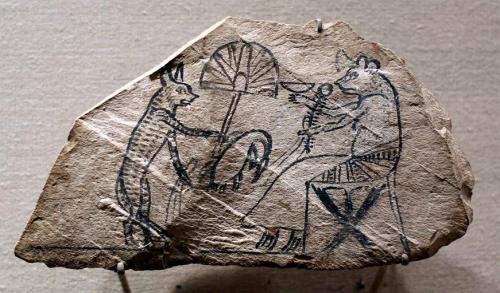


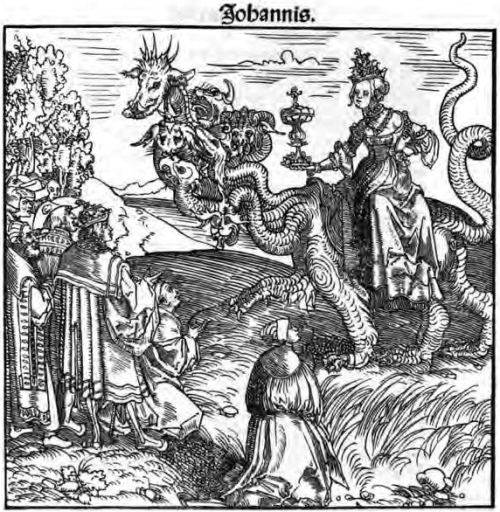
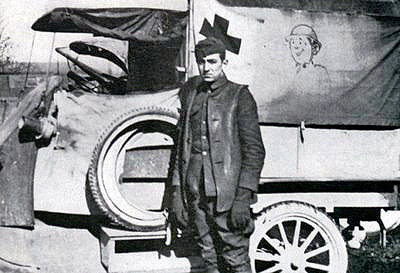


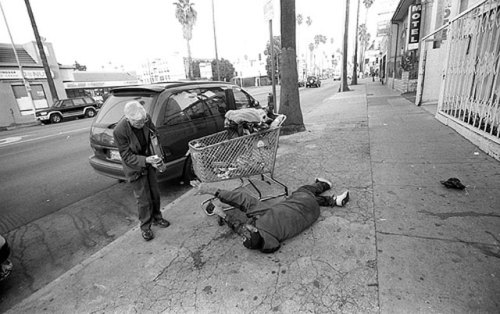
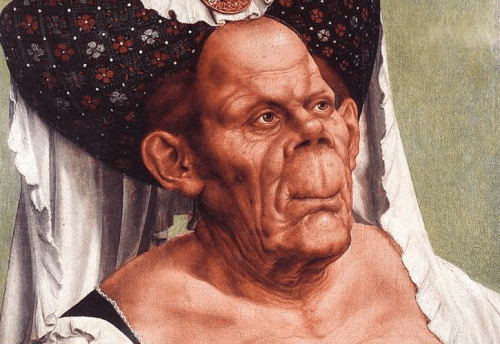

 Idiot Joy Showland