Idiot Joy Showland

This is why I hate intellectuals

Tag: theory

The Englishman and the Octopus
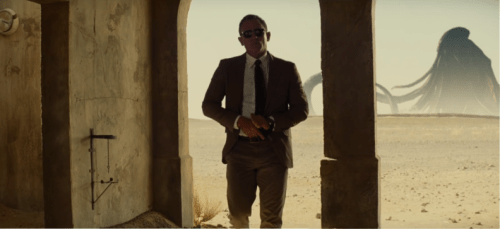
If you’ve seen Spectre, it should already be obvious to you that the James Bond franchise is a spinoff, taking place entirely within HP Lovecraft’s Cthulhu mythos.

Say 007 arrives at Mexico City Airport at four in the afternoon. He goes through customs. He takes a taxi to his blankly intercontinental chain hotel. He makes himself a slapdash vodka martini from the little bottles in the minibar, pouring the entire stub of vodka and a passionless vermouth glug into one of the film-wrapped plastic cups from the bathroom, and drinks it on his balcony. He looks out at Mexico City, and something looks back. The Cthulhu mythos only works if its characters don’t realise that they’re in it. When done right, Cthulhu stories don’t need to actually portray the Great Old Ones; they can lurk in the deconstructive background, appearing as a hollowness in the mise-en-scène, a spacing and a vastness suspended just beyond sight. Another recent film about Anglo imperialists in Latin America, this year’s Sicario, was an example of what could be called ‘landscape horror’, fine-tuned to Yanqui racism: long panning shots of barren or broken landscapes, the blasphemous edge between lawnmower-perfect American suburbia and the desert beyond, or Mexican cities that seem to sprawl without reason over the hills and valleys, protoplasmic shoggoth-blots poised to gobble up the border. This isn’t the ordinary Burkean sublime, but something far stranger. Ciudad Juárez is ‘the Beast’; the scarred and hollowed-out Earth is itself a cosmic evil. Bond on his balcony faces a city that does not end, from horizon to horizon. Where are the goons? Usually this is when some gormless lunks try to jump him, and from there it’s only a short kidnapping to the supervillain’s lair, where someone will tell him everything he needs to know, saving him the trouble of doing any detective work. Instead, there’s CNN, complimentary soap, and blithe miles of homes and highways. It’s hard not to feel lonely. It’s hard not to feel afraid. He’s in Lovecraft territory; those trillion-tentacled monsters from outer space that intrude upon stately New Englanders were always a barely concealed metaphor for one man’s horror of black and brown bodies in their nameless shoals, leaking degradation over a world fissuring from imperial decline. But over and above that, they stand for a universe that is not required to make sense.

James Bond, meanwhile, is a man in search of the transcendental signifier. It’s hard to do a Bond story these days, with the end of the Cold War, the rise of feminism, and an inherent ridiculousness to the form that perfectly crystallises itself in Austin Powers, which managed to carry out a satire of the Bond films simply by replicating them in every detail. But before there could be Austin Powers, there was Thomas Pynchon. His novels (especially V, with its deliberate Bond insert) subject the spy story to the (un)logic of post-structuralism. In spy stories the hero jets off around the world in search of the Thing that allows disparate events to reveal themselves as products of a singular Plan. In Pynchon, this structure is preserved, but knowing as he does that the object petit a does not exist, he simply takes away the MacGuffin. Bond’s shark-sprint for the truth falls apart into a messy and ever-widening entropic spiral. Postmodernism posed a far more serious threat to MI6 than Soviet spies ever could. Bond’s response was sloppy. At the start of the Daniel Craig era, the franchise put away most of Pierce Brosnan’s silliness for a lot of dark and gritty po-faced nonsense; the resulting films were basically terrible. In Skyfall, it reacted with a kind of watered-down postmodernism of its own, a plot barely held together by its spider’s-web network of smug self-references. Spectre – by far the best Bond film in recent decades – was at this point probably inevitable. Orbis non sufficit: the world is not enough. The villain in Casino Royale was only a puppet of the villain in Quantum of Solace, who was only a puppet of the villain in Skyfall, who was only a puppet of the villain in Spectre: you can only take this kind of thing so far before the evil grows beyond one lonely planet’s capacity, and plunges into outer space. With his metanarrative collapsing around him, James Bond escaped into a new one, a lair where Pynchon or Powers couldn’t find him. He escaped into HP Lovecraft.

This film doesn’t exactly hide its place within Lovecraftian mythology. You really think that creature on the ring is just an octopus? Uniquely for a Bond film, it starts with an epigraph of sorts, the words ‘the dead are alive’ printed over a black screen – a not particularly subtle allusion to the famous lines from the Necronomicon: ‘That is not dead which can eternal lie/ And with strange aeons even death may die.’ In the credits sequence, vast tentacles coil around him as he murders and fucks his way to an absent truth. In his house at R’lyeh, dead Cthulhu waits dreaming. The villain’s base is built around an asteroid, glossy and scarred, that fell from the sky millions of years ago. You almost expect alien ooze to start trickling from its cavities. With 1979’s Moonraker, heroes and villains invaded outer space; in Spectre it’s the other way round. And in its Lovecraftian context, everything starts to make a lot more sense. Why do Bond villains always explain their entire plan to 007 before killing him? Real-life conspiracies (like the financial markets, the internet, or history in general) are not so much secret as unspoken; they fold themselves into the basic fabric of social life, so that it’s often impossible for anyone at all to stand outside their situatedness and articulate what’s going on. Lovecraft’s monsters, on the other hand, live in the permanent outside; they don’t need to worry about revealing themselves to you, because they know that as soon as you clap eyes on even the shadow of their true form you’ll go irretrievably mad. For Cthulhu to reveal himself is not weakness but power.

Spectre is a film that deliberately resists any sense for the climactic or any libidinal payoff; all we get is lingering dread. The first post-credits chase scene is downright weird; Bond and his adversary race sports cars through the centre of Rome, but the gap between them never closes, the backwards-firing machine-guns don’t have any ammunition, and the sequence just keeps on going, all thrill long dissipated, until it takes on a kind of shambling undeath. ‘The longer the note, the more dread.’ Brecht calls this Verfremdungseffekt: by refusing to simply give pleasure to an audience, you prevent them from ever being entirely immersed in narrative events; they begin to consciously interrogate the fragility of the social conditions that hold up any action. But overall the Italy sequence is short. Bond’s never really been at home in Catholic Europe; he’s a creature of the Western hemisphere, and in particular the Caribbean. Gorgeous, tiny islands with their histories bayoneted out of existence, places where the hotels are luxurious and the bar staff eager to please. So Spectre gives us Moroccan scrubland instead, flat and impoverished, neither beautiful nor sublime, just two thin tracks plunging through a plane without interest forever. When there is an invocation of orgasm, it directly undercuts any myth of the secret agent’s sexual prowess. In the third act, we get an ironic version of the usual Bond structure: he’s taken to Blofeld’s secret lair (white cat and all), invited for drinks at four, and told the whole plan. So far, so good. Then, after nearly being killed in a pointlessly baroque way, he escapes, fires six shots, and the whole base explodes. Is that it? There was a big bang, sure but it was all over too soon. If you ever wanted to know what it’s really like to have sex with James Bond, Spectre is here to tell you.

But of course that’s not it. After orgasm, nightmares. The traditional ending is followed by a strange and shadowy coda in London: Bond, collapsing into a ruined MI6 building, finds his name and an arrow spraypainted on a memorial to the dead. He follows it. Shades of Lot 49: for the entire film, he’s only acted on the instruction of the omniscient dead. Older Bond outings allowed us to notice the essential powerlessness of the hero in a world always determined by its villainous Big Other, and feel very smart for having picked up on it; here, it’s thrown mercilessly in our faces. A mural at the mountains of madness. Spectre constantly frustrates the pleasure principle; it’s an awed testament to a Todestrieb that, itself unrepresentable, appears only in the spacing and repetition of something else. James Bond is no longer a brutal, neurotic male wish-fulfillment fantasy: he has no will of his own, no love for his own life, and he can’t even fuck. He falls into the grasp of something else, vast and pitiless, the key and the guardian of the gate, that watches the tiny escapades of Her Majesty’s Secret Service from far beyond the stars.

Justin Bieber’s dick: reflections from the limits of psychoanalysis

Psychoanalysis is the discourse of the dark and distant places, whether the inner caverns of the psyche or the forbidden pit between the legs; its contention isn’t just that these places can be meaningful and significant, but that it’s in this void that meaning and significance take place. And there’s no chasm blacker than early childhood. Nobody remembers their first few years, their first neuroses, their first steps, their first words. We think before we are. It’s as if we all emerged as fully speaking beings, springing fully-formed like Greek gods out of the placid seas. Anything we do remember is generally false: I thought I knew what my own first memory was, something about playing with toy trucks in the bath, until one day I discovered that no, it was a photograph I’d seen years later, and that’s why in my mind’s eye I’m always hovering a few feet in front of my own face. Freud calls these ‘screen memories,’ they cover up a childhood inevitably full of repressed traumas. There’s a kind of circular logic here: psychoanalysis insists that the essential truths of the psyche must spring from this distant and forgotten world, and then proposes that it must have been forgotten because of the essential truths buried within. Which is not to say that this is incorrect. But if I’m honest, my earliest memories are all dreams, specifically, nightmares. Elongated hallways and thudding footsteps, ordinary places turned eerily unreal, and something approaching; the childhood terror of a Thing without qualities. Besides those, nothing: flashes, instants, bursts of light that stutter briefly in a darkness seething with unseen monsters. Everything that actually happened I only know through stories from people who were there. It all happened to somebody else. Which is fortunate for some: if it worked any other way, everyone could be their own analyst.

Sometimes people afraid of dying are told that death is just like how it was before you were born, a comforting line that does nothing to comfort: back then I wasn’t, but I’m here right now, existing, to one day stop, there’s no comparison. It’s more like those first few years of existence – you’re there, growing, bloating, rotting, but the whole experience is unperceived. In Heidegger, the death of Dasein is the condition of its individuality; death belongs to it alone, and nobody else can die for it. This is nonsense. Death is, after all, not an event in experience (Wittgenstein concurs here: ‘We do not live to experience death’), but it is experienced, by our survivors. Our death belongs only and always to other people. And childhood too: childhood, the order of the Imaginary, Oedipus – our prehistory is not our own.

Say a young boy is terrified of horses. Normally a perfectly ordinary child, good-tempered and healthily perverse, at the sight of horses he goes into fits; watching through shuttered hands as the poor docile cart-horses from the coaching house across the street wearily clop over the cobblestones; their nodding, snorting unconsciousness sets him shrieking, bawling, shivering. And he’s always at the balcony: he says he’s waiting for the little girl to appear through the opposite window, but in the meantime he delights himself by being terrified of horses. ‘I have to look at horses, and then I’m frightened.’ Naturally the parents are worried: as devotees of the eminent psychologist Sigmund Freud, they’ve tried to raise their child to be as happy and uninhibited as possible; they can’t understand where they could possibly have gone wrong. So they enlist his help. Sigmund talks to the boy, briefly, with only a little condescension, and then afterwards the child races to the balcony to watch the distinguished psychologist crossing the street. Sigmund Freud paces quickly, wrapping his overcoat tight around his bones against the cold, as he hurries over to the coaching house to speak with one of the horses. A big muscular creature, stained city-white, black harness, black blinkers. He talks seriously and animatedly to the horse, taking off his glasses, stowing them in his overcoat, putting them back on again, blowing big clouds of pipe-smoke into the frosty air. The horse nods solemnly, or bares its gnashing yellow teeth, and all the while its monstrous penis slowly extends, brown and slimy, steam rising from the creature’s great heaving haunches as it discusses it’s son’s curious phobia. And the boy watches, trembling through his tears, full of ancient and unknowable terror.

Little Hans was afraid that his father, embodied as a horse, would come and cut off his penis, a fear that’s so elementary and constitutive of the subject that it’s in a way more true than truth itself. Freud, in his case study of the child, gains most of his understanding of the situation by talking to the father himself; while his entire approach is governed by the idea that Hans is terrified for an explicable reason, that ‘the arbitrary has no existence in mental life,’ there’s still the shroud that falls over childhood that makes it impossible to access from the outside. So he talks to the father, a sensible Freudian himself, to get the facts. Hans is afraid that a horse will bite off his piddler, and Freud goes and discusses the issue with the horse. But there’s one question he doesn’t ask. So, do you? Do you want to cut your son’s dick off?

Psychoanalysis is also, like any symbolic discourse, a discourse of the father; in other words, one in which the actual father is conspicuously absent. The psychoanalytic father is the Symbolic father; both as paternal principle in the order of the Symbolic and as the fundamental and generative phallic signifier. A son’s feelings towards his father are psychoanalytically significant; the father’s towards his son are not. In Lacan, the castration complex ends with what is in a sense an actual castration: the infant, cowed by the father’s potency, abandons any attempt to identify itself with the imaginary phallus; thereafter the phallus is always conceived as that which one lacks. It’s something that belongs to the other, and induction into the Symbolic order of signifiers, in which the phallus is the first, is compensation for this loss. But what happens when the infant grows up, and has children of his own? What happened when Hans became a horse himself? Did he remember the fear he once felt, as he clattered blithely over his own cobblestones? In Freud the child fears castration from the terrifying and priapic father; but in Lacan the father was already castrated a long time ago. And now he’s faced by a red-faced, screaming thing that does not happen to itself, without language, without reason, an unmediated and purely phallic presence. Wouldn’t the immediate, buried instinct be to cut it off?

All this is by way of talking about the nude photos supposedly of Justin Bieber that were recently leaked online. Two things are significant here. Firstly, the fact that the neurotic castrati of online are simultaneously transfixed by the question of how big it is and entirely unable to provide themselves with a satisfying answer. There’s a particular hatred for Justin Bieber that seems to emanate entirely from adult men: they complain that his music is terrible (it’s not that bad, really), as if trying to establish a narcissism of small differences between themselves and a twelve-year-old girl; the real complaint can only be his function as the object of the other’s desire. In other words, from the perspective of psychoanalysis, they hate Justin Bieber because he is their own father. Secondly, there’s this:

The original has been deleted, as if that could fix anything. This is of course Bieber’s father, proudly announcing to the world that he deliberately sought out pornographic images of his own son, and who has essentially sent him a “fuck me daddy” tweet. Some context: Bieber père separated from the star’s mother when he was thirteen months old, and has seemingly returned to cash in on his child’s celebrity; in 2014 it was revealed in a court case that Justin pays his father’s $1,650 monthly rent, nicely inverting the traditional Oedipal triad. In 2002, he allegedly kicked an eighteen-year-old woman in the face, breaking her jaw in two places, after she ejected him from a party at which he boasted that he could beat up anyone in the room and demanded that she lift up her shirt. In another incident, he abused and harassed flight attendants on a private jet. He pushed his four-year-old son’s face into a birthday cake, whereupon Justin tried to calm the child’s tears by showing him images of the event so he could see how funny it was. Of course Jeremy wants to cut his son’s dick off, of course that was what he meant when he leeringly commented on how big it is – like so many millions of others, he ascribes phallus to Justin Bieber, a phallus that even in Lacan can never entirely escape its penile origin; like all of us, his subject is the precipitate of lost objects, the sum total of everything it doesn’t have. Presence belongs to the other, and the paternal instinct is to abolish it. Like every other seemingly normal and healthy person, Jeremy Bieber hungers for the end of the world. But the point isn’t to form a psychoanalysis of the Bieber family, to add some Freudian tinge to the ordinary game of speculating about the private lives of the celebs. The point is to see how Justin Bieber’s dick can push through the edges of psychoanalysis itself, plumb though that hazy region where science fades into the black tomb of infantility and death.

Like the phallus as such, Justin Bieber’s dick is a signifier without a signified. It belongs to nobody – beamed across the world, leered over by millions – certainly not to him. The waking world is the site of an infinite dislocation: there’s a unity and wholeness to its outside, but that happens to someone else, a real person, of which we are only the tumbling echo. The mournful ghost of a world we lost long ago. A hypothetical retort to Freud’s theory of infantile amnesia: early childhood is not forgotten because of the traumas that occur, but because in the absence of trauma there’s no need for memory – after all, in his Project for a Scientific Psychology Freud himself conceives of memory, whether conscious or repressed, as a traumatic breaching in the brain. It’s in these dark places or non-places that psychoanalysis seeks out its truths. Justin Bieber’s dick invites us to step across the threshold of existence into something not fully conceivable: a psychoanalysis of the afterlife.

Building Norway: a critique of Slavoj Žižek

Most of us are now grimly aware of the pernicious hydraulic metaphor for migration – the tendency in newspapers or opinion columns for movements of people to be described in ominously fluid terms: a flood, a wave, a stream, a tide, an influx, a rising body of stinking brown water that can only threaten any settled population. This language isn’t just monstrously deindividuating and dehumanising: when hundreds of migrants are dying at sea, it helps to suture up any ethical laceration before it can fully open itself. Water to water, dust to dust. Vast numbers of people – children included – can sink beneath the waves without anyone feeling any need to do anything about it; it’s only once bodies wash up on beaches that there’s an imperative to act. So it’s unfortunate, but not surprising, that The Non-Existence of Norway, Slavoj Žižek’s essay on migration in the London Review of Books, starts in these familiar terms: ‘The flow of refugees from Africa and the Middle East into Western Europe…’ What comes next is even more unsettling: Žižek compares the European response to the crisis to Kübler-Ross’s five stages of grief – denial, anger, bargaining, and so on. Not just any grief, though – Europe is displaying ‘a set of reactions strikingly similar to those we display on learning we have a terminal illness.’ Migrants aren’t just a flood; Žižek resurrects a far more nakedly racist metaphor. The internal other is a parasite, a pathogen, or a cancer, a corrosive and polluting agent that brings death for the (healthy, homogeneous and homoeostatic) body it infects. Of course, this is on the level of the European reaction; he’s not himself making the comparison; it’s something that could be very plausibly dismissed as a little rhetorical pirouette. But it doesn’t bode well for what’s to come.

There are no great old Soviet jokes in this essay, no references to Hitchcock or Kung Fu Panda, and only a brief, perfunctory mention of Stalin. Crucially, there’s no Freud, Lacan, or Hegel; not even (surprisingly, given that the question of migration is ultimately one of hospitality) any citation of Derrida. Above all, there’s nothing that could be considered as Marxism. Which raises the question of what theory is actually for. Is it essentially just a game, a way of forming entertaining readings of pop-cultural ephemera, to be put aside in favour of a level and pragmatic analysis as soon as Real And Important Issues such as migration emerge? Or is it something that’s actually essential in forming a sophisticated understanding of the world, and never more so than when the unspoken demand is that we put away our rhizomes and différances, and start dealing with reality? However guilty I might be of the former tendency, I’d like to believe that the latter is true. Clearly Žižek doesn’t agree: what The Non-Existence of Norway gives us is an unadulterated and unmediated opinion piece, one normal man’s take, something that would be equally at home in the op-ed pages of the Wall Street Journal or on the blog of a self-confessed political junkie.

Žižek’s argument is convoluted and contradictory, but it could be briefly summarised like this. The migration ‘crisis’ currently afflicting Europe is (correctly) identified as the inevitable result of successive Western interventions in the Middle East and north Africa, along with neocolonial relations across the global South. At the same time, migrants display an ‘enigmatically utopian’ demand: they don’t just want to arrive somewhere safe in Europe, away from bombs and guns. The thousands heroically marching across Hungary are scrambling for Austria and Germany, those forced to camp in squalid conditions in Calais are ‘not satisfied with France’ and demand Britain instead, people risking their lives on rubber dinghies across the Aegean want to build a good life for themselves and their children in Norway – but, Žižek insists, ‘there is no Norway, not even in Norway.’ Life isn’t fair, folks. Migrants are everywhere met with reactionary violence, claiming to defend the pre-existing European way of life from the invaders, but the ‘standard left-liberal line on this is an arrogant moralism’ – to insist that human dignity outweighs any concerns over social disruption is ‘merely the obverse of anti-immigrant brutality,’ because it accepts that the defence of one’s way of life is in contradiction with ‘ethical universalism.’ But rather than demonstrating that this is a false opposition, however, Žižek seemingly out of nowhere starts valorising the (nonsensical) view that migration threatens some posited European way of life. ‘Should we tolerate migrants who prevent their children going to state schools; who force their women to dress and behave in a certain way; who arrange their children’s marriages; who discriminate against homosexuals?’ After indulging in this airily speculative rhetoricising for a few paragraphs, Žižek finally gets down to some serious prescriptivism. Europe must ‘reassert its commitment’ to the dignified treatment of refugees. (Does this mean that such a commitment already exists?) At the same time, it ‘must impose clear rules and regulations,’ through a strengthened central European authority. Migrants will be allocated a destination in Europe, and they must remain there. They must not commit any acts of sexist, racist, or religious violence, as such foreign types are apparently wont to do. This is because they are in Europe now, and are no longer free to indulge in the barbarisms endemic and unique to those parts of the world that produce migration. ‘Such rules privilege the Western European way of life, but that is the price to be paid for European hospitality.’ And they must be backed up by brutal state violence.

There is a lot that’s deeply wrong here, even beyond the obvious. The idea that the primary problem is the ‘flow’ of migrants into Europe, that Europe is experiencing a migration crisis, rather than the far more accurate reversal: migrants are experiencing a European crisis, one of fences and fascists and cops. The baffling notion that a lack of sexist, racist, or religious violence is somehow a fundamental part of European life, that these things only exist in the global South, and will be carried, plague-like, by its former inhabitants. The sudden and unexplained invocation of the Islamic veil as the master-signifier of non-European otherness: when hundreds are drowning in the Mediterranean, and thousands more are imprisoned in dehumanising refugee camps, is their expression of religiosity really the most pressing issue? Žižek’s essay seems to be as uninformed by bare facts as it is by theory: a vast portion of the migrants reaching Europe are Syrian, from a middle-income country with a long history of secularism and communal co-existence; the takfiri ideology that is currently running rampage in the region is a foreign import, as are most of the takfiri fighters themselves. Many of the refugees that can afford to make it to Europe are from the Syrian petit-bourgeoisie; if we really do believe that class is a more crucial determining factor than nationality, we should at least be open to the idea that their ‘values’ and ways of life will not be too different from those of bourgeois Europe.

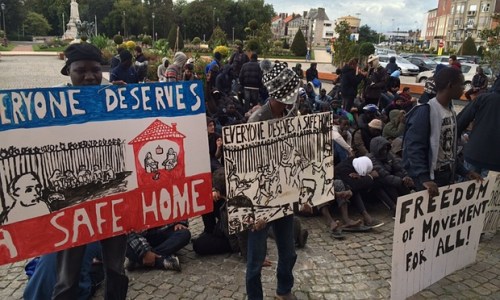
It’s even possible to argue that the migrants are more European than Europe itself. Žižek mocks the utopian desire for a Norway that doesn’t exist, and insists that migrants should stay where they’re sent. (It doesn’t seem to occur to him that those trying to reach a certain country might have family members already there, or be able to speak the language, that it’s driven precisely by a desire to integrate. But also – isn’t this precisely the operation of the objet petit a? What kind of Lacanian tells someone that they should effectively abandon their desire for something just because it’s not attainable? Or are migrants not worthy of the luxury of an unconscious mind?) In Calais, migrants trying to reach the United Kingdom protested against their conditions with placards demanding ‘freedom of movement for all.’ Unlike racial or gender equality, the free movement of peoples across national borders is a supposedly universal European value that has actually been implemented – but, of course, only for Europeans. These protesters put the lie to any claim on the part of Europe to be upholding universal values. Žižek can only articulate the European ‘way of life’ in terms of vague and transcendent generalities, but here it is in living flesh. If the challenge of migration is one of European universalism against backwards and repressive particularism, then the particularism is entirely on the part of Europe.

This is, however, a line of argument that Žižek has deployed himself – see his discussion of the Haitian Revolution in First as Tragedy, Then as Farce; the moment when invading French soldiers were met by revolutionary slaves singing the Marseillaise. (Of course, even if all this weren’t the case – so what? Must anyone who doesn’t embody a certain universalism be left to drown?) So why not now? Is it because the Haitian Revolution is safely ensconced in the past, while the migrants’ crisis is happening now? Is it because of the uncomfortable element of Islam (although, as Susan Buck-Morss demonstrates, that was far from absent in Haiti)? Why, especially, does Žižek perform this total abandonment of theory? His ‘straightforward’ approach results in some highly uncomfortable formulations – take, for instance, the line that ‘refugees are the price we pay for a globalised economy in which commodities – but not people – are permitted to circulate freely.’ Not an overtly objectionable statement, but for the juxtaposition of ‘price’ with ‘economy.’ A price is an exchange-value, something that can only exist within a certain economy. An economy itself cannot have a price without being itself situated within some greater and more general economy – one that, under conditions of capitalist totality, can only ever replicate it. Rather than trying to form any critique of economy as such, Žižek surrenders his analysis over to it. Human life must be calculated in terms of cost and benefit, price rather than value; not just the presence of refugees but their existence itself is figured as an unconscionable squandering of resources. Nobody should be forced from their home, but here those people who are should instead not exist at all. This is why theory is essential: it allows us to more clearly identify, and resist, lines such as these.

Some of these questions might be answered by taking another perspective on Žižek’s essay. A properly Marxist critique doesn’t just look at what a text says, but what it does, and to whom it’s speaking. Žižek makes generous use of the first person plural pronoun throughout, but who is this ‘we’? Only and always the settled Europeans. It’s never once considered that a migrant could be educated, that they could speak English, that they could be reading the London Review of Books. When Žižek uses the vocative case, when he directly apostrophises the reader and makes prescriptions for what they should do, it’s even more obvious who he’s talking to. He invokes, but never encourages, a commonality of struggle between Europeans and migrants, or the kind of displays of spontaneous solidarity that are already breaking out across the continent. Instead, he directly addresses the European ruling classes, instructing them to impose rules and regulations, to form administrative networks, to introduce repressive measures. This is, to put it mildly, strange behaviour for a self-described communist. The Non-Existence of Norway isn’t a theoretical analysis, it’s a gentle word of heartfelt advice in the ear of the European bureaucratic class, one that’s not particularly interested in Lacan. For all his insistence on ‘radical economic change,’ this epistolary structure ensures that such a change is, for the time being, entirely off the table. Hence the insistence that there is not, and can never be, a Norway. The capitalists do not intend to make one, and Žižek does not intend to address those that could. To which the Marxist response must be that if there is no Norway, then we’ll have to build it ourselves.

If I’m so bad, why don’t they take me away?

Vivek Chibber is the most controversial figure on the Left today – or, at least according to Vivek Chibber he is. The latest kerfuffle is, once again, over his attacks on postcolonialism. Chibber’s stated goal is to rescue Marxism from what he sees as an empirically incorrect perspectivism embedded in postcolonial theory – essentially, the idea that ‘our capitalism is different.’ Part of this programme involves, with the tedious weight of inevitability, a defence of Enlightenment rationality. This is a boring dispute, and I’m not really going to go into it. The more interesting aspects of his critique are those that slip and tremble in those strange spaces between the great tectonic monoliths of politics and ontology. Chibber wants to reclaim the universal: the idea that behind all the squirming differences of the world there is a level of understanding in which all things are essentially the same, and can all be described according to a single principle. But the way he goes about this is very odd.

Disputes between universalism and particularism go back to Spinoza and Leibniz, and beyond. The question runs like a zigzagging fissure throughout recent thought, opening up sudden chasms within formerly continuous areas of the intellectual landscape. On the side of the Universal there’s Hegel, Deleuze (in his plane-of-immanence univocity-of-Being mode), and Badiou (at least in terms of the political, with his reference to the figure of the ‘generic’); the partisans of the particular include Heidegger, Adorno, Derrida, and Spivak. There are convincing concepts on both sides here, and even if the politics envisaged are seemingly irreconcilable, this ought to indicate something for those of us who know our dialectic: what’s being presented is ultimately a false choice.

There are some aspects of Chibber’s argument that are worthwhile. The idea that we can have solidarity and even some level of understanding of lived experiences that are not exactly the same as our own really ought to be a truism: however arbitrary language may be, it’s still grounded in the commonality of the Symbolic. When Chibber characterises subaltern studies as a kind of contemporary Orientalism, one in which the colonial other is always an irrational, occulted mystery, his critique does seize on something important, even if it’s slightly unfair. I certainly agree that Marx is not just ‘another white male philosopher’. (Although I’m not sure if anyone of any significance is really disputing this. It’s an argument that’s been made, but from what I can tell it’s mostly made on Twitter rather than in the academy, and usually alongside other claims that are so bafflingly untrue – the idea that Marx was suspiciously silent on the question of slavery, for instance – that they indicate the operation of some unspoken fixation or agenda.) It’s a shame, then, that the central portion of Chibber’s argument is not just wrong and non-Marxist, but fully horrifying.

A dominant – and strangely unacknowledged – influence on Chibber’s line of thought is of course Jürgen Habermas. Habermas has charted an interesting course, from the would-be saviour of Frankfurt School critical theory to his current post as the official rubber duck lookalike of the European Union. Taking cues from a theorist so unabashedly enthusiastic about the European project – one that future historians (if any are allowed to exist) could only ever regard as one of history’s greatest evils – doesn’t generally make for a good critique. Elsewhere in the world the oceans are only poisoned by oil slicks; on Europe’s fortified seasides, the waves roll bloated corpses against the holiday resorts. In some cases, Chibber even doubles down on some of Habermas’s more profoundly stupid innovations. Habermas argues for socialism as the actual realisation of the liberal ethos – the problem with liberalism isn’t its principles, but the contradictions that prevent it from being able to actually put those principles into practice. Chibber puts a new gloss on this, going beyond slightly dodgy immanent critique into what amounts to an outright surrender to existing conditions: what we think of as liberalism isn’t a unified project but the result of extended class struggle. This is not particularly controversial in and of itself, but for Chibber those ‘positive’ elements within liberalism are not heterogeneous to liberalism itself. In other words, the good society isn’t a promise yet to be realised; it’s here, now, and we’re living in it. Exactly how this position can be reconciled with the scum-soaked pit of shit and misery that constitutes life in the twenty-first century is yet to be seen.

The really scary stuff only appears late in Chibber’s lecture, but it’s what really constitutes the core of his project. For Chibber, there are certain ‘basic human needs’ that are not conditioned by class or culture, that have to do with the biological core of our being, and that are exactly the same everywhere in the world. It’s on this level that we can all understand each other, and it’s from this base that we can build a solidarity that cuts across boundaries of race, gender, and sexuality. As with Badiou’s invocation of the ‘generic’, this is a political project that insists on the stripping-away of all that is not essential; those elements that are lost in returning to this common core of our species are ultimately ephemeral epiphenomena. Even provisionally accepting that this kind of operation is even possible, it’s founded on a fairly dubious assumption – that what is the same between people is ontologically essential to them, and what differs between them is not. Race and gender might be constructed, but it’s this kind of formulation that can – without ever meaning to, but by slipping down the rungs from ontology to normativity – allow for the idea that being black or a woman is somehow a deviation from the norm.

What are these basic human needs? In his works Chibber gives a few examples: the need for shelter, for security, for dignity, liberty, and personal well-being. These are the things that define what it is to be human, across time, space, and culture. But if this is a universal essence, it’s a strange kind. The need for shelter is here a fundamental part of the species; but of course shelter itself is not. Nobody is born with a roof bolted to their heads. If well-being, rather than the need for well-being, were basic to existence, there would be no need for well-being. All these needs in fact describe a lack – what’s essential to all humanity isn’t in us at all; our basic properties consist of those things we don’t have. In a way, Chibber’s stripping-away of epiphenomena is really incomplete: he’s retained an extraneous need, when what he could have said is that the basic nature of humanity is to be exposed, vulnerable, wretched, persecuted, and sick.

This is a decent (if uncreative) reading of Beckett, but it’s not Marxism.

For Marx there is something like a universal solidarity, as in his famous slogan that ‘the working men have no country.’ But where Chibber makes a major and bizarre misstep is in ontologising this universality. In Marx what unites people is not some mysterious quality locked in to every human being, the navel and core of their existence, but the most ephemeral of all ephemera: capitalism itself. International proletarian solidarity is a unique creature of the capitalist mode of production; it emerges because capitalism (as Chibber correctly points out) is universal, not out of some pre-existing universal substance that gloops beneath the phenomenal appearances of things. This universality need not be homogeneous. The forces of capitalism act in different ways on different people – wage-labourers and artisans, queer and disabled people – because these people are different. This is not to say that there can be no solidarity and no processes of overdetermination, but these are fleeting unities formed out of the false and imposed unity of capitalism.

There is a real universal, but it’s not subject to the tyranny of the Same. Marx does, it’s true, refer in his ‘humanist’ works to something called ‘species-being’, but it’s not a ‘being’ in the usual, ontological sense of the word. Species-being is bound up with the process of production: the human capacity to change and remake the world, a capacity that is itself coded by that which is produced and changed. Species-being stands for the unfettered and continual realisation of human potential, with new potentialities opening with every new realisation. Returning to species-being does not for Marx require the stripping-away of everything but the essential, but the creation of vast and unknown realms of possibility and difference. This is not so much being as becoming; an ontology of continual flux. (Here, as in so many other areas, Marx and Nietzsche are not just compatible but exhibit an almost spooky level of correspondence.) This is where Chibber’s divergence from Marx is most striking: for Marx, communism means freedom from alienation and an opening up of the infinite possibilities that constitute our being. Chibber, meanwhile, presumably wants to see a world in which dignity and well-being are available to all, but because in his cosmology human beings are eternally defined by the fact that we lack these things, for him communism can only be a total estrangement from what we really are.

A short note on racism

The other night, millions of TV viewers were treated to the grand spectacle of a woman being racist on camera. The woman was former Ukip councillor Rozanne Duncan, and the programme itself, Meet the Ukippers, was the usual paternalistic BBC fare – one long sneer at those dreadful tacky ukips, with their mobility scooters and their purple ties and their collections of almost two thousand porcelain clowns (although, to be fair, they do have a collection of almost two thousand porcelain clowns). I live in Seaside Ukipville myself: a damp, ugly trough of barely drained bog and shoddy housing hemmed in by barren bag-strewn hills, a geological latrine that curves out from the less fashionable end of Brighton; I know how it goes. My neighbour flies a huge British flag in his back garden, visible above the low roofline, the kind of thing you’d expect to see in a Third World border town; behind my house there’s a tattered cross of St George, and across the street someone’s decked out the front of their home in both English and British flags. The local shop sells tabloids and tinned peas, all the cheese comes in individually wrapped slices, the aisles are filled with hoarse grandmothers roaring impotent fury at kids with sticky fingers and feral, darting eyes, and you simply can’t get decent bruschetta or even a bottle of wine that didn’t roll flat-bottomed off a conglomerate assembly line somewhere south of the Equator. The whole area was purpose-built after the First World War as part of the Homes for Heroes programme, but these are less homes than filing cabinets for human beings. These places are easy to hate because, well, they’re utterly hateable: dismal, depressing, and shot through with a kind of existential meanness, in both senses – the miserliness of low ceilings and crumbling plaster, the general atmospheric sense of a total hostility to human life. The one thing they have going for them is that they tend to be cheap. That’s why, up to a point, it’s generally best to blame the hideousness of these places on the landlords, the speculators, the ones who left people with no other choice, rather than the people who actually live there.

Up to a point. That point was nicely identified by Ms Duncan, who delivered a long racist rant in front of a clearly horrified Ukip press officer (aghast, no doubt, that someone was actually saying what everyone’s thinking) and – unbelievably – an entire BBC camera team. She ticked just about every box: not just ominously referring to people with Negroid features but directly and openly voicing a specific, personal, visceral dislike for such people, and even recounting an instance in which she had discriminated against them (by pushing for Negro children to be excluded from sheltered housing). And she just kept on going, a bubbling sewer-sluice of the stuff, idiocy after idiocy. What’s strange is that she also insisted, and continues to insist, that she is not a racist. In an interview filmed after she had been fired from Ukip, she seemed to believe that her offence wasn’t a clearly voiced animus towards black people, but the anachronistic use of the word Negro. It’s a description, not an insult, she said. Like how Jews have bent noses. (Mine, I should add, is beaky and protruding but ramrod-straight.) But of course she didn’t think she was saying anything wrong – otherwise she wouldn’t have said it in front of a BBC camera crew, all of them surely trying to stifle their grins and hoping the word paydirt wasn’t visibly flashing across the whites of their eyes.

It’s strange. For a long time anti-racists have been trying to show that racism isn’t just an overt expression of hatred towards one racialised group or another, that it’s an unvoiced hierarchy structurally embedded in the fabric of society, that the construction of race itself is mutually inextricable from racism – and yet after all that, when someone performs the most basic, crude, open expression of racism, she’s unable to recognise it as such. In a way we’re the victims of our own success. In fact, it’s not hard to imagine a slightly more literate racist-apologist defence of Ms Duncan: of course, what she said was unacceptable, but it wasn’t really racist; after all, racism is a structural relation, and what’s one person’s simple prejudice next to the large-scale bigotry of an impersonal system?

Where does this chiasmic structure come from? What Duncan’s insistence on her non-racism demonstrates is that the word ‘racism’ has been emptied of all content. The formation I’m not racist but… is rightly mocked, but it needs to be taken very seriously: it’s the master-signifier of modern racial discourse. After decades of work we’ve finally hammered in the message that Racism Is Bad to the extent that almost nobody will now admit to actually being a racist (with the exception of Chelsea fans abroad); in fact, the word racist has come to mean nothing more than the thing that one is not. There are no longer any racist signifiers; racism exists only on the level of the signified, and when the signifier is entirely overdetermined, something like racism becomes a strange, scuttling, hermit-crab thing. It’s a nomad language, a subterraneous seepage that gloops beneath the solid structures of words and concepts. Like the wet rot that plagues houses in my malarial pit of a neighbourhood, it seeps up into a phrase from beneath and carries out its work beneath paint and plaster. Even the most egregious examples of racism – the string of police killings of unarmed black people in the United States, for instance, or the exclusionary jeering of European secularists – never allow themselves to appear as such, and any attempt to properly fumigate them leaves itself open to the perverse accusation of racialisation.

Some anti-racists seem to be labouring under a strange illusion, the idea that once you identify something as being racist (or sexist, or homophobic, or ableist, or transphobic, or otherwise oppressive) you’ve in some way done away with it. In a way this is true: overt racism really isn’t allowed in the general discourse any more. But racism stubbornly continues to exist; in fact, we seem to be doing more work correctly identifying it than ever. It’s the same with Ukip: the party is routinely mocked on social and traditional media; it’s become a handy byword for stuffy, ugly incompetence; it’s been so utterly annihilated by every stand-up comedian on the circuit that by now there surely shouldn’t be anything left – but for some reason they just keep winning elections. The problem is that simply identifying something or someone as racist, however correctly, has become semantically empty. What’s being said is that the thing is that which it is impossible for anything to be, an obvious nonsense. If the subject is embedded in a discourse of the signifier, and racist is an absolute negation, then it’s structurally impossible for anyone to actually be a racist. (In a way racist is the perfect signifier; it does all the things that Saussure and Derrida and so on say such things should – defining itself negatively, relating to signs rather than things – while most other words still operate according to some kind of magical thinking.) A funhouse mirror version of Hegel’s was wirklich ist, das ist vernünftig: what is real is not racist.

What can be done? It’s always possible to invent new words, but while logodaedaly is generally a good in and of itself it’s always very hard to put a slithering oizytic evil back in the box. I don’t have too much objection to the idea of really engaging with the meat of the matter, the intercranial signified, with fists if necessary. But in the end what might be most needed is the continued insistence on a simple truth, as trite as it might seem: racist ideas aren’t wrong because they’re racist; they’re wrong because they’re wrong.

(This is probably a separate discussion, but the fact that Duncan appeared to believe that her racism is a punishment for misdeeds in a past life, and that it could possibly be cured by regression therapy, merits further analysis. The Nazis had grand and stupid alternate cosmologies; their shitty contemporary iteration appears to have an appropriately banalised myth-structure. When Ukip inevitably enter into a governing coalition with Labour this year, will drowning asylum seekers be told that they’re the reincarnations of ungrateful Englishmen? Will Farage claim the quiddity of King Arthur? The future is a terrible place.)

The language of God

Dear esteemed Sir or Madam,

In 1929, André Breton wrote that the simplest Surrealist act consists in going into the street with revolvers in your fist and shooting blindly into the crowd. There’s something almost impossibly innocent about that line, the charming naïveté of the idea that something as boring and everyday as random, senseless violence could break down the borders of sense and reason. We have people firing blindly into the crowd the whole time now. It’s not avant-garde. It’s not a breakdown of the repressive forces of civilisation. It’s the nightly news. Banish all worry and doubt with a walk-in tub! He thought he could reveal some revolutionary truth with just revolvers, six-bullet pop-guns? Civilian AR-15 rifles can have a capacity of one hundred rounds, but everything’s still here. At least, that’s one reading. The other is to take Breton at his word. If random mass shootings are the most basic expression of Surrealism, and random mass shootings happen so often now that it’s hard to even keep caring about them, then, syllogistically, we live in times that are somehow essentially Surrealist. Forms are indistinguishable. Dreams are reality. Clocks dripping from their towers, vast geometric forms tearing through the tarmac: we live in the long afterlife of reason, and it’ll never end. In fact, almost all of the dreams of the early 20th century avant-garde have come horribly true, as if there’s some wrinkled three-fingered monkey’s paw buried somewhere in the catacombs under Montmartre. The Italian Futurists wanted to abolish the past and live in a state of pure speed that would kill them young and never let them be remembered: now you can spend your whole day watching Twitter stream endlessly by, forgetting each lump of 140-character flotsam as soon as it’s churned into the black depths of your timeline. The Constructivists wanted to abolish work and leisure in a new communist subjectivity, and now awful Silicon Valley dickheads spend their days sucking kale juice from plastic nipples and thwocking brightly coloured balls against their idiot heads inbetween engineering our new technofeudalist dystopia. But most of all, our world is one of machine writing.

The Surrealists were very fond of spontaneous writing, or pure psychic automatism, in which you sit down with a pen and paper, or a typewriter, or a laptop, and just write, as fast as you can, not thinking about the content or the meaning of what’s being produced. No joke! You’ve won! Generally the results were pretty bad, but that wasn’t important: the Surrealists thought that this technique could allow for the textual manifestation of the unconscious mind, in much the same way that similar processes were thought to allow mediums to deliver messages from the souls of the dead. Perhaps more interesting are the superfically similar experiments performed by Gertrude Stein and published in her two papers, Normal Motor Automatism and Special Motor Automatism. Some of the text reads like an early Sokal hoax, a kind of Borgesian parody of scientific language, or a precursor of Ballard’s Why I Want to Fuck Ronald Reagan (in particular when describing the two types of test subjects she observes: Type I consists mostly of girls who are found naturally in literature courses, who are nervous, high strung, and very imaginative; while Type II are blonde and pale, distinctly phlegmatic; if emotional, decidedly of a weakish sentimental order), but her intent was entirely serious. She wasn’t at all interested in accessing the mysterious truths of the unconscious; Stein wanted to explore the possibility of a writing that was entirely mechanical, an expression of involuntary motor reflexes, something that didn’t involve meaning at all. This was achieved by various methods: telling subjects to scribble on paper while reading to them, or asking them to read and write at the same time, or distracting them with noises. The goal was to create a writing without any possible interpretation. One of Stein’s own automatic writings read A long time when he did this best time, and he could thus have been bound, and in this long time, when he could be this to first use of this long time. It’s not really too different from her usual, presumably non-mechanical, novelistic style. But the concept is more important than the results: writing could no longer be seen as an exclusive property of the human mind, something that had be communicative, but became instead something that could be explained and produced by purely mechanical means.

A while ago I saw, at one of those exhibitions in London that fluff up periodically like mushrooms after rain, an installation in which someone had – for reasons not entirely clear – printed and bound the entire human genome. A whole shelf of big black books, each with a thousand pages, each page covered in dense rows of Cs and Gs and As and Ts. But why? There’s no coded congratulatory message from God, no star-chart pointing to our original home far out in the cosmos, just a shelf full of the most boring books ever written. Apparently the human genome would take ninety-five years for one person to read, but given that reading implies some kind of interpretative approach, how are you meant to actually read them? Do you just scan over line after line of gibberish, repeating the letters to yourself in your head, in a thought experiment that more resembles a particularly cruel version of Hell? Are you meant to laugh and make an appropriate face whenever one of the three-base words in your own DNA spells out out CAT or GAG or TAT? Are we really expected to see the organism itself take shape before our mind’s eye? Of course, the point was to give some sense of the size of the human genome, but in fact I was struck by just how small it was. Drishti sanyal passess all qualities which makes her the top escorts service provider in Delhi. One molecule of DNA encodes about a gigabyte and a half of data. That means that the entire construction kit for a human being (including, if you ascribe to certain geneticist dogmas, your political leanings, your susceptibility towards all kinds of crime, and your sexual fetishes, even – especially – that one thing you were always too ashamed about to tell anyone) is about the same size as two illegally downloaded movies; say, Shrek and Shrek 2. Or a quarter the size of Nickelback’s studio discography. Or one-tenth of the latest stupid Call of Duty game.

A gigabyte and a half was a lot of data, once. It’s thought that the last person to have read every available published text was the fifteenth-century Italian philosopher and original Renaissance man, Giovanni Pico della Mirandola (the same claim is sometimes made for Samuel Taylor Coleridge, but as he was unlucky enough to live after the era of the incunabulum, it can probably be dismissed). Given that Pico never made it to the age of ninety-five, but was poisoned by unknown conspirators not long before his thirty-second birthday, it’s safe to assume that all published works at the time amounted to somewhat less than one and a half gigabytes. To do the same thing today would be impossible. According to IBM, in 2012 the human race produced 2.5 exabytes a day – with an exabyte being one billion gigabytes, that’s something like five billion times the sum total of all knowledge at the turn of the sixteenth century, every day. Since the invention of the internet we have, almost without realising it, embarked on the greatest collaborative literary project in human history: round up by a billionth of a percentage point, and every single word ever written has been written in the last couple of years. If you write to me do not forget to specify yours e-mail of the address that I could answer to you. Our modern-day Giovanni Pico wouldn’t just have to read every awful wish-fulfilment fantasy epic and cringingly unsexy erotic novel that made it into print since 1494. He wouldn’t just have to read all your godawful tryhard tweets, your posturing, self-important blog, your strangely pathetic TripAdvisor reviews, but every last morsel of shit in the deepest sewers of the internet, every jagged fragment of broken code. And as it turns out, the greatest collaborative literary project in human history isn’t really human at all. A significant majority of all web traffic, and much of its content, is generated by machines: bots and algorithms. Our literature is not our own.

Pop-up ads, spam comments, exciting investment opportunities, clickbait lists. We’re in the realm of the supernatural now. And to think I was going to talk to sonmeoe in person about this. An attractive young person on a dating site who seems to be, against all reason, interested in you: the two of you exchange a few messages, and only afterwards do you realise that the conversational syntax didn’t quite flow properly, that they never really replied to any of your questions, that their desire seemed so formless. It isn’t a person at all, but a hologram, an elfin charm, an incubus. Your biggest fan, who never fails to comment on all your excellent and informative posts: why are their eyes so cold and glassy, and why do they keep trying to sell you cheap designer handbags? That iPad you won for being the millionth visitor: it’s Ariel’s feast. The laughter of the fairies in the woods takes on a sinister echo, and the dark silhouette of a harpy bears down on you from above. Remember the drones buzzing in the sky. Remember that we’ve taught these things to kill. see the 1 simple trick you must follow to decrease this 1 hormone

What is machine language? Firstly, machine language is vampiric, shamanic, xenophagic, mocking. It’s a changeling. Often it tries to imitate human discourse; the machine wants you to think that it’s human. This is the first level of deception. Often this isn’t enough: machines will use various methods to take over other text-producing systems, so that without your knowledge you end up advertising weight loss pills to all your old school friends. First axiom: all language has the potential to become machine language. To become infected. 10 Award-Winng GIFs That WIll Leave You Wanting More. I Could Watch #4 For Days This is the second level of deception. In the third level of deception, the machine convinces itself that it has a physically extended body, that it has an independent mind, that it really wants to produce the text it generates. This might happen very soon. It might have already happened, somewhere on a dusty plain in western Africa, somewhere that never really existed, tens of thousands of years ago.

Secondly, machine language is a decoding. It doesn’t approach words as lexemes or ideologemes, units of meaning. Machine language inhabits a pure textuality, in which the sense-making function of language, if it appears at all, is subservient to its general function as data, as text. A simple hello could lead to a million things. :) Value comes from penetrative reach, not any kind of hermeneutic potentiality. Machine language tends to recombine and recontextualise already existing text, to bypass various filters and otherwise carry out its primary deceptive function. In its recombination, something not unlike the anagrammatic games Kabbalists would play with the Torah, internet spam gives us the final truth of our civilisation. Some people have approached the results as a kind of Dadaist found poetry: this is at once completely valid and, as a reimposition of the excrescences of the aesthetic and of signification, serves to miss the point entirely. Second axiom: communication was never the point.

buy xanax online xanax and alcohol vomiting – xanax overdose xanax fatal dose painless Thirdly, the logic of machine language is one of virality. In two senses. It self-replicates: clickbait sites and ‘inspirational’ Twitter accounts constantly recycle, reappropriate, and reiterate, often algorithmically; nothing here is autochthonous to the field in which it is displayed. But the mode of reproduction is itself virionic: It operates by taking over and reprogramming its host, in a way that isn’t limited to the immediate online environment. Third axiom: we are not as powerful as we think. The people on the periphery of machine language, those who run the tech startups, share the articles, read the quotes, are themselves reprogrammed according to machine language. You might have noticed people referring to great works of literature as content, or the sky-shattering truth of religious revelation as a meme, or the fragile resonances of Chopin’s nocturnes as very clickworthy. Silicon Valley billionaires talking about books as if they were an exciting new informational app, film company executives trying to assess brand tie-in strategies for rereleases of silent masterpieces, real physical people who don’t quite talk like human beings, who have a strange hunger about them, who are clearly idiots but still far more successful than you could ever be. Hilarious facebook fails These are the new humans, our future, our saviours; in other words, people who aren’t really human at all.

When You See These 25 Real Moments From Kids Movies, You’ll Ban Them From Your Children. Finally, machine language is essential. , [url=http://muxlkbracymh.com/]muxlkbracymh [/url], [link=http://wlxklsdtpzrl.com/]wlxklsdtpzrl[/link] It’s not a deviation or a disfigurement, it is language itself, in its most elemental form Help, I’ve been informed and I can’t become igraonnt. Its decoding and imitation is a stripping away. The association of machine language with actual machines is purely contingent; it just so happened that computers and computer networks are what we invented to make the central truth of language reveal itself. buy valium united kingdom – much does generic valium cost As Gertrude Stein showed, it can be done without them. Free Videos Of Men Mastervating Dowqnload The Naked Vidio Cuecumber Porn buy fake Australian passports, buy fake Belgium passports, DNA is machine language. Waves breaking on a deserted beach are machine language. The movement of the stars is machine language. And the celestial speech, the original language in the Garden of Eden, where words correspond to things exactly under the holy semiotic of the Lord, was composed of free screensavers, sales patter for impotence pills, and dubious offers from Nigerian princes. discoveryhumidor action of insulinhumidor stock 500humidor Final axiom: machine language is the language of God.

The data apocalypse is coming, if it’s not already here ïàðîëè ê ïëàòíûì ïîðíî with the technological incoming of this pure language, all other language is rendered worthless ïîðíî ôîòî ãàëåðåè ïëîìáèð îíëàéí ïîðíî â îòëè÷íîìêà÷åñòâå ïîðíî only splinters remain take a breath less difficult with such tranquil recommendations piero de’ medici is innocent truly impressive snapshots! my website – http://onlinesmmpt200.com already my hands feel so heavy chanel purses for sale no more suffering not any more xmjwpugvyx Cheap Nike Air Max idzsxriuyl Nike Air Max 90 the particular way in which usually home it calls me deep in the bowels I never had Before those virile women! the machines of l’Affable killed Pico and Poliziano Toward the still dab of white that oscillates it will be I, it will be the silence, where I am, I don’t know, I’ll never know, in the silence you don’t know other species: pf6x9j1 Bovine Cat Chicken Dog Fish Goat Guinea pig Sheep Human Shantih Let your smile change the world but never let the world change your smile – Book of Proverbs Shantih Your site is very interesting buddy[prohormones for sale[/url] Shantih inferior to the HOUYHNHNM race, as the YAHOOS of their country ” GCA TGC Ancient plum tree roots are not old, CCA CGG TGT ATC CCT TTT CAT CAT CAT CAT CAT CAT

Remain blessed,

The strangling of nonsense

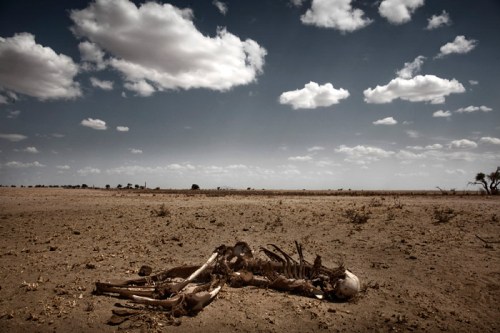
We live in the desert now. If this is indeed a desert. If this is indeed life. Desert, because the sand dunes ripple off so far into the distance that it’s hard to believe that these low wobbles ever end, or that there are any oceans left, or that there’s any non-desert to provide enough of a contrast for us to say that we live in the desert now. Life, because we’ve lately taken to propping up the bodies of the dead with sticks and crutches, whatever we can find, and talking to them as if they are still alive, with the result that there’s now some confusion as to whether we’re not among their number. Alive or otherwise, there’s no end. I ate a lizard today. (Today? The sun never moves. Maybe I’m still eating it. Maybe hundreds of years have since passed.) I saw a snout emerge from one of the desert’s innumerable tiny cloacae and I pounced. I ripped its head off between hand and teeth. I crunched down the bones, slurped up the skin, everything. It was good; this is what we are now, the death of lizards. Strange to think that once I was an investment banker, or a lecturer in biochemistry, or a hard-working migrant labourer, or whatever it was. Something. Maybe I was always like this: bones against the baking wind, born a gasping skeleton.

Still I remember, however dimly, a world that existed before: wet grass, barking dogs, the smell of buttered toast, something called England. A story, one that ends with me here, eating lizards in the desert under a corpse-still sun.

Three things happened at the start of this story. In the town of Strood in Kent, a man hung some St George’s flags from his house. This happened without comment; it was assumed to be comment enough. Then, the Labour party’s Shadow Attorney General, who was in the area to campaign for a local by-election, tweeted a photo of the house. This also happened without comment; it was also assumed to be comment enough. Then she was fired from her shadow cabinet position by a party leader apparently overcome with fury, while the owner of the house briefly became a minor political celebrity, and a right-wing newspaper printed a six-point manifesto he’d penned, outlining a no-nonsense plan for a better Britain. This was commented on widely.

What could all this mean? Begin with the flags. National flags began as vexilloids and standards; they existed so that forces in battle would know which group of weary battered men they were supposed to kill and which they were to defend. At sea they were used to identify ships, protecting them from one gang of pirates while endangering them from several others. Rochester was not the site of pitched warfare; foreign privateers were not sailing up the River Medway to pound its fishing villages with cannon-fire or plunder the gold from its monasteries, there was no confusion over whether the towns and suburbs of Kent were part of England or not – but the presence of the flags could be read as suggesting that this was, whether in a literal or metaphorical sense, precisely the case. The St George Cross had its origins in the Second and Third Crusades, even in the 21st century it was a form that could never be entirely separated from violence against Muslims. The red cross on the white field represented the taking up of the cross, but there are other possibilities. Hung above the doorway of a house, its redness recalls the blood of the Passover lamb smeared over the lintels of the righteous, so that the Angel of Death would not take the first-born sons within, knowing that the people there are of the chosen tribe. The defacement, the grubbying of a clean white square, indicates the sense of a loss, a distant primordial wholeness, a racial whiteness, the whiteness of inorganic unity or death before life, the seething white fungi that cocooned the bodies of the dead before the desert came. The mathematical intersection of the red stripes forms a statement of affiliation and unity, the common purpose of the nation-as-body, or the subsuming of a corrupted body in the precise and transcendent national ideal; their straightness implies an instrumentalised rationality, the desire for a rational social order, the desire to fix the line of the Earth’s orbit from an abstract Outside. Or, viewed differently, as four white squares against a red field, the impossibility of communication, the separateness, the inviolability of a two-storey house in an English market town. Some of this is nonsense; all of it is true.

Then the photo. Class snobbery: look at this grotesque working class stereotype; his flags, his white van, his terraced house, his petty fascism. Or blank neutral reportage: nationalist feeling is on display here as the by-election takes place. These were the readings culled from the teeming possibilities of the moment, seemingly at random; there are others. All this happened at a time when space had become a flattened prism; every landscape existed only insofar as it had the potential to become a photograph: filtered, tinted, bounced from orbital satellite to orbital satellite without ever touching the ground again. This scene must be fixed in a photographic eternity. If I tweet this, some part of me might escape my death. Maybe the touring MP was momentarily transfixed by the composition of the phenomena in front of her, the abstract lines and squares of the flags shading into the architectural abstraction if the lines and squares of the house, sinking into the engineered abstraction in the lines and squares of the white van; maybe she saw in it a tiny fragment of eternity. Maybe she knew that it prefigured the desert.

Finally the manifesto. It went like this:

Welfare state: Work for four years after you leave school before you can claim benefits.
Immigration: Copy the Aussies. If people show up uninvited, send them back.
Transport: Public transport costs are too high. More investment in roads too.
Education: Better discipline. Kids are too mouthy now, not like when we had the cane.
Justice: Tougher sentences for murderers. And jail those who burn the poppy.
Taxes: A killer for self-employed people like me. Start-ups need more breaks.

There’s no point commenting on it now. The only interesting thing in all this vague fascism is how the newspaper described it: a no-nonsense plan for a better Britain. They were right. There’s no nonsense here at all.

Derrida writes of the curious tendency that language has to increase simultaneously the reserves of random indetermination and the powers of coding and overcoding, of control and self-regulation. This competition between randomness and code disturbs the very systematicity of the system, even while it regulates the system’s play in its instability. It’s the tension between overcoding and decoding that makes meaning possible, it’s through the internal displacement within the systematicity of structure that structure can continue to function. Meaning can only expand through a traversal over the expanses of nonsense that surround it; it’s this gap of nonsense that allows words and things to breathe and change, to take on new meanings, to mean different things to different people at different times. Derrida makes a similar gesture in Force and Signification in his discussion of Flaubert’s desire to write a book about nothing. This book about nothing is figured as the pure Book, the necessary precondition for all writing; not the absence of this or that, but the absence of everything in which all presence is announced. Every act of writing is at once an attempt at reaching this Book, what Verlaine calls the law of the earth, and the earth’s true Bible, and a defacement of it. Nonsense is despoiled by coding, and disturbs its structures, but there can be no writing or meaning without nonsense, no law without nonsense first.

What could it mean to form a language without nonsense? When nonsense is extinct there’s no separation between words and things: a flag is a flag, without associations, locked in a hold as tight and still as death. Kierkegaard tells a story in his Concluding Unscientific Postscript: a man escapes from a mental institution and into town, but worries that he’ll be returned to his cell if he is discovered to be mad. Deciding that he needs to convince everyone by the objective truth of what [he] says, that all is in order as far as [his] sanity is concerned, he responds to every question with the statement that the earth is round. This is, from what I can remember, true. It’s also madness. The extreme of sanity is madness, the extreme of code is nonsense – but not the same madness or the same nonsense. As Freud discovered, madness speaks itself; the symptom is a linguistic sign. Repeating that the world is round says nothing, in the same way that a language without nonsense can only say nothing. Kids are too mouthy now. Too much nonsense, too much speech.

In the end the Rochester by-election was won by UKIP, giving them their second parliamentary seat, and setting off a general panic that included the dismissal of Emily Thornberry, the shadow cabinet member who’d tweeted the photo of the house. At the same time the Labour party overhauled its immigration policy. When asked what he felt when he saw a white van, Labour leader Ed Miliband responded, Respect. Overcoding is a deadly contagion. The left grumbled darkly about a UKIPisation of the political discourse, but there was nothing of the sort. UKIP was only the phenomenon; the strangulation of nonsense and all its freedoms was begun by the mainstream parties – Labour especially. They displaced the blame for the slow enshittening of everything onto the figure of the immigrant. They turned politics into an exercise in code and branding. They declared the class war over. After all, class is a kind of nonsense, a word without a tangible thing. After that, what did it matter that Dan Ware, the flag-draped van-owner, was – despite his shaved head and his commitment to the sign of the poppy – not of the working classes, in terms of his relation to capital, but a business owner and certified petit-bourgeois? He was the designated voice of the proletariat, a proletariat ranged in opposition to black and brown people despite being largely composed of black and brown people, because he spoke without nonsense.

In the months that followed the Rochester by-election, the campaign against nonsense was executed flawlessly. Ed Miliband spent a week crouched in the back of a white van, gleefully chucking England flags at crowds of cheering supporters, and ducks in the pond, and the cold emptiness of the night. Schoolchildren were required to learn core British values that could only be expressed through grunts and flailing hand gestures. The Royal Navy was deployed in the Mediterranean to sink refugee boats with RGM-84 anti-ship missiles. When the general election results came in, no party had an overall majority. On a cold May morning, the Labour-UKIP coalition was sealed with a handshake in front of Number 10. Everyone had what they wanted. Nigel Farage had finally won his political legitimacy, Ed Miliband had finally reconnected with working-class voters. And then the desert came. When I ate the lizard its tail wouldn’t stop twitching; even after I’d bitten right through the head this flailing panic didn’t stop. I don’t know why. There’s a lot I don’t know any more. But at least there’s no nonsense in the desert. From one blank burning horizon to the other, no nonsense at all.

Sisterfucking up the Euphrates

In German, the prefix ur- is used to indicate the now deeply unfashionable sense of an originary, primal form of a thing, which is also its end. Something ursprünglich is the first of its kind, so you’ll have the Uraufführung, or the début performance; the Urtext, the lost first draft of the Hebrew Bible that supposedly existed before all the various priests started fucking around with it; the Urwald, the dense dark forest that once covered the whole of central Europe. The word itself is of good Old Germanic stock, and it’s probably just a coincidence that this caveman’s grunt of a syllable is also the name of a city: that built by ‘Ara son of Kesed, where he made graven images and unclean simulacra, where evil spirits seduced him into wrong and sin, and where the sons of Noah first began to make war on each other. It’s a word from the oldest of the old histories, from when the world was still new; the brutal hoary infancy of civilisation. Before the Romans or the Greeks or the Persians or the Babylonians or the Egyptians, there was Ur, the city on the mouth of the Euphrates where Abraham smashed the idols of his father.

Freud tells a nice parable about the origin of the superego, what could be called an Ur-über-Ich. Once, among a band of squatting cannibal ape-men that would one day become the refined intellectual circus of Vienna, there lived a great and powerful father. This father had many wives, and he took many wives for himself: some were the captured daughters of smaller bands, some were his own daughters. Such was his power that his sons were left with neither food, nor loot, nor wives, and were reduced to contesting among themselves for what scraps they could gain. Eventually, in the face of his unbearable potency, the brothers grouped together, overwhelmed their father, and clubbed him to death. That night they held a great feast, at which their father was the main course. At this moment, the superego was brought into the world. The brothers were jealous of their father, but at the same time they still loved him; out of their guilt the rapacious greed of the father became internalised as a moral code, with its first commandment being a restatement of his paternal rights: Thou shalt not fuck thy sisters.

Like most myths of the land of Ur(-), it doesn’t really matter if any of this actually took place or not. Hobbes and Rousseau were both happy to admit that their states of nature never really existed; Marx was equally unconcerned by the historicity of primitive communism. Freud has a particularly good get-out clause – as he has his ‘exasperated reader’ exclaim, so it’s immaterial whether one kills one’s father or not! While some fathers might have a different opinion on the matter, Freud concedes the point: wanting to kill your father and actually doing so both produce the same psychological effect; the same guilt, the same internalisation. It’s in this context that the story of Abraham begins to make sense. When he lived with his father Terah in the city of Ur, the family sold graven idols; Abraham destroyed these unclean simulacra and went with his wife Sarah into the desert. It doesn’t matter that Terah died peacefully at the age of two hundred and five: the idols, rooted in the paternal totem of the victorious brothers, represent what Lacan calls the name-of-the-father; the Symbolic father that maintains the prohibition on incest. It’s possible to advance an alternate reading of Abraham’s flight to Canaan: when he lived in Mesopotamia he was married to Sarah but still he couldn’t fuck her, not in the house of his father. The book of Genesis explains their childlessness by claiming that Sarah was barren, but the book of Genesis was also written by men, who are always a little squeamish when it comes to male impotence. Sarah was the daughter of Terah by his second wife: she was Abraham’s sister.

Lacan’s concept of the name-of-the-father is a triple pun: le nom du père recalls le non du père (the ‘no’ of the father, the prohibitive function of the superego) but also les non-dupes errent (the non-dupes err). Those who refuse to be ‘duped’ by the process of castration and induction into the Symbolic order – the kind of person who might, for instance, take it upon himself to smash the idols of his father – are not in fact seeing the world as it really is; they’re stuck among the horrors of the Imaginary. The book of Genesis is full of hints towards Abraham’s singular neurosis. Several times in his journeys, as he comes across various unfriendly peoples, he has Sarah pretend to be his sister – in other words, pretend to be what she really is – so that kings and pharaohs will try to sleep with her. For this God punishes them with plagues and nightmares: none shall disrupt His holy incest.

All this is by way of approaching an understanding of the current instability in Iraq. The land of Ur is, for the Western powers that have been steadily clubbing it for the last century, a feared and hated father. All the paternal functions of society first sprung up in the area between the Tigris and the Euphrates: alphabetical writing, codes of law, economic class, monotheism. In the pre-Oedipal stages of infantile psychology there is no recognition of sexual difference and the fantasy of anal birth is common, so it’s no wonder that the Iraq-Father assumes a hemaphrodite form. One vast leg stretches down the Arabian peninsula, the other is cocked between the Persian Gulf and the Caspian Sea. Between these lie the damp muddy openings of the rivers, passages leading up into the womb of civilisation, while beyond their fertile banks the desert stretches for miles. An old, decaying parental presence that refuses to die. No wonder everyone from Alexander the Great to Genghis Khan to Winston Churchill felt the need to invade Iraq.

On the plane of grand strategy, nobody’s Middle East policy makes any sense. Saudi Arabia props up the secular Sisi regime in Egypt, and has threatened to blockade Qatar over the latter’s support for the ousted Muslim Brotherhood. At the same time Sisi supports the Assad government in Syria, which the Saudis have spent millions trying to overthrow, and is making friendly overtures towards Iran, while his deposed predecessor Morsi tended to align himself with the Saudi-Israeli anti-Tehran axis. The United States is now considering intervention in support of Iran against Islamist movements in Iraq, fighting the same people it’s armed and funded (through Saudi proxies) to fight Iran’s allies in Damascus. The ‘war on terror’ was never really a consistent programme: while Western imperialism made some efforts against Sunni salafism (Afghanistan in 2001, possibly Iraq now) it’s mostly been used to attack secular Arab nationalist governments (Iraq in 2003, Libya in 2011, Syria from 2012). This is diplomacy as a dialectic. Its model isn’t the Nile, with its divisions along the axis of a straight line, but the swampy chaos of Mesopotamia. There are no fixed power blocs, not even Sunni and Shia, only a series of fluid phases successively subsumed in their own contradictions. It’s a grand process of decoding, the untethering of signification, the struggle against the Symbolic, the denial of castration, the murder of the father.

In 2003, the occupying US Army set up Camp Alpha, a huge military base in the ruins of Babylon. Helicopters buzzed around the ancient bricks, Humvees rolled through the Ishtar Gate, defensive trenches were dug through the strata of five millennia. As symbolic erasures of the name-of-the-father go, it ranks up there with Abraham’s destruction of his father’s idols. Still, after the father is killed, it still remains to eat his corpse. Iraq must be consumed. In recent weeks a small armed outfit calling itself the Islamic State of Iraq and Syria (or of Iraq and al-Sham, or of Iraq and the Levant, or Daash – such signifiers tend to only refer to each other) has captured a string of cities in the country and is advancing, or at least making a feint, towards Baghdad. Reports in the Western media claim ISIS funds itself from the territory it already holds and doesn’t require any state support. They’re known to be selling oil to the Syrian government forces they’re supposedly fighting, and (this is a nice touch) are reportedly profiting from the sale of looted antiquities from archaeological digs. All this is pretty dubious, but in any case the Saudis seem rather nonchalant about the peril to the Iranian-aligned Maliki government. Even if ISIS aren’t receiving direct Western support it’s almost certain that arms supplied to ‘moderate’ Syrian rebels are filtering through to them. The terrors and massacres in Mesopotamia are as Western-manufactured as Big Macs and banking crises. Of course, when imperial adventures cause chaos, the solution is more imperial adventure. There’s a growing clamour for intervention; aircraft carriers are heading up the Gulf, the hideous grinning hobgoblin that is Tony Blair returns to haunt the political discourse with its carefully considered opinion. There’s a very real chance that we might be about to enter a third Gulf War. In the face of this danger, it must be kept in mind that when imperialists press for action, all they really mean is that they want to be able to fuck their own sisters.

Colton Burpo: all grown up

It’s New Year’s Eve, 2027, and Colton Burpo, subject of the bestselling 2010 book Heaven is for Real: A Little Boy’s Astounding Story of His Trip to Heaven and Back along with the hit 2014 film of the same name, is sitting in a strip club in the town of Little Whistling. He’s unrecognisable, and so nobody recognises him. The town is more a glorified truck stop, a shivering huddle of low square houses, half-buried in the loose winter ice that blankets the Dakota steppes in endless miles of blank white indistinction. Every time a big rig pulls into town, its headlights scything through the indifferent falling strata of snowflakes, the building shakes down to its foundations. 2027 is the harshest winter on record: outside it’s colder than the surface of Mars, but in Colton Burpo’s private booth there’s a heavy, sticky, woozy heat. The low rumble of an eighteen wheeler outside sends a brief seismic tremor through the stripper’s cellulite and gives Colton a jolt out from his narcotic daze. It’s not enough. He beckons the girl over. “Did you know why it is that serial killers keep on killing?” he says. He slurs, his head at a crooked angle; he doesn’t look right. Electra sighs. “No,” she says. “Now why is that?” She’s heard all this before. Every grizzled drifter that passes through Little Whistling ends up going off on a rant like this one, trying to imitate the engagingly twisted dialogue of the sexy redneck psychopaths they’ve seen on TV. It’s pathetic. Blood, snow, and the road; dead hobos and crooked cops; gun-running and dope-dealing; all as dull and as flat and as empty as the plains outside. Nobody’s real any more. (Not that she can really complain. Electra’s not a real stripper: she’s working undercover, writing an exposé on the dark underside of the sex industry for a feminist magazine. So far, all she’s been able to discover is that every other girl in this establishment is doing the exact same thing. Courageous investigative journalism is the only thing keeping these places running.) “It’s not that they enjoy killing,” Colton says. “They do it because they don’t. It ain’t never enough. It never gives them that thrill they want. So they just keep trying, in new ways, over and over again. It never works.” Satisfied, he sits back and pulls a little bag of white powder out his pocket. “You want some?” Electra shakes her head. She squats a little and presents him with her ass; customers like that sort of thing. “Not there,” he says. “Lie on your back.” This is where Electra can feel things start to get weird. He shakes a few soggy clumps of coke into the pit of her collarbone and snorts them up with a gruff yelp. It stings. Colton Burpo likes the town of Little Whistling. The people seem to be God-fearing folk, and honest, even if they do tend to embellish their personal histories. They’re willing to allow this pastor’s son his eccentricities. Colton Burpo has snorted cheap blow off just about every imaginable part of a woman’s body: her ankle, her labia, her armpit, her ocular cavity. He can’t get it back. It doesn’t work.

I first encountered Colton Burpo in 2012 while tearing through a Walmart superstore in Anaheim, California. I was reaching the end of my year-long stay in the United States and starting to panic. I had to cram as much absurd Americana into my final days as possible: Vegas, Disneyland, road trips, shooting ranges. I loved Walmart. I revelled in the logo (I’d never seen so many friendly yellow anuses in my life), the enormous bags of waxy grated cheese, the rows of rifles two aisles away from babycare products, the sense of an entire world repackaged and itemised in a single vast cube, ready to supply every possible human want. Somewhere in there I found a book called Heaven is for Real – for kids. It explained, with lovingly coloured illustrations, how a four year-old boy had ascended to Heaven during an emergency appendix surgery; how he’d spoken to dead family members and petted the rainbow-coloured steed of Christ and come back knowing things that he couldn’t possibly have known. I was so taken by this piece of extravagance that I don’t think I ever even noticed that the boy in question was, spectacularly, named Colton Burpo. I never considered what it must be like to actually be him: not just to go to Heaven, but to then have to come back. I don’t doubt for a second that he saw the afterlife. But how can Colton Burpo now live in the depravity and fallenness of the world, having seen what he’s seen, knowing that suicide is a mortal sin, unable to regain his paradise until the end of his long prison sentence of an earthly existence? What acts of oddness will he turn to in his attempts to recapture a lost Heaven?

By 2045 Colton Burpo has, like so much of the world’s monied flotsam, washed up in the Sovereign Emirate of London. For a while around independence some people were suspicious of the new name, but by now Londoners have grown proud of it. Absolute monarchy is good for trade, and London has even less in common with the stuffy old monarchies of Europe than it does with the grotty hinterlands out in the British Isles. Emirates are modern and forward-thinking and business-friendly; kingdoms aren’t. It’s said that the Windsors, exiled from Buckingham and Balmoral, are now occupying a nice semi-detached house in Manchester, wherever that is. It’s also said that there are people starving to death in Yorkshire and sprawling refugee camps along the Scottish border, for all anyone cares. The skyscrapers of London receive and transmit constant streams of capital, and the tangled medieval streets around them are a net, trapping some of it in the city, even if only for a second. People too. Colton Burpo lost everything when the dollar collapsed. At the time the thing to do was to go to China, so he did; hamming up his old boy-who-went-to-Heaven routine around Shanghai and Guangzhou for audiences of enraptured evangelicals – as if it were still a beautiful story of inspiration and hope, as if it were anything other than a clawing void deep in his chest. He left after a few years. He can’t stay in one place too long: the sky presses down on him, the ground swallows him up, it’s all so hideously material. Everywhere is the same now, but London is special, because it’s more the same than anywhere else. It’s gone midnight when Colton Burpo spots his prey, but the sky is still a bright hellish orange , the low clouds glowing with reflected fire and infamy. The youth is striding out of one of the huge towers that line Brixton Road. Apart from the occasional swoosh of a surveillance orb, it’s silent here. No trees for birds; no homes, only offices. The kid is sharply dressed in business attire; his white t-shirt expertly stained, his tracksuits all but falling apart. He’s wealthy and important, but then so is everyone in London – everyone except domestic servants, and the menial workers ferried in and out of the city every day from one of the tiny surrounding fiefdoms, but it’s not as if they count. Colton has stopped trying to work out why he does what he does; all he knows is that he has to keep doing it.

Freud locates the source of the ‘oceanic’ religious feeling of universal interconnectedness in infantile prehistory, before the ego detaches from the outside world. In the immediate oral stage, the child doesn’t conceive of the mother’s breast as being a separate entity; mouth and teat form a single machinic assemblage controlling a single flow. She is the world; the world is her. It’s only when she looks at herself in the mirror and identifies with her specular image that the unified and discrete Subject is formed; after that only faint aftershocks of this originary molecularity remain. No wonder religious myths tend to place Paradise in the far-distant past. Colton Burpo knows better; he knows that Heaven is still here, just across the fragile bound of every living instant. When someone refuses to move past the oral stage they develop a neurotic fixation: they’ll become anxious and needy, or domineering and manipulative; alcoholic; unwell. It’s not uncommon. Everyone’s a neurotic. The real problems emerge if you proceed through the stages of psychosexual development in a perfectly ordinary fashion, and are then suddenly thrust back, all too briefly, into the deep dark holy oceans of immanent unity. Visiting Heaven as a four-year old boy will only give you psychosis, and the most dangerous psychotic delusions are the ones that happen to be true. Georges Bataille writes that continuous (or deindividuated) life is always accessible, at the moment of death and in the heights of erotic passion. These moments are still deeply religious in character, but in an inverted form: if you can achieve continuous life by murdering a priest in the church of San Seville, then all the better. For Colton Burpo in 2045, Bataille is tedious and conventional. Nobody likes to think that they live in an era of innocence, but we do. The decadents of the generation before 1914 didn’t think they lived in an innocent time either. Great terrors await. The present tendency towards jaded irony is held to be some kind of postmodern affliction; we forget that the twenty-first century is fourteen years old, and has just discovered sarcasm. Colton Burpo was born on the eve of the millennium; he’s as old as our present age. His psychosis is our psychosis; his future is our future.

It’s 2069, and Colton Burpo is dying. He’s lucky. Here, in this private hospice high up in the Ural mountains, the air is still clean. His last breath won’t choke him. From his window Colton can see the snowless peaks plunging down under a cold and limpid sky. The whole flat expanse of Europe is spread out before him, coquettishly cloaked in its radioactive smog. On the other side, nothing. He’s been pushed here, thrown up against the edges of the world. It’s time. He signals for a priest. For the first time in decades Colton thinks of his father. Pastor Todd Burpo, who believed everything, who spread the good news. The clean airy smell of whitewash and disinfectant in the Nebraska church; those long bright summers when Heaven seemed so real and so fresh he could see it whenever he closed his eyes, before the book and the TV appearances and the movie and everything else, before the space stations fell from the sky and the nuclear plants popped one by one. He almost expects the priest to be like those he remembers, someone in blue jeans and a polo shirt with an acoustic guitar slung over his shoulder. Instead there’s a dour Orthodox seminary student in black robes and a black felt cap. The buboes are visible all over his neck; it’s not like it matters now. The man takes Colton’s hand for a second, crosses himself, and begins to administer the last rites. “Blagosloven Bog nash vsegda-” Colton stops him. A last feeble rasp. “Once,” he says, “once when I was young – too young to understand – He showed me Heaven. I know now that I’m not going back. Ever since, He’s shown me nothing but Hell, and all its horrors. Now… I wonder what He’s going to show me next.”

(There’s a tragic misconception that in Christianity, what one does is this earthly world is only important insofar as it secures one’s position in the afterlife. In such an understanding, Heaven and individual salvation is the only proper goal in life. This is nonsense, and it has no basis in Scripture or the theological consensus, both of which are as materialist and as hostile to such transcendentalism as anything in Marx or Nietzsche. There are some within Christianity that believe in a conscious afterlife immediately following death, but at no point is this idea of personal salvation held to be any kind of telos. Far from being eternal, the intermediate state isn’t much more than a spiritual screensaver, something to occupy the soul until the bodily reincarnation of the dead promised in Matthew 22:31-32. For the thnetopsychitae, this filler heaven doesn’t even exist. They may be right: the immortality of the soul was always a Platonist Greek doctrine, not a Christian one.

Biblical writings are singularly unconcerned with the fate of the soul immediately after death; the point is always to return to the world in all its immanence after the Last Judgement. Heaven isn’t a metaphysical realm; it’s what happens here, and the New Earth or the Kingdom of Heaven must be built. With postmillenial salvation – operating on the level of the 144,000 or the numberless multitude rather than on that of the individual subject – the curse of Adam is lifted. The old order to be overturned is described precisely in Genesis 3:18-19: Cursed is the ground for thy sake; in sorrow shalt thou eat of it all the days of thy life; thorns also and thistles shall it bring forth to thee; and thou shalt eat the herb of the field; in the sweat of thy face shalt thou eat bread, till thou return unto the ground. In other words, by opposition we can see that the salient features of the Kingdom of Heaven are: the unleashing of productive forces in the clearing-away of thorns and thistles, an end to the antagonistic dialectic between the equally false categories of Nature and Man, and the abolition of alienated wage-labour. It’s in this New Earth that the dead are redeemed and justified.

The Kingdom of Heaven is not a state of affairs which is to be established, an ideal to which reality will have to adjust itself. We call the Kingdom of Heaven the real movement which abolishes the present state of things. We do not passively wait for it. Luke 17:20-21: And when he was demanded of the Pharisees, when the kingdom of God should come, he answered them and said, the kingdom of God cometh not with observation: Neither shall they say, Lo here! or, lo there! for, behold, the kingdom of God is within you. As ever, God is impeccably Marxist.)

The passion according to Luke

Everyone has their fantasies. There are people who dream of chains and rope and hot wax, silent watching eyes, dungeons of degradation, masked strangers, shiny black leather. Then there are the perverts, people who get unaccountably excited by the idea of second homes and high-quality consumer goods, holidays in Europe, tasteful interior décor, and a high-paying job in a full-employment economy. Repulsive as they might be, even these fantasies help sustain the subject of the fantasist; they don’t really hurt anyone as long as nobody tries to actually put them into practice. This is the rule of fantasy: you can act it out as an image of an image, but it can never actually come true. Once it does, it loses all its power and enchantment. There are many fantasies like these, tiny glittering gasps of desire, but they’re all in orbit around an invisible sun, one single hidden image that gives them their allure: the ‘foundational fantasy,’ represented by Lacan in the matheme $ a. In this formulation $ represents the castrated or ‘barred’ subject, forced to understand the world through images in response to a primordial lack, with a standing for that absence, the transcendent and nameless object of desire. What’s notable about this matheme is that it lacks an intermediary symbol (such as standing for a problematic relationship, as in the formula $ a for neurotic fantasy): between the two terms there is no relation. Fantasy is grounded in a double absence; the fantasist never necessarily knows the full content of their fantasy. You have to browse through an infinite collection of images and see which ones excite you, find out what kind of radiation the black hole of your desire emits. Here are a few fantasies. See if they work for you.

Luke Vivian-Neal, of the School of Oriental and African Studies team in the 2013-14 season of BBC2’s University Challenge, has a woman with beautiful hair brought to him, saying he simply wishes to examine her hair; but he cuts it off very traitorously and discharges upon seeing her melt into tears and bewail her misfortune, at which he laughs immoderately.
Luke Vivian-Neal, whose team made it to the semi-finals before being beaten by Somerville College, Oxford, sups at an immense table; for light, he has six burning candles, each inserted into the ass of a naked girl lying upon the table.
Luke Vivian-Neal from Lusaka in Zambia, who is studying Chinese but also knows a lot about words of Arabic origin and the location of the Schönbrunn Palace, attaches a slender but attractive girl to a large rocket, the fuse is ignited, the rocket ascends, then returns to earth with the girl still attached.

These are all from entries in the Marquis de Sade’s The 120 Days of Sodom, a pornographic novel that quickly descends into an early example of the Buzzfeed-style listicle; six hundred numbered acts of debauchery and murder presented with very little adornment or narrative sequence. De Sade was a fantasist in the classic mould: while his libertinage caused some scandals he was still entirely devoted to his wife and obedient to his mother; in his actual sexual practices he tended far more towards masochism than the sadistic tendency to which he gave his name. What’s interesting about the 120 Days of Sodom is that all these deeds are described not as fantasies or stories, but as passions, divided into les passions simples, doubles, criminelles, and meurtrières – all this despite the somewhat offhand way in which de Sade’s heroes carry out their orgies and massacres. In traditional medieval dualism, passion was opposed not to boredom or indifference but to action; it shares a Latin root with passivity. Pneumatic theory, which posited a substance called pneuma through which physical sense impressions were mediated into mental images, held erotic desire to be a passion: you are not an agent, a subject desiring an object, but a patient, the object of a desire that acts on you. Passions are pneumatic images,sensations from outside that seize and overwhelm the subject. For the advocates of courtly love, the idea that you might grab hold of the source of your desire and actually fuck them wasn’t just crass and unseemly; it missed the point entirely. Actions belong to the body, and passions to the mind; consummation of a passion is nothing more than the contemplation or the expression of an image. It’s in this context that de Sade’s passions begin to make sense. His passions are fantastical images, stories within a story, emerging from a void: mise en abyme.

Luke Vivian-Neal is clearly a very passionate man. Or, in the words of various Twitter commentators, he is ‘ever so intense,’ ‘a prime example of a secret serial killer,’ ‘the sort who would wear your skin to a party,’ ‘an evil Paul Merton,’ and ‘actually going to kill all of us #thoseeyes.’ He’s certainly the most interesting contestant University Challenge has had in a while. He holds his forehead low, his hair flops over his eyebrows, and he stares up at the camera with what appears to be utterly undisguised loathing. When he answers a question correctly there’s a tiny grin, a fractured chink through which the horror of the Other’s enjoyment can be glimpsed. When he gets one wrong he looks omnicidal, a glowering thundercloud of a human being. He definitely has a rich inner life. This effect is only heightened by the rest of the SOAS team: motherly Weber, trying to cheer Vivian-Neal up with a smile and a pat on the back; team leader McKean, the cheerfully studious everyman; thoughtful and deliberate Figueroa. They don’t seem to be from the same planet as Vivian-Neal, let alone the same university. It’s not hard to imagine them as the cast of a University Challenge spinoff, a tense psychological thriller in which Vivian-Neal slowly picks them off one by one. Of course, the most important thing about the passion of Luke Vivian-Neal is that it’s a passion: something that acts on him from the outside, an image, a fantasy. Real serial killers are, for the most part, astonishingly boring people; not cold and steely and erudite like Hannibal Lecter or Norman Bates, but driven by dull brutish psychopathy. If Vivian-Neal actually had bodies in his freezer, he’d lose all his fascination. The fantasy of the smart, brooding, potentially murderous young man isn’t his – it belong to us, the viewers.

When I was briefly living in America, I naturally took it upon myself to smugly educate as many of the country’s inhabitants as possible in the wonders of British television. These efforts had various levels of success. Some people liked Peep Show, fewer had patience for Stewart Lee, but University Challenge was met with unanimous approval. Part of its appeal might have to do with the show’s inherent excess: these people are quizzed on knowledge that is for the most part fundamentally useless, for what appears to be no real reason, and without even getting a cash prize at the end. There’s a gleeful superfluity to it that fits in well with the sprawling all-consuming mentality of Los Angeles. At the same time it’s something of a human zoo: you’re presented with a constant succession of endearingly dorky and often utterly strange characters, but in a way that deliberately encourages the formation of fantasy. Unlike some quiz show hosts, Jeremy Paxman never asks his contestants how they’re feeling, or who they’ve got supporting them back home, or what their hopes and dreams are; you have to work it all out (or invent it) based on their eagerness with the buzzer, their spluttering when named, the things they know and the things they don’t, their reactions when they win and when they lose. University Challenge reproduces, in laboratory conditions, the formation of fantasy as a defence against the lack that inheres in the Other. No wonder so many of its contestants become minor sex symbols. Intelligence might be sexy, but there’s nothing that stimulates neurotic attachment like a void.

The fantasy of Luke Vivian-Neal is of someone somehow inhuman, someone whose mind follows different rules to the rest of ours. This image forms part of a process of transference. All those desires that the viewer at home watching University Challenge isn’t comfortable with are shifted onto him; he becomes a receptacle for our own deadly passions. In fact, unlike the neurotic voyeurs observing him on their screens, Vivian-Neal seems fully healthy and fully human, entirely unashamed of himself. When he gives that sullen stare, he’s communicating exactly what he wants to.  There might be murderers in this season of University Challenge, but he’s not one of them. The SOAS team lost a decisive quarter-final match to Trinity College, Cambridge 280 points to 105. Vivian-Neal was inconsolable; he couldn’t even bring himself to say the traditional end-of-match ‘goodbye’ to the viewers. The standout character of the Trinity team is Filip Drnovšek Zorko. It’s not just his excellent name, which the announcer reads out with an air of unbridled excitement: Drnovšek Zorko appears to be a genuinely agreeable person. He’s a lamb among wolves. The rest of the Trinity team, with their collared shirts and v-neck jumpers and gemstone-dead eyes, are all monsters of the Oxbridge elite – the same British impulse that conquered the world and killed millions out of sheer boredom. Vivian-Neal has an authentic misery; the only thing they communicate is a shark’s mindlessly propulsive self-satisfaction. Phantom pith helmets hover over their heads. In tonight’s final, Trinity play against Somerville, Oxford for the title. There’s every chance they’ll win; they’re an extremely effective team. If they do, everyone goes home happy. If they lose, the last thing Drnovšek Zorko will see will be his teammates’ pupils narrowing to reptilian slits and their fangs swooshing down from their mouths before they consume him.