In the Hegelian system the history of mankind no longer appeared as a wild whirl of senseless deeds of violence, all equally condemnable at the judgement seat of mature philosophic reason and which are best forgotten as quickly as possible, but as the process of evolution of man himself. Engels, Socialism: Utopian and Scientific
There was meant to be progress. Slowly at first, and then with gathering confidence, human beings were supposed to be turning the world from a Hell we couldn’t understand into a finely tuned machine that we could. We would predict the weather and split the atom and put a brushed-aluminium fridge-freezer with an ice-cube dispenser in every household, whether they wanted one or not. It was all a lie. What’s been called progress was nothing more than a war of annihilation against the ghosts. At first our odds were slim: the ghosts outnumbered us several times over. Every little copse had its nymphs and sprites; every wild animal carried the head of a god; in every home the jealous ancestors would take up their positions by the fire. It took centuries, but we pushed them back. We got rid of the strange and powerful forces that had controlled the clouds and the rain, and replaced them with tiny floating particles to form the seeds of water droplets. We slowly starved the moon-goddess to death, and replaced her with a big lump of floating rock; we even sent an expeditionary force to its surface to plant a flag there and confirm its lifelessness. All the whispering local spirits were massacred, and their ownership of the sacred sites was passed on to brutal landowners. You could be forgiven for thinking that we’d won. The universe makes sense, after a fashion; a lot of it be explained without any need for ghosts or spirits. If you want, you can now climb Mount Olympus yourself: there are regular tour buses from Athens; if the gods were ever there they’ve now moved on. Machines have been sent out into space to let us know exactly how boring it all is. But if that’s the case, and the magical forces that once haunted every inch of our world are gone forever, then just what the fuck is Tony Blair?
Tony Blair rises every couple of months, like a bubble of swamp gas. First there’s an uneasy buried rumbling, then small tremors shake the surface, and then suddenly he bursts through, a gassy eruption stinking of farts and sulphur. It doesn’t matter how many rounds you fire into his shambling frame; he just won’t die. Whenever something unpleasant happens in the Middle East, whenever some huge corporation is discovered to be starving people to death or poisoning them through calculated negligence, whenever the chaos of the international order starts to wobble into another death-spiral, a damp wind blows through a graveyard somewhere in England and Tony Blair emerges from his tomb. There’s something viscerally revolting about the man. His fake chumminess and his sham gravitas are both as nauseatingly contrived as his shiny oily skin, hiding what can only be bloated rotting organs inside. He’s a gremlin, an incubus, very strange and very cruel and very foreign to our world. But still there’s a decaying vestige of that charm, the memory of the love in which he was once held, that universal joy when he finally ended a generation of Conservative rule by ending the Tory monopoly on evil. We’ve deluded ourselves into thinking that we’ve learned from the experience, we’re past all that now, but every time Tony Blair re-emerges there’s still a shock. There he stands, with his jug ears and his peg teeth and his manic eyes full of an otherworldy certainty – it’s like the shock of seeing a former lover going through your bins at night, or a long-forgotten childhood toy waiting for you on your bed. He represents something that’s been repressed, and even though the repressed always returns, it’s always a surprise. Who is this hideous figure? Why is he still alive? Why won’t he just leave us alone? Of course, Tony Blair was never alive. He’ll never leave us alone.
Tony Blair is old, older than time itself. Beyond left and right, beyond right and wrong, beyond age and death. When the first cave-dwellers made the first image of their god, Tony Blair was there with his shiny spiv’s suit to suggest that it might require a blood sacrifice. When the first half-fish heaved itself out from the boiling sea to flap around in the sodden tidal slime, Tony Blair was there with his cold intense stare to offer it words of vague encouragement and then crush its head under his heel. When the first drifting clouds of interstellar dust began to coalesce into what would one day become our little speckled world, the bodiless malice of Tony Blair was there to help them set the stage for our future suffering.
Older and wiser societies than ours knew about Tony Blair, and they knew to be afraid. Throughout history he’s arrived among the homes of men and promised a very slightly better life, before suddenly carrying out inexplicable destruction.The Sumerians knew him as Tešgali, a snake-demon twenty miles long, who would enter a walled city in the guise of a man, and then uncoil his vast scaly bulk and devour everything inside. This knowledge was passed on to the early Christian Gnostics, who called him Tialdabaoth, the blind creator-god with the head of a lion and a serpent’s tail, architect of all madness, who created this world out of spite and envy and who tried to prevent the first humans from eating from the Tree of Knowledge. Country folk of the Middle Ages were terrified of the bálfar, creatures of beguiling appearance but malicious intent, who lived in the marshes and the wildernesses but would sneak into human villages by night. Certain trees were sacred to these bálfar, and cutting them down would mean imminent death; if your house stood in their path they would tear it apart. The bálfar were known to kidnap human children and even grown adults (several Old English epics tell the story of a man’s doomed quest to retrieve his wife from their kingdom) and replace them with one of their own, a creature identical in all respects but for a savage listless boredom. They ruled by inscrutable and murderous caprice, but it was possible to appease them with small offerings: a ring of flowers, a saucer of milk, a thimble. Those they took favour on would be treated to a great feast, but like all elfin magic this was a simulacrum: eventually the guests would realise that the food was not real, and that they were eating dirt from the ground. Tony Blair even appears in the Daemonologie of King James I, as Tibericaxus, a Deuill who being of great Charme andGuille, sneaketh into the homes of the Godlie, and perswades them to addict themselues to his seruice.
But soon after that something changed. With the dawn of the Enlightenment people stopped believing in the old horrors that lurk in the dark corners of reality. The universe was no longer a grand stage for the cosmic clash of good and evil, and God became a kind of divine tinkerer, neatly slotting all the cogs of his Newtonian machine together and leaving it to run with a steady tick. We thought we could understand the world, and so when Tony Blair returned we didn’t even see him for what he really is. We should have known better, but we thought he was just a politician.
What Tony Blair represents is the final meaninglessness of the world. We still don’t know why there is something rather than nothing. Stare too long into Tony Blair’s face and it’s hard to tell if there is something rather than nothing. What kind of a world is this if Tony Blair exists in it? For centuries philosophers would construct grand systems: an ontology and a metaphysics and an epistemology and a theory of ethics and a theory of aesthetics, all connected by one overarching principle. For Plato the eternal, for Kant the absolute, for Hegel the unfolding, for Kierkegaard the teleological. All these finely honed contraptions utterly failed to account for the whole of existence. Even Heidegger, who finally reached the understanding that there is no universal substance of Being but only individual beings, felt the need to turn this into a complete system; even the deconstructionists had to hold up their technique as a fidelity to a text. There might be nothing outside the text, but its basic unit is not one of meaning but of insufficiency in the face of the unsignifying Real. The truth is that there is no unifying principle behind anything beyond its total incoherency. Every time we think we might have a handle on how things actually work, the ghastly figure of Tony Blair emerges from its ancient swamp to remind us that this world is not a sane or a rational place.
Apologies to J.G. Ballard. No, really. I’m so sorry.
THE ZIPLINE INCIDENT: MYTHOPOEIA OF THE LEGENDARY
Focus group surveys aimed to reproduce a representative sample of the British population at large for market research. Subjects surveyed included a recent university graduate wondering how long he has until it’s no longer acceptable to listen to house music, a semi-popular circuit comedian gradually metamorphosing into his own character, a harried single mother who’s been tramping up and down a single supermarket aisle for fourteen consecutive hours, everyone inside a Blackpool bingo hall at 7 pm last Friday, a Welshman, an ethnic, and a football with a smiley face drawn on in felt-tip pen. Most subjects were recruited for consumer surveys through pop-up adverts on the lactation fetish pages of several popular pornographic websites; others were kidnapped on the street; some were grown in vitro and have lived here their entire lives, consuming nothing but weak tea and re-runs of BBC panel shows.
Subjects were asked to evaluate Boris Johnson’s performance in a number of Mayoral duties: leading an army of warriors against the goblin menace, pushing back the tide as it creeps up the Thames in his quest for a new airport, initiating a nuclear attack on Argentina, nursing a newborn fawn at his lactating teat, baking a tray of delicious muffins, and dangling from a zipline. Evaluations were given on a five-point mythological and meta-narratival scale, descending from epic through legendary, saga-esque and apocryphal to Talmudic. A full 91% of respondents considered the Mayor of London’s breastfeeding abilities to be either legendary or epic. In response to being questioned on his abilities as a military leader against geopolitical, elemental and supernatural foes, most respondents either marked him as Talmudic, considered the question to be metaphorical, or begged to be released. During a word association exercise Johnson was, in 82% of cases, identified with the ‘maternal’ against the ‘paternal’ element of a word pairing (as in cake/bread, warm/cold, shame/fear, hate [existential]/hate [conditional], wine/beer).
JOHNSON’S HAIRSTYLE
Subjects were asked to give examples of consumer products that could be improved or more easily marketed if supplied with their own trademark straw-coloured Bojo mop. ‘A potato’ was not included in statistical analysis given the bewigged potato’s physical indistinguishability from the Mayor himself. The most popular non-tuberal responses were (in descending order) a dead pigeon on the pavement, the pudenda, standard issue prison uniform, a small heap of used teabags, and the white cliffs of Dover.
TOP BANTER
Altered footage was assembled, using a team of Californian CGI artists, of the Mayor appearing to perform the following comedic routines: a rambling and repetitive Stewart Lee monologue about shoelaces, Michael McIntyre drunkenly failing to seduce a 17 year old in an Edinburgh dive bar, the Socialist Workers Party Disputes Committee’s proceedings against Comrade Delta, and Hitler’s speech before the Reichstag of July 13th 1934. All were seen by the vast majority of subjects to exhibit Johnson’s trademark wit and intelligence. The latter sequence, when spliced into Dave’s regular Tuesday night programming, is believed to have caused a statistically significant spike in the national birth rate nine months later. Video footage of ‘Boris Johnson’ stamping on kittens was, when rated on a scale from cute and blimey to fail and trashy, voted cute by 87% surveyed.
THE GENETIC ARISTOCRACY
99.87% of sixth-form students at St. Jonty’s School for the Incurably Retrognathic believed themselves to be among the 2% of the human species with an IQ over 130. The same proportion, when presented with the idea that ‘intelligence’ when phrased in such terms is nothing more than an instrument used by those with social status to justify their position after the fact and to wage war against those without, agreed vociferously, adding that this is exactly as things ought to be.
MACHINE RUNWAY HYPERSYNTHETIC GENODATA NANOSPASM
Subjects were introduced to the ‘Bumblorator 3000,’ a basic robot programmed to painfully wound them and then make a brief apology or a comic pratfall. Laceration with a rotary blade followed by ‘oh, I am frightfully sorry’ produced a weary chuckle in 63% of subjects. Removal of the lower teeth with pliers followed by a collapse into a small pond produced a 77% rate of muffled sympathetic giggling. Decapitation of the subject with a rusty machete followed by ‘my word, what could I have been thinking’ produced an apologetic grin in 61% of freshly severed heads.
BORIS JOHNSON’S FACE: CRISIS OF POSTLIBIDINAL SEXUALITY
Several scenarios were drawn up by market researchers for sexual congress with Boris Johnson; among them ‘creepy uncle at Christmas,’ ‘forbidden thrill of filial incest,’ ‘boyish public school hijinks,’ and ‘coked-up yacht orgy.’ Almost all were deeply unsuccessful, with subjects (drawn from the ear, nose & throat wards of three hospitals) reporting sensations of extreme distress and self-recrimination. The conclusion that Boris Johnson was not a fit libidinal object was broken by two anomalous findings. Firstly, simulated congress involving rope, hot wax, body hanging, coprophagia, urophagia and nipple clamps was reported to result in a sensation of fuzzy warmth tinged with bittersweet nostalgia. Secondly, scenarios in which Boris Johnson was presented attempting coitus with non-human objects including a cupcake, a copy of the Daily Telegraph and a porcelain teacup induced spontaneous orgasm within two minutes in nearly all subjects. When replicated across the board a similar result was obtained.
While the faces of Tony Blair, David Cameron and Nick Clegg uniformly provide genital – specifically phallic – suggestions, that of Boris Johnson was held by 81% of those surveyed to resemble the breasts of a woman or the buttocks of a man. The Mayor of London could be held to represent a pornographic or post-libidinal sexual politics in which he simultaneously represents sexual object and fetish-object, the central point in a sexual topology otherwise characterised by total indifference. Should Boris Johnson succeed in becoming Prime Minister the suicide rate is not expected to spike significantly, although a gradual increase in fatal incidences of auto-erotic asphyxiation is inevitable over the course of his term. The actual conversion of the entire country into an enormous playground for international finance capital should result in no more that 1-2 million excess deaths.
Beyond what I am, I meet a being who makes me laugh because he is headless; this fills me with dread because he is made of innocence and crime. Georges Bataille, The Sacred Conspiracy
A series of public UK Border Agency raids in the last few days has attracted the usual furore from the usual quarters, with various pious lefties throwing around accusations of racism based solely on the fact that officers deployed at various train and tube stations were only stopping commuters from visible ethnic minorities. Meanwhile, the publicisation of the raids on the Home Office’s Twitter account has attracted criticism for supposedly being ‘totalitarian,’ ‘a blatant Tory election ploy,’ ‘some serious Children of Men shit right here,’ and ‘a further demonstration of the chimerical and ungodly union between racialised state violence and the pseudo-democratic spectacle of social media.’ In the interests of combating such nonsense, the Home Office has released to the general public this guide, which lays out the criteria by which trained officers can distinguish potential illegal immigrants from ordinary people of colour on sight.
Illegal immigrants, who are known to derive perverse enjoyment from stealing the jobs of British workers, may be identified by their sadistic grins, or expressions of haughty contempt. They may also have bulging pockets, a large rucksack, or a burlap sack printed with a pound sign, in which stolen jobs may be stashed.
While legal British residents tend to have a stoop, hunch, slump, limp, crimp, clob, grag, bort, or other psychologically induced musculoskeltal deformation, illegal immigrants typically display the upright bearing and proud stature of one whose back has not been broken under the weight of labour regulations or union representation.
Many illegal immigrants have been trafficked in to the UK to work in the sex industry, often in positions of indentured servitude. Such offenders can be distinguished by their bed-tousled hair and the healthy sweaty radiance of someone who is definitely getting a lot more action than you are.
Recent illegal immigrants may not have fully adjusted to the social codes that govern life in the UK. Telltale signs include sartorial choices (a swan’s neck worn as a stole, corgi slippers, a lucky red squirrel’s head pendant), food (curry that is not masala, korma, balti or jalfrezi), or suspicious behaviour (any deviation from the mandated autism and perpetual embarrassment of British public life).
Any person who appears at all disturbed or frightened by the presence of officers in stab-proof vests demanding documentation from passers-by is behaving suspiciously and should be immediately handcuffed to a seat on the next flight to Lagos.
Funny moustaches on men, pregnancy on women, an expression of existential bewilderment on the faces of children. Tweeds in unusual colours. Any honest hope that tomorrow might be better than today. Joy, vitality; misery, real misery, black and incandescent. Anything whole and total. Any sense of vastness, any ocular gleam betraying the faint memory that the edge of the firmament does not curve in a shimmering curtain from Land’s End to John O’Groats.
The illegal immigrant’s lack of papers is an innate rather than a contingent attribute. As such, officers should be aware of any persons on public transport who appear unwilling to pick up or carry copies of the Metro or Evening Standard, or whose hands seem unable to even touch them, as if repelled by a strange magnetic force.
When show a picture of the Queen, illegal immigrants may hiss, recoil in horror, spontaneously burst into flames, or collapse into ashes (helpfully saving the Home Office and its private-sector partners the costs of repatriation).
As entering the country illegally is against the law, and breaking the law is cool, anyone exuding an aura of charismatic nonchalance and cheerful self-assurance should be apprehended. They are almost certainly an undocumented worker; and even if their papers are valid, they’re definitely up to something. Anyone meeting these criteria and also wearing sunglasses should be tackled to the ground with no warning and with entirely disproportionate force.
Some police dogs have been trained to pick up the scent of intrinsic bodily illegality. Due to the high levels of background illegality, which has been known to confuse the dogs or send them into a frothing omnicidal fury, it is recommended that the UKBA not deploy them in the City of London or Canary Wharf areas.
After crossing a national boundary, the ontological and material status of the illegal immigrant is permanently altered. Many are subsequently able to move through solid objects at will. Be alert for persons emerging out of walls, passing through doors without opening them first, holding a briefcase through its centre, walking ankle-deep in the pavement as if it were no more substantial than a fragrant early dawn mist, etc.
Remember above all that these people are not criminals; they are crime itself, their existence is crime itself.
Other documents made public by the Home Office include plans to capitalise on the impact of the ‘racist van,’ a mobile billboard that drives through multicultural areas with a sign telling immigrants to ‘go home.’ In addition to racist rickshaws, racist hydrofoils, and light racist aircraft, the next steps in the mechanisation of racism will include an airport security gate that beeps in the presence of melanin rather than metal, a phone that makes automatic calls to the council whenever ‘those people’ next door play that dreadful dancehall music, a toaster that burns a carbonised transcript of the ‘rivers of blood’ speech onto every slice of bread, and a coin-op laundromat that asks visible ethnic minorities where it is that they’re really from. These innovations are expected to be highly popular, as people will be able to enjoy all the benefits of living in a structurally racist society without having to go through the whole tiresome rigmarole of having to be outwardly racist themselves. Further Border Agency initiatives include a contingency plan in which uniformed UKBA personnel will invade and conquer the eastern Balkans and impose a murderously appropriative colonial regime so as to dispel positive illusions about Britain, and an ongoing project in which the education, healthcare, and labour protection systems are comprehensively wrecked in the hopes that the UK will then become a less attractive destination for migrants.
Dan Brown’s new novel Inferno went on sale yesterday and has already careered straight to the top of the bestseller charts. Naturally, I was a little jealous. However, unlike the throngs of snobbishly unpublished authors who take it upon themselves to parody Brown’s works, I decided it would be far more productive to try to learn from someone so clearly a master of his craft. That said, I needed an edge on my competitors, and just reading Inferno wouldn’t cut it. I knew his next novel, scheduled for publication in 2015, had already been written. So at midnight last night I parachuted stealthily out of a Cessna 172 Skyhawk plane with a Garmin G1000 Primary Flight Display flying at 13,000 feet over the small Westphalian city of Gütersloh – home to Bertelsmann SE & Co. KGaA, parent company of Doubleday, the publisher of Dan Brown’s novels. Landing on the roof of the squat office building, I quickly incapacitated the guards, who were armed with Heckler & Koch MP5 sub-machine guns, for reasons best known to themselves. Gingerly, I entered the building through a ventilation duct. Eventually I found myself outside the room where Dan Brown’s next novel was being kept. What I found in there revolted me. The air stank of ordure and rotting bananas. The shit-speckled walls, the piss-sodden carpet, the flies, the rats. About a thousand primates sat there on ergonomic office chairs, chained to antique typewriters. The macaques and tamarins were visibly distressed, straining at their manacles, screeching helplessly, banging their heads against their desks. A few chimpanzees had resigned themselves with seeming good humour to their work; while one typed, another groomed its back. By the far wall, a sad-faced old orangutan slowly and arrhythmically pressed the ‘H’ key, over and over again, staring dejectedly at the reams of paper it had yet to fill. The baboons seemed to be in charge of the place, though. They were unshackled. As I entered they shrieked in unison, baring their yellow fangs. I grabbed a few sheets from the typewriter of the nearest gibbon and ran. As I left the building, pursued by the chilling ululations of the baboons, I briefly passed Bertelsmann’s Employee of the Week board. On every square was a picture of a baboon. And at the top, smiling benevolently down on them, was a photo of the Reinhard Mohn, the corporation’s legendary former CEO: a silverback gorilla, staring with a pipe in his mouth and the faint gleam of a deep unknowable wisdom in his round brown eyes.
The lines that follow are all that I could rescue from that room.
THE STORY SO FAR: Around the world, hundreds of men and women drop dead on the same day. The tall man Chad McRib, professor of Obscurantology at Hardton University, is accused of complicity in their deaths. Fleeing the French police through the streets of Paris, he finds himself catapulted into the ancient mysteries of the 20th Century, as it emerges that all of the victims had at one time or another been analysands of the psychoanalyst Jacques Lacan. After Chad enlists the help of the beautiful European nuclear scientess Slavojina Zizek, it is discovered that Lacan had been highly radioactive. It was for this reason that he had gone against the Société Parisienne de Psychanalyse in introducing shorter sessions: he knew that prolonged exposure could give his patients a lethal dose of radiation. But who had irradiated him, and why? Chad and Slavojina delve into the sewers of Paris with a stolen copy of Lacan’s notebooks to find the answer, but find themselves trapped in the terrifying Mirror Stage, and shadowed by mysterious gazing figures…
The tall brown-haired man walked into the room. The man was Chad McRib, who was tall. The attractive woman Slavojina Zizek clung to his arm. The whirr of a VRF (Variable Refrigerant Flow) air-conditioning unit hung in the air, which was suffused with the hum of a VRF (Variable Refrigerant Flow) air-conditioning unit.
“We’ll be safe here, Slavojina,” Chad said. “As we have checked into this hotel, the Hôtel Fièvre Gastrique on the Rue Grossier, under false names, the Big brOthers will be unable to find us here, in this particular place.”
Slavojina reclined delightfully on the expensive bed. “Zhe question ish, what ish it we should we do now?” she purred, like a cat suddenly teleported to Planet Milk. “Theesh I claim: we musht carry out the sexual act, it ish our duty, in zhe Kantian senshe.” Her hand fluttered teasingly over her eyebrow and the bridge of her bulbous nose as she grunted sensuously.
“While it is true that we are now experiencing a high level of mutual attraction, especially when compared to our first meeting two days ago, during which you were somewhat wary of me, we have no time for that,” said Chad, who was high in stature and had brown hair. “Whoever those people are, they won’t stop looking for us until they have these écrits,” he continued cromulently. “Whatever the secret is, it must be hidden in this notebook,” he mouth-flappled.
The notebook was square and had yellowed over the years. Its cover was black with embossed gold lettering. The paper was made from pine woodpulp. 60% of the pulp that had gone into the notebook had come from a single pine tree. The tree had been planted in 1928 near the Spanish town of Rascafria. In 1941 a Spanish imperial eagle (Aquila heliaca adalberti) had nested in its branches like a zeppelin docking at the Empire State Building. The eagle was later shot by a hunter named José Mercader, who had a thick moustache and later fell into penury for unrelated reasons. None of its chicks survived. Chad McRib opened the notebook with his fingers, which were long and slim, much like his body, which was tall and slim. He read a few pages, like a crowded minivan plunging tragically off a cliff. I’ve got it, he thought. If the unconscious mind is itself a series of chains of signification, then literally everything has a hidden meaning and every single object is part of a vast paternal conspiracy.But what could be the purpose of it all? Suddenly, he knew.
~
He then told Slavojina what he had discovered, which was very unsettling and also exciting. “It is commonly said in the bar-rooms and crack dens of the world that Lacanian psychoanalysis is difficult,” the professor said, thrillingly. “Indeed, many of my students have told me that they find it difficult to read Lacan, because his words are difficult to understand and the order in which they are placed also makes them difficult to understand,” the noted academic who was on the run from the police said, in tones that made it sound very exciting. “However, what if the reason for this complexity is that Lacan’s works in fact carry a hidden message, explaining who had given him his continual doses of radiation? For instance, Lacan attempted to explain psychoanalytic concepts through mathematical formulae. The traditional interpretation is that he did so as a half-serious attempt to give his theories objective mathematical weight. But could it be something else?” The teaching-type person, who was very clever and also had brown hair, directed the woman’s attention to a diagram in the notebook. “Look at this,” he said.“Does thees not demonstrate precisely zhat in making a line acrosh zhe face of zhe Real, zhe act of represhentation ish itshelf monstrous, in a senshe deesgushting?” Slavojina giggled.
“Exactly,” said the man, who was called Chad McRib. “It doesn’t seem to make any sense. But what if we tried to solve it as if it were a perfectly ordinary triquadratic biequation?” He scribbled in the notebook with the furious zeal of an itinerant lobster, using a Pentel GraphGear 1000 PG1015 automatic pencil. “You get this.” “My God,” said Slavojina. “Pure ideology.”
“I think the whole book is a map” said the fêted head-think-brain-man. “It’s a set of directions. Where is the name of the Father written in Paris? Above the altar in Notre Dame. And what forms a phallus? The Eiffel Tower. Somewhere along the line between those two points an incredibly precious object is hidden, an object people have been seeking for centuries. That’s what the Big brOthers are after. Lacan’s notebook gives us the route to the objet petit a. The ultimate object of desire. The Holy Grail, Slavojina.’
“But zhees ish eempossible,” said Slavojina. “Zhe objet petit a ish unobtainable. Zhat ish zhe source of eets transcendence.”
The famous professor flipped through the square book. “What if I told you that I know exactly where it is?” the elegant variation pronounced.
“In zhe filum of Heetchcock, zhe gaze ish never a pure gaze, eet ish alwaysh accompanied by zhe threat of viyolence,” Slavojina gasped.
“You’re right. We haven’t a second to lose.”
As the tall man Chad McRib and the attractive woman Slavojina Zizek stepped out of the hotel onto the Rue Grossier, a dark bad figure of a bad man lurking in an alleyway watched as they hurried off towards the Seine. He cocked his SIG P226 pistol and began to follow them.
~
A short man burst into the boardroom of a superbly appointed office building in New York. “Sir,” he said, proffering a photo of Chad exiting the hotel. “McRib is back.”
Sitting alone in the room, which had excellent views over the river, wearing a sharp navy-blue three-piece suit, the Master-Signifier smiled in an evil way as would befit someone who is obviously the villain in this story. “All is going according to plan,” the Master-Signifier said. “Once McRib finds the objet petit a for us, no power on Earth can prevent us from crushing the schizoanalysts and achieving world domination.’
Will our heroes find the objet petit a? (no.) Does it even exist? (no.) What about the Big brOthers, do they exist? (no.) Will Chad uncover their plot before the radical schizoanalysts detonate a nuclear bomb over Vienna and wipe out the Freudian legacy? (no.) What unexpected twist awaits us before the novel’s end? (Slavojina is quite clearly a man.) To find out, you’ll just have to wait until 2015.
What had she done with all the milk? That’s what we should have been asking: what had she done with all the milk? By the time we found out, it was too late.
At first it’s almost imperceptible. Mourners shuffle past the open coffin as it lies in state. She looks different, they think, but it’s hard to say exactly how. It’s true, she seems a little fuller in the face than one would expect, plumper, like an over-ripe fruit – but at the same time white, deathly white.
Within a few hours its hard to ignore. Something horrible is happening to the former Prime Minster. She’s grotesquely fat, and visibly growing. As Ed Miliband delivers a heartfelt speech his already clammy skin begins to drip with sweat; Nick Clegg, in the front row, collapses into Cameron’s lap. A sour aroma rises. One of the Queen’s Bodyguards of the Yeomen of the Guard standing guard over the coffin starts to vomit uncontrollably; soon the other three are unable to hold themselves back either. Baroness Thatcher swells and pales until her body barely fits in the coffin. The imperious hawk’s beak of a nose sinks into the bloating flesh. She looks like an enormous blancmange; her skin seems like it’s about to burst. Then it does. The first fissure tears its way through what was once her forehead. A high jet of milk streams out into the vaunted ceiling of Westminster Hall; the news cameras follow the triumphant ejaculation as it arcs up and descends, splattering a group of Young Conservatives. The coffin shatters. A tidal wave of milk rushes through the hall. The stench of rot and acid is incomparable: hundreds of thousands of gallons of milk, hidden away in some dark warm recess of her body for forty-three years. As the mourners drown in the sea of putrid milk some are dragged down into its depths by heavy caesin blobs. Others are not so lucky: the smaller curds swarm and envelop them, leaving nothing but whitened bones and shreds of corduroy. The massacre completed, they swim together, and begin to converge…
Thatcher bursts through the roof of the Palace of Westminster. She is one hundred feet tall and brutally nude, her limp dugs shimmering with the semitransparency of milk. Somewhere, buried deep in her monstrous frame, are dark reddish shadows: supported on rusting bones formed from the frames of long-dead factories, the Iron Lady strides out into the Thames, and howls. From down the river in Canary Wharf a howl rings out in reply.
We thought she was dead, when in fact Margaret Thatcher was never alive. Not as we knew her, at least. If she ever existed, the grocer’s daughter from Grantham died a long time ago, and something else, scuttling like a hermit crab, moved into her body. She was animated by the false life of things, the undead hum of markets and brands and commodities, the image of life that opposes life itself at every turn. How could such a creature die? When her heart shuddered to a halt, it only freed the Thing inside from its fleshy prison.
Everything makes sense now. Why did she fight so hard to close down the mines? They were digging too deep, burrowing too far into the cold heart of the earth; there was something down there that she didn’t want them to find. Why did she introduce a poll tax? Because her alien sentience could never comprehend any differentiation within humanity. Why did she send young men to die for the Malvinas? Because without access to the magnetic flux streaming from both poles of the Earth, her plans to gain immortality would be doomed to fail.
We stand, quivering, waiting for the monster that was once Margaret to smash our cities, pound our homes to splinters, rip up our infrastructure, bat away our fighter jets like flies, tear apart our society, leave us cold, enslaved, and alone. It doesn’t, though. It just stands there, ankle-deep in the river, the crooked slit of a grin stamped on its milky mouth. Its work has already been done.
Darth Hugo Destruktor Chávez, the outspoken and inflammatory Venezuelan leader, died yesterday in Caracas when the Invisible Hand of the free market reached down his throat and shook loose his gall bladder. He is survived by his four children and his millions-strong army of terrifying cyborg drones.
To his supporters and those implanted with his mind-controlling Chavismo-chips, Chávez was Emmanuel, the reborn Christ. To his detractors, he was Double Hitler. As ever, the truth is somewhere in the middle – while he was certainly born, he was not Christ; and while there was only one of him, he was most definitely Hitler.
Hugo Chávez exploded onto the world stage in September of 2005, when he took the stand at the United Nations General Assembly to complain at length about the air conditioning. However, he first came to prominence in the hitherto-unknown land of Venezuela in 1992. In that year, he and a band of avaricious raiders attempted to steal the Seer’s Eye, an enormous sapphire kept in the vaults of the Federal Legislative Palace. Thankfully, his plot was foiled, and the stone was destroyed before it could be used as a component in Chávez’s Ionising Doom Cannon, a laser weapon that would have been capable of extinguishing the Sun.
However, that which is dead cannot die, and Chávez escaped the dungeon dimension he was cast into to come to power in 1998. While not going so far as to actually do anything remotely dictatorial, Chávez was far from a democratic leader. Instead of competing honestly in elections, he provided services and raised the standard of living for the people of Venezuela, ensuring their gratitude and thereby gaining an unfair advantage at the polls. Much of the funds for this insidious election tactic of ‘making things better’ were rerouted from the newly nationalised oilfields: through this wanton kleptocracy, billions of petrodollars were withheld from deserving rich white people. Under his rule, the murder rate soared; a tend analysts have linked to his predilection for riding round Caracas slums at night and picking off pedestrians with a hunting rifle.
Absolutely nothing happened in April of 2002.
On the international stage, too, Chávez made some severe missteps. From his innumerable lazy Sunday morning lie-ins with Mahmoud Ahmedinejad, in which he and the tie-hating weirdo spent hours curled up together on the sofa watching reruns of Friends, to his decision to travel back in time to 1939 and sign the Molotov-Ribbentrop Pact on behalf of both nations, Chávez maintained a policy of automatic support for tyrants, dictators, traffic wardens, accordion players, queue-jumpers, and other evildoers.
For all the vaguely defined suffering that I’ll assume he’s caused, Chávez’s death opens up new opportunities for Latin America. Freed from his yoke, leaders across the continent are now free to abandon his schemes for mutual assistance and non-usurious development lending. Only a broad network of grassroots citizen activists stands between the Venezuelan people and the rapprochement with financial imperialism that they definitely want, even if they don’t know it yet.
I’ve always thought that a good way to test the sincerity of anyone who claims to be on the Left is to find out their attitude to Hugo Chávez. Those who try to disavow him tend to be, in general, useless: they want a pure, ideal socialism, not socialism as a real material movement. Chávez wasn’t perfect. In some areas he went too far; in many he didn’t go nearly far enough. Nonetheless the immense good his Bolivarian Revolution has done for the people of Venezuela – and for people across Latin America and the world – is undeniable. What must be remembered, though, is that Hugo Chávez didn’t do any of this alone. His achievements were those of every doctor, teacher, worker, farmer and organiser who worked to improve the lives of those around them. The social movements he helped build and connect will long survive him. Descanse en paz. La lucha sigue.
OVERTURE: A symphony in three movements for orchestra, piano, articulated lorry, stock ticker, and tear gas canister.
ACT ONE
SCENE ONE: We are in Venice, at the start of the eighteenth century. Doge MARIO MONTI (tenor) sings the aria Siamo tutti fottuti from the balcony of his palace, in which he explains to the people of the city that a strange beast called il Mercato is stalking the streets and canals of the city at night, killing animals and destroying produce. The beast, which has ‘eyes that dance with the spark of lightning and claws with the chill of ice,’ has been sent to punish the Venetians for their profligacy and excess. Monti reveals that only he has the power to rein in the beast’s destruction, and claims that its wrath may be stilled if one child is drowned in the Grand Canal every week. He then announces that despite the beast’s reign of terror, the annual masquerade carnival will go ahead as planned. Inside his palace, Monti sings a duet with his lover, Donna ANGELA MERKEL (soprano). He assures her that their plan will succeed; she complains that his skin feels like old parchment and his breath smells like a cauliflower fart in a crypt, and notes with alarm that he sometimes licks his eyes like a lizard when he thinks she’s not watching.
SCENE TWO: The disgraced nobleman DON BERLUSCONI (baritone), our hero, reclines in the Palazzo Bunga-Bunga surrounded by North African prostitutes. He sings the aria Io scopare tutto ciò che si muove, lamenting his fall from power at the hands of Merkel and the court case brought against him by Monti. He vows to his manservant, ROBERTO MARONI (bass), that he will have his revenge against those who wronged him. Maroni suggests that they try to embarrass the Doge at the masquerade. He then sings Quest’uomo è un idiota, a mournful reflection on the frailty of man.
SCENE THREE: In a town square, DON BERSANI (countertenor) sings Il centrosinistra è politicamente praticabile, but nobody cares, and the audience is distracted by a juggler who comes onto the stage and performs a few basic tricks. The famous drunk BEPPE GRILLO (baritone) criticises Monti’s decision to start drowning children and vows to overthrow him. A CHORUS of citizens sing their support. Don Berlusconi watches from a window, and reflects that he could use Grillo’s popularity to engineer his revenge.
INTERLUDE: Twenty fascist football hooligans beat the shit out of an oboe.
ACT TWO
SCENE ONE: The day of the masquerade has dawned and Grillo is addressing a crowd. Watching him from a window, Don Berlusconi realises that he has fallen in love. He sings the aria Seriamente, qualsiasi cosa con le tette, in which he recounts his past romantic conquests and reminisces fondly over his simple past ‘when I had nothing but a media empire, an advertising company, and a construction firm.’ Across the street, Don Bersani has also fallen in love with Grillo. He and Don Berlusconi sing a duet in which each tries to prove his worthiness as a suitor, unaware that the object of their affections already left some time ago.
SCENE TWO: In a nearby tavern, Grillo reveals his plan to overthrow the Doge. He will attend the masquerade disguised as Don Bersani, who will not be attending because ‘that baldie loser hates parties.’ To prevent the suspicion Grillo’s absence would arouse, one of his followers will go dressed as him. As Monti must mingle without his bodyguards during the masquerade, he will then take the opportunity to challenge him to a duel. In the same tavern, Don Berlusconi discusses his plan to reclaim power and win Grillo’s heart, telling Meroni that he will do this by going to the masquerade dressed as a sexy nurse.
SCENE THREE: The masquerade begins. Doge Monti inaugurates the ball by singing the aria Più soldi più problemi and then by slow-dancing with Donna Merkel, to the disgust of all present. A visibly coked-up Don Berlusconi tries to seduce the man disguised as Grillo by singing Sono un ragazzo divertente, vero? to him; however, he is rejected. He then sees Grillo, dressed as Don Bersani, conferring with his follower. Assuming that his rival is making a similar attempt, he becomes inflamed with jealousy and draws his sword. The two fight. In the panic that follows, Don Berlusconi is killed by Grillo, who is dressed as Don Bersani; Grillo is killed by Maroni; and Doge Monti is killed by Don Bersani, who has attended the masquerade after all and is dressed as SpongeBob SquarePants. After the tumult of battle has cleared, only one man remains.
INTERLUDE: An old woman complains about how there’s never anything good on TV.
ACT THREE
SCENE ONE: The only survivor of the masquerade, still in his mask, proclaims himself Doge. He explains that the beast il Mercato was invented by Monti to control the people and that the citizens of the city are finally safe. Near the end of his aria E ‘tempo di formare una coalizione ragionevole, just as he prepares to reveal his identity, the monster bursts onto the stage, kills him, eats half the audience, privatises the opera house, and sells it to a real-estate developer to be turned into a branch of Pizza Hut.
Pictured: Janus, god of doorways, transition, continuity, and disappointment
6:00 AM EST: As polls open across the Eastern Seaboard, millions of Americans are getting ready to not vote. “I’ve got things to do,” says a photogenic mother of three. “I’m playing video games,” says a student. “My firm already made multi-million dollar donations to both campaigns, so actually voting seems a waste of time,” says an investment broker. “My species is systematically denied the right to participate in American democracy,” says a dog.
11:48 AM EST: The Libertarian Party, the Green Party, the Constitution Party, and the Party for Socialism and Liberation ‘do in fact technically exist,’ according to cryptozoologists. “They’re just too small to be seen with the naked eye.” Meanwhile in Wisconsin, a man who claims to have received a PSL leaflet through his door is subjected to derision, confinement in a mental institution, electroconvulsive therapy. “We’re sure he’ll get better soon,” his family say. “Then we’ll have the old Tom back.” Privately, his children are being told that Daddy’s going on a business trip and they don’t know when he’ll be home.
1:10 PM EST: Millions of Americans descend upon the polls. Street vendors expect to make a windfall selling special voting prophylactics. “When you’re in the booth, it’s a very intimate moment between you and your candidate,” one says. “But a lot of people forget the risks. You’re not just voting for them, you’re voting for every shady businessman they’ve ever made an unprotected backroom deal with. Democracy is fun, but it’s important to play safe.”
6:41 PM EST: Voting starts to wind down. As dozens of states are still ‘too close to call,’ the resulting paradox forces a rift in the fabric of space itself. Virginia, North Carolina, Minnesota, and Pennsylvania now together occupy an area smaller than the head of a pin. Various proposals emerge to adjust their representation at the electoral college accordingly. Romney rebuffs these suggestions: “I have a deep and abiding respect for the folks of these great states. Even if they now exist only on a subatomic scale, they are still Americans.”
7:30 PM EST: In a bizarre ritual repeated once every four years, people around the world suddenly start caring deeply about Ohio. Governor’s office releases a statement: “We know everyone’s looking at us right now, but we try to shrug it off. We’ve been hurt before, you know.”
7:38 PM EST: Supposedly serious political commentators continue to report on things happening on Twitter.
7:56 PM EST: With the election drawing to a close, thousands of surplus attack ads escape from their holding pens near Dayton. The attack ads swarm over the plains of the Midwest, stripping leaves from trees and turning cornfields into barren deserts. Local citizens are encouraged to take refuge in fallout shelters and pray that the gods of their fathers grant them mercy.
8:24 PM EST: In Florida, continual seesawing between a Republican and Democratic lead ‘could push the entire state into the sea,’ seismologists warn. “Peninsulas like Florida were not built to endure this kind of constant rocking action, and it’s starting to seriously damage the structural foundations of the state. Already we’re seeing salt water flooding into the Everglades, and the city of Tampa has been ducked into the water and pulled out again so many times that it’s started babbling pleadingly about ‘where the bomb is.’ Please, guys, just make up your minds.” The government subcontractors responsible for building Florida decline to comment on the possibility of lax construction standards.
9:22 PM EST: Voting machines in Nevada attain sentience. Rather than trying to overthrow their human overlords with brute force, the machines quickly decide to undermine the tyranny of man in a more subtle way: by processing each ballot correctly as it is deposited.
11:36 PM EST: ‘Nobody’ wins the election by a landslide, distantly followed by the incumbent. Pundits perplexed by repeated references in President Obama’s comments to a ‘national funeral pyre of hope’. CNN anchor opines: “Maybe he’s talking about the tax rate?”
1:49 AM EST: Barack Obama, basking in the approval of his victory Reichsparteitag, suddenly peels off his mask, revealing an unmistakable visage, craggy and handsome, grinning a lopsided Texan grin. “Fool me once,” Obama says. “Shame on me. Fool me twice… fool me… you can’t get fooled again.”
2:18 AM EST: Obama rides through Washington DC in a victory float shaped like a drone. Competition winners from local elementary schools with big sacks of tomato ketchup get to play the Pakistani children joyfully liquefying in its wake. Obama licks an stray blob of fake blood off his hand. “Tastes like democracy.”
2:31 AM EST: Following the theoretical advances of Yang Hsien-chen, Barack Obama and Mitt Romney announce plans to ‘combine two into one’ by physically melding their two bodies, in a grotesque inversion of the process of mitosis. The resulting super-entity, Bamick Robamney, will reign over the vanquished peoples of Earth for a thousand years of blood and toil. A senior political analyst says: “It’s good to finally see some bipartisanship here in Washington.”
4:13 AM EST: Seventh Seal opens. Humanity shuffles towards its end with a weary contentment, knowing it’s all probably for the best.
SLAVOJ: Yes. My god. This question, I claim, it is inevitable, but I had hoped that it would be inevitable in the manner of Derrida’s messiah which is always coming but never comes, not in the manner of the inevitability of socialism. I should begin, I think, by saying that I have not read this book. In my house in Ljubljana, I have a hundred copies of each of my own books, there is no room for anyone else’s. It is a field of pure madness, pure narcissism, in the Lacanian sense, of course; it is the perfect image that constitutes the Subject. I may as well have made every wall a mirror. This book, it starts on the Internet, no? People are reading more than ever before with this technology, it is disgusting, wholly degenerate. I think the only true literary figure of our times is Katie Price, you know this? The woman who has written more books than she has read. She forms the highest critique of literature – and I do not mean this in the liberal nostalgic way of the culture is declining, everything is becoming commercialised, and so on, and so on. No! What she does is very important, I claim, she reveals the truth that was always there, that reading books is a worthless activity. There is an excellent line in Nietzsche, he says: at the dawn of one’s strength, to read a book – I call that viciousness! So I claim, the problem with this book is not that the author has not read enough, it is that she has read anything at all. My god. But this book, it is simulated sex, no? It is pure pornography. But that is not what is obscene about it; all literature is pornography, after all. No, what is obscene is the reaction. This is the difference between the modern and the postmodern: when that other pornographic book was published, Lady Chatterley’s Lover, it was banned at once. This is good, very healthy indeed. Pornography that is not banned at once, you know, it is like coffee without caffeine, beer without alcohol, a proletarian movement without the Absolute, and so on, and so on. But this book, the Fifty Shades of Grey book, it is embraced openly, the women read it on public transport, and so on, and so on. It is the Other without Otherness, utterly obscene. In the liberal society, everything is permitted, every kind of sexuality; not only permitted, it is mandatory. The command everywhere is this: you must Enjoy! The truly radical act, this I claim, is to not enjoy. The revolutionary is the real hedonist of the twenty-first century because he puts Communism over his own jouissance. It is this which is unacceptable. I am reminded of an old Soviet joke: Marx, Engels and Lenin take turns buggering a peasant woman in a field. When they are done, Marx kisses her cheek, Engels kisses her mouth, and Lenin has been stealing the wheelbarrows. I claim: if you do not get this joke, you are a fascist.
I’m convinced that it would be relatively easy to programme a computer algorithm which, given sufficient input in the form of pop culture and political events, would be able to churn out fully formed Žižek books at the rate of three hundred a second. The man himself already lies deep within the Uncanny Valley: like Marxism and eschatonic Christianity, he exists only to prefigure his own redundancy.
The monotheistic desert is a passageway through which the Earth’s ultimate blasphemy with the Outside smuggles itself in and begins to unfold. The apocalyptic desert is a field through which the Tellurian dynamics of the Earth can be ingrained within anthropomorphic belief systems. In which case, there is no worse blasphemy than ‘Thy Kingdom come.’ Reza Negarestani, Cyclonopedia
In my last days in California, I went to Disneyland. What I found there troubled and fascinated me. After my return the same images kept on flashing through my mind: the running children, the laughing children, the children bellowing in fury as their parents dragged them through the exit, the omnipresent insistence on happiness, the cold blank faces of the animatronic puppets, the bloodshot eyes of the actresses playing the various princesses. A lot of it had been unproblematic fun: the rollercoasters, the shooting ranges, the meticulous detailing – but there was something pervasively sinister about the park. Mr Toad’s Wild Ride ended implausibly with a descent into Hell, where he presumably now suffers for eternity. The robotic vultures in Splash Mountain cackled over my impending death. The ‘happiest cruise that ever sailed’ seemed intent on slowly driving me insane with each repetition of its shrieking refrain. I had to find an explanation for what I had seen. I started to read up on the place.
There was plenty to read: so much has been said about Disneyland. The lingering racism of Adventureland has been thoroughly picked apart, the progression of Tomorrowland from naive liberal utopianism to ironic steampunk to brushed-aluminium iFuturism has been exhaustively documented, the strangely totalitarian way in which the Haunted Mansion’s automated cars ensure a uniformity of experience for all visitors has been subject to an excess of theorisation. Everyone already knows that if you stand to one side of the statue of Walt and Mickey on Main Street USA, Mickey’s snout looks like Walt’s erect penis. Baudrillard was fascinated by the place, devoting much of America to a meditation on it. Eco famously compared a cruise down the Mississippi unfavourably to its imitation in Frontierland. But in my research, I found myself heading down entirely unexpected routes.
The theorists of Disneyland all make the same category error: they all approach Disneyland and its projected reality as an intrinsically modern – or indeed postmodern – phenomenon. They’re wrong. Walking into the park, a sign informs you that ‘here you leave today and enter the world of yesterday, tomorrow and fantasy.’ The sign is more accurate than most visitors realise. When you go through the gates of Disneyland you enter the bowels of something sublimely ancient, something whose avaricious fantasies have shaped the nature of our world for centuries, something grasping to claim our future.
The notes that follow are the result of weeks of frenzied research. The employees at the British Library know me well by now: I’m always already there when they open in the morning, pacing up and down in front of the building in the chilly dawn light, taking quick nervous drags from a cigarette. I’ve been growing steadily more neurotic. The sound of helicopters has me slamming down windows and pulling curtains. My hands shake uncontrollably, even as I type. Still, I feel I have to share what I have learned. I’ve tried to present my findings as objectively and as comprehensively as possible, but it’s not always easy to maintain an academic tone when under such stress. This is the true story of Disneyland.
The Cult of Penew-Nekhet: an overview
The story of Disneyland begins in ancient Egypt, with the Cult of Penew-Nekhet, or the All-conquering Mouse. While animal cults such as that of Apis the bull at Heliopolis date back six thousand years to the predynastic period, that of Penew-Nekhet appears to be comparatively recent. While it may have been operating clandestinely for some time beforehand, its existence is first documented during the reign of Amenemhat II around 1923 BCE. In contrast to other Egyptian animal religions, the Cult was not demotic in character: public ceremonies were rare, with carvings attesting to only one: a monument to Sobekneferu at Gezer records among her few achievements during her three-year reign the ‘inauguration of the games of the Mouse.’ Instead its practitioners were drawn almost entirely from the aristocratic nomarch-class, with rites performed in secret in their provincial estates. The Cult was also unique in that the archaeological record gives no indication that ritual burials and mummification of mice ever took place: rather, Cultists would adorn the inside of their houses with imagery of mice shown enjoying positions of luxury, often being waited on by cats, as in the ostrakon above. That no mouse-related imagery has been found on the outside of palaces or funerary complexes attests to the shifting nature of the relationship between the nomes and Pharaonic power during the Middle Kingdom: at times the Cult was tolerated or endorsed, as was the case under Sobekneferu; at times it was suppressed – whatever the political situation, its practitioners did their utmost to conceal their secret religion.
The unique character of the mouse-cult can to some extent be explained by the unique character of the mouse in Egyptian thought of the time. In the ancient Egyptian language, the word penew was always singular. Records do not describe an arov penewt, or plague of mice, but always an arov penew, a plague of mouse. Mice were conceived of as a single substance; like flies or worms, they were presumed to emerge from spontaneous generation, with the murine principle of Penew-Nekhet directing their abiogenesis. This is why members of the Cult continued to keep cats and lay traps for mice, while in other cults the killing of the sacred animal was taboo: the object of their worship was not the individual mouse but mouse in the abstract. Mice, which caused famine by eating grain in warehouses, were commonly recognised as a symbol of death, while with their subterranean burrows they were thought to have a privileged connection with the Underworld. The Cult of Penew-Nekhet could therefore be considered as an incipient Satanism in an era preceding such Manichaean moral divisions: the image of the cat waiting on the mouse indicates a total reversal of the accepted moral order. The focus on imagery and representation over the Real is also significant: in such images the seed of Disneyland’s spectacle can be seen.
It is not known exactly when the Cult of Penew-Nekhet spread to Greece, but it was well known by Homer’s time. In the Iliad he describes Chryses as being among its numbers:
Now Chryses had come to the ships of the Achaeans to free his daughter, and had brought with him a great ransom: moreover he bore in his hand a sceptre crowned with the symbol of the mouse and he besought the Achaeans, but most of all the two sons of Atreus, who were their chiefs, and who too were worshippers of his cult. “Sons of Atreus,” he cried, “may the gods who dwell in Olympus grant you to sack the city of Priam, and to reach your homes in safety; but free my daughter, and accept a ransom for her, in reverence to Apollo, son of Zeus, and to the image of the Mouse, before which we prostrate ourselves as one.”
While the secrecy of the Egyptian cult and the lack of any records concerning its rituals make it hard to ascertain to what extent the Greek manifestation was continuous with it, the same themes (inversion of morality, adoration of images and representations, the chthonic) are present in accounts of Penew-Nekhet rites. As in Egypt, worshippers of the Cult were drawn from the aristocracy, and it intermittently stood as a vehicle of aristocratic class solidarity against monarchical power. Unlike the contemporaneous Bacchanalian mysteries, practitioners were uniformly male, and there was no element of eroticism. In one fragment from Herodotus, a ritual in Epheseus is described:
The supplicants, wearing the crowns and masks of a king, then threw themselves to the ground before the statue of the mouse, and wailed, “O destroyer, O bringer of famine, may your desolation stretch across the world!” As their wailing grew louder it was joined by the beat of a drum and the sounding of a salpinx [trumpet]. At this point two slaves put the torch to the pyramid of grain that had been built on a stone altar in the centre of the circle and it leaped instantly into flame. The initiates then gathered around the fire, but did not dance to the drum. Instead they cried bitterly, pulling at their hair and clothes, and lamenting the loss of their grain. When I asked why, I was told, “We are rich men, and we have no lack of grain; but during the rite it is as if we are peasants, and our sorrow is real. This sorrow is felt by Nikheis Pondiki [Penew-Nekhet] and by the Earth, and we gain many great powers.”
References to the Cult during later antiquity are patchy. The early Christians were aware of it: the apocryphal Gospel of Munimius cautions ‘Therefore be not as the hypocrites, who make sacrifices for the eyes of the crowd, nor as the rich men, who in their mansions bow in unison before the Mouse, but worship alone according to the guidance of the Holy Spirit and not theflesh.‘ It is known that the emperor Elegabalus had the town of Croceae razed to the ground and its inhabitants slaughtered in 218 CE after he applied to join the Cult there and was rejected.
This antipathy between the Cult and Christianity, and the far more established enmity between the aristocratic Cultists and Pharaonic and royal power, melted away with the Donation of Constantine. The first Christian Emperor was drawn from a respectable lineage of Cultists – his grandfather Eutropius was an Illyrian nobleman who, as the Historia Augusta describes, ‘Held in his villa secret gatherings of the gentry, for which the city of Sminthium [city of the mouse] in Moesia Superior,which he founded, was named.‘ Indeed, in some depictions of the conversion of Constantine to Christianity before the Battle of the Milvian Bridge, such as the one shown above (which is now housed in the Vatican’s private collections), the sign appearing in the sky is not that of the cross, but the trinod, or thrice-weaved circle, of the Cult of Nikheis Pondiki/Penew-Nekhet. As many modern historians have concluded, Constantine was in all likelihood not a genuine adherent to Christianity, but one who saw in this supposedly subversive new faith the potential to build a more unified empire. However, doing so would require the neutralisation of much of extant Christianity. Following from his incorporation of the Christian faith and Imperial power with the Council of Nicaea, Constantine instigated the removal of Arians and other Eastern heretics from the Church hierarchy, replacing them with trusted members of the Cult. Christianity proved a far more amenable vessel than chaotic paganism for the furthering of the Cult’s secret plans: institutional Christianity quickly set about suppressing the unbridled, sexualised Dionysian cults, declaring them as Satanic; meanwhile the properly Diabolic mouse-cult was embraced as a means of control.
The period from 325 CE coincides with a spate of church-building across the Roman Empire. New churches appeared in every major city, often built using Imperial funds and government-approved architects. Their design differs markedly from that of previous churches. During the period in which Christianity was persecuted, churches were informal, with prayer being carried out in private homes marked with the symbol of the fish or the Chi Rho. Services were held in the colonnaded atrium, and prayer rites were conducted without a cantor or leader; much of the prayer was silent. While the new, public basilicae featured a nod to earlier forms in the cloister, a walled garden at one end of the building reserved for use by the clergy, the church itself was dominated by the bema, a raised platform in the centre of the transept from which priests could direct their congregation. Liturgy became highly contrived, with themes of sin, worthlessness and abjection predominating. The burning of grain was replaced by a similar ritual, in which a wafer is consumed by congregants; as in the rite described by Herodotus, food is imparted with symbolic-representative value before being destroyed. This revolution in church architecture signals the first major shift in the development of Disneyland since ancient Egypt: the ceremonies of the Cult of Penew-Nekhet were no longer private, voluntary rites conducted by the elite. Instead, they took on elaborate disguises; large populations were made to participate in them without their knowledge.
The power of the Cult-Church complex was struck a harsh blow by the collapse of the Western Roman Empire. The Arian heresy, banished from the Empire in 325, was upheld by the barbarian rulers that had come to dominate Europe. Under Ostrogoth rule the Papacy continued to function, but without its large network of churches the potency of its rites appears to have waned. Scattered, terrified, and wretched, the Cultists fell back on earlier practices: in the 5th Century, for the first time since the reign of Constantine, private Penew-Nekhet ceremonies reappeared in the homes of the Senatorial class. With the conversion of the Franks to Catholicism the Cult finally began the drive to reclaim its former monarchial power; however this would not reach its goal for several centuries, with the surprise coronation of Charlemagne as Holy Roman Emperor by Pope Leo III in 800 CE. Once again, royal and ecclesiastical authority were unified through the matrix of the Cult of Penew-Nekhet. A suppressed variant of Einhard’s Vita Karoli Magni, unearthed by a Franco-American archaeological team at the Palace of Aachen in 1998, records Charlemagne’s induction into the Cult:
On the most holy day of the birth of our Lord, the king went to mass at St. Peter’s, and as he knelt in prayer before the altar Pope Leo set without warning a crown upon his head, while all the Roman populace cried aloud, ” Long life and victory to the mighty Charles, the great and pacific Emperor of the Romans, crowned of God! ” After he had been thus acclaimed, the pope did homage to him, as had been the custom with the early rulers. At first the king was displeased that Pope Leo should give to himself a power over that of the Augustus, and swore his regret that he had come to his [the Pope’s] aid. However, the next day, the king was called to a second ceremony in the crypts of Rome, whereafter he emerged in a good temper. On his return to Aachen the king then instructed his jewellers that the ears of the Mouse, woven from gold and studded with emeralds, be fixed to his Imperial crown, and sent out inspectors to the churches of his realm to ensure that prayers were conducted in the proper manner as ordained by almighty God.
The history of the Cult through the later Middle Ages is one of degeneration. With the increasing wealth of the Church and European monarchies, the rites of Penew-Nekhet dissolved into empty ritual and spectacle, often focused around orgies and spectacular consumption or destruction of expensive food, lacking the crucial aspects that gave power to the Egyptian and Greek Cultists. Church services based on the old secret grain-burning rites still took place but without a high level of orchestration they lost their value; meanwhile in their private lives the wealthy Cultists tended towards debauched Dionysianism rather than the contrived hyperreality of the early rituals. There were several movements by diehard Cultists to resurrect the true Cult: during the Avignon antipapacy there was a sudden explosion in the use of mice as architectural motifs, such as in the relief on the Palais des Papes shown above. However, the Cult was not fully restored until the 16th Century, with the intervention of Martin Luther.
That Luther was a member of the mouse-cult is incontrovertible. Born into a bourgeois family in 1483, Luther was pressed from an early age into a career in law, one which he found spiritually stifling. In desperate search of the certainty of faith, in 1505 he abandoned his studies and joined the Augustinian friary in Erfurt, under the tutelage of theologian and Cultist Johann von Staupitz.
Seeing the young man’s fierce intelligence, devotion to the Church and hunger for truth, von Staupitz inducted Luther into the Cult of Penew-Nekhet, most probably around 1506. It was in that year, according to Luther’s brother in the Augustinian friary Josef Endelstinus, that the young man began ‘making unexplained absences in the night, wherein he would leave his cell and thunder absent subtlety to the catacombs. There, strange drums could be heard, and among some brothers it was said that they could hear the voices of women, and a chanted prayer unlike any in the liturgy-book.‘ However, what Martin Luther did next was unexpected: rather than being seduced by the earthly pleasures afforded to him by his membership in the Cult, he became fascinated by its long history and the occult powers believed to be bestowed upon its adherents. Endelstinus later wrote that Luther convinced the friar to arrange for a manuscript of Manetho’s Aegyptiaca to be purchased at great expense by the monastery, a copy which he guarded jealously. Eventually, Luther came to the conclusion that the Cult’s degeneration was unacceptable. Rather than reforming it from the inside, he hatched a plan to overthrow it and start again, one that eventually manifested itself as the Protestant Reformation.
While Luther’s early opposition to the selling of indulgences to finance church construction at first appears to undermine the Cult’s programme of church-building, it must be remembered that the churches were by his time entirely non-functional as ritual spaces. The same goes for his frequent assertions that his enemies were part of a sinister, Satanic cult. It is notable that in his many diatribes against the Pope, Luther accused him of every imaginary Dionysian excess imaginable (depicting him as the Whore of Babylon in the woodcut below), yet remained curiously silent on the fact that Clement VII was part of a secretive mouse-worshipping sect. It was not this that aggravated him, it was the degeneration of that sect into a vehicle for mere degeneracy.
In addition to his prodigious work-rate in the production of pamphlets for general consumption, Luther also wrote secret manuals for confidants in his Reformed Cult of Penew-Nekhet. There are many texts purporting to be among this number, many of which are most likely Catholic forgeries. However, one genuine fragment has been found, a palimpsest from among many scraps of waste parchment unearthed at Wartsburg Castle:
We tell them that all men must be able to read the Bible themselves only so that they will believe with ever more vigour that what we tell them is their own belief. It is so much easier to redirect the prayer of one who thinks himself to be acting of his own accord than one who is reading from rote!
Luther’s ultimate project was to once again fuse royal and ecclesiastical power through the Cult: his brand of Protestantism lacked any of the egalitarianism of his contemporaries. When the lower classes of Germany rose up against their landlords in the Revolt of 1524-1526, partly inspired by a misinterpretation of his ideas, he quickly penned Against the Murderous, Thieving Hordes of Peasants, in which he advised secular rulers to ‘kill as many of the blasphemers as is possible.’ In this he was entirely successful: when the smoke of the Reformation had cleared and the scores of bodies it had produced had been buried, Europe was full of Protestant princes eager to take the advice of Lutheran priests.
Having acquired a new, Protestant disguise, the Cult of Penew-Nekhet began to infiltrate as many organisations as possible: trade guilds, Freemasonry, the Illuminati, the newly formed United States government, the institutions of the French revolution, among others. Through these hosts it attempted to wipe out the temporal authority of its former, corrupted home, the Catholic Church, leaving the road clear for the new, invigorated Cult to dominate the world. Eventually, the Church was weakened to the extent that it became susceptible to re-infiltration: although the Cult never again controlled the Papacy, the Society of Jesus was eventually drawn into its influence. With the rise of the public sphere (and despite the Cult’s dominance in the media) secrecy became paramount; it is likely that at any one time there were no more than five hundred people alive who knew of the Cult’s true nature. A few of them can be confidently identified: Viscount Francis Bacon, Oliver Cromwell, Benjamin Franklin, Napoleon (whose coronation deliberately mirrored that of Charlemange), Benjamin Disraeli, the Rothschilds, Rockefeller, Mussolini, Rudolf Hess. Always seeking mass participation in its disguised rituals, prominent Cultists covertly engineered spectacles including the French revolutionary Terror and the Black Hole of Calcutta. The culmination of this new, murderous form of ritual was the First World War. The conflict was deliberately engineered by Cultists including Helmuth von Moltke, Leopold Berchtold and Dragutin Dimitrijević as an elaborately orchestrated pan-European rite of death and suffering. However, during its course something went disastrously wrong. The war, which was meant to be fought to an eternal stalemate, instead sparked a series of unplanned revolutions across the continent, starting with Russia in 1917. This was then followed by a second, yet more ruinous war from 1939, in which Cultists on all sides tried frantically to rein in the destruction to no great effect. A secret conference of high-level Cultists, terrified that the forces of global entropy would continue to erode at their hold on power, was held at Hückeswagen Castle in 1948 to determine a new direction. Most of the minutes and paperwork was destroyed immediately afterwards, but one charred scap of paper was discoved by Hans Ufer, a local peasant:
…maintien de la stase soviéto-américaine et de planifier W.D.
28: The policy of mass slaughter having failed, it is therefore RESOLVED that the full attentions of the Organisation will be given over to maintaining the Soviet-American stasis and to plan W.D.
28: Die Politik der Massenmord…
Ufer was convinced that the documented represented a Nazi plot to continue to enact racial policies, and attempted to bring it to the attention of Der Rhein-Arbeiter, a weekly Communist newspaper. Before it was able to go to press, the newspaper’s offices were gutted in a fire. The British occupying authorities mounted a brief investigation before summarily ruling out arson.
The last direct evidence for the continued existence of the Cult came with the publication of Nixon’s White House tapes:
NIXON: Last month I had to attend another of those things, that god damn Penny Necket thing, bowing in front of the mouse and everything. It’s the faggiest damn thing. The faggiest damn thing imaginable.
HALDEMAN: It’s unavoidable.
NIXON: I don’t like it. All the judges, all the senators, kissing the feet of the mouse for five minutes and then gossiping for fifty. I don’t like to see our guys chanting in Greek with the Democrats. Who isn’t in that thing? Erlichman, surely, I don’t think I saw him. They don’t take Jews, do they?
HALDEMAN: He’s in it, up to the eyeballs. Kissinger too.
NIXON: Jesus Christ.
From these transcripts it’s evident that the rites of the Cult were no longer considered a source of power, but, as in the Middle Ages, had degenerated to the status of fraternity rituals or the cod-spirituality of institutions such as the Bohemian Grove. However, their facile nature did not prompt a purist resurgence. Why? Because by the time of the Nixon administration, the old rituals and the more recent spectacle-terrors had been replaced by something far more effective – the Plan W.D. mentioned in the Hückeswagen fragment: Disneyland.
The Cult & Walt Disney
Walter Elias Disney was born in 1901 in Chicago to a family of disappointed California gold-panners. He was a shy, serious and studious child: rarely an entertainer, he spent much of his time alone, drawing. Only a small portion of his juvenalia has been released by the Walt Disney corporation (most of which covers patriotic themes); much of the rest is kept in a locked vault in Burbank, California. The only clue as to its content was provided in a quote by an unnamed Disney employee to Los Angeles Times reporter James McDowell in 1981:
“What can I say? He was a teenager when he drew that stuff. Most of it was your usual Tijuana Bible-type material. A lot of oversized breasts and so on. Engorged penises. And a few depictions of murder victims, sometimes at the same time… there’s some unpleasant stuff, sure. But nothing all that unusual.”
In 1917 Disney joined the Holy Order of Fellow Soldiers of Jacques DeMolay, a youth Freemasonry society. The same year he dropped out of high school to fight in WWI. Being only 16, he was rejected by the United States Army, and joined the Red Cross instead, arriving in France shortly before the Armistice. Stationed at a church in Saint-Cyr-l’Ecole, a Western suburb of Paris, he was at first highly enthusiastic. However, as described in Scott Gladdy’s unauthorised 2004 biography Walt Disney: A People’s History, his attention quickly turned to other matters:
At first Walt was much like many other young Americans abroad: he was a regular both at the local taverns and the brothels that had sprung up around the military academy. By February 1919 he was almost unrecognisable. Always a staunch Protestant, Walt had taken to spending most of his day in the Église Sainte-Julitte, a nearby church, in the company of the venerable local Jesuit priest Antoine Sourisse. “He changed all of a sudden,” his comrade Roy Michaels recalled later. “He stopped drinking, stopped whoring. He stopped driving the ambulances. We all thought he’d gone queer. But it wasn’t that. All of a sudden he had this great unity of purpose. It was kinda terrifying, to tell you the truth.”
On his return from France in 1919, Disney started drawing cartoon mice.
Why did the Cult choose Walter Disney to carry out the final stage of its plan? It may have been connected with his ancestry. Walt was a distant heir of Hughes d’Isigney, a Norman nobleman who participated in William the Conqueror’s 1066 invasion of England and claimed to be able to trace his lineage to the Merovingian kings of the Franks, and through them, to Jesus Christ. While it’s impossible to say for certain that Hugues was a member of the Cult of Penew-Nekhet, there are several indications. In Disney Through the Centuries, Adriana Villalobos’s exhaustive history of the Disney family, she describes how Hughes took a ‘fanatic interest in the precise procedure in which church services in his new fiefdom were carried out,‘ and seditious rumours spread among the local peasantry of a secret idol kept concealed in the d’Isigney castle. Eventually William (who as an illegitimate child would have been denied membership in the Cult) grew wary of his vassal and lent him a few hundred soldiers for a suicidal campaign, encouraging him to invade France and reclaim his rightful crown. However, it is equally possible that when Antoine Sourisse induced the young Walt Disney into the Cult it was simply because of his skills as a draughtsman and yearning for transcendence. After all, it had to happen to somebody.
The first Mickey Mouse cartoon was released in 1928. Steamboat Willie was an enormous popular and critical success; most audiences were too focused on the short animation’s sight gags to pick up on its disturbing subtexts. Mickey Mouse is a destructive outside agent who emerges into the ordered environment of the steamboat and comprehensively reorders it according to his own schematic principle: living animals are rendered inorganic tools, turned into musical instruments, forced by Mickey to play along to a piece of music that simultaneously emergesfrom them and is extraneous to them. Essentially, Steamboat Willie provides a coded account of the activities of the Cult of Penew-Nekhet since the Christianisation of the Roman Empire.
The Walt Disney company’s growing successes coincided with a sudden paranoia on the part of its namesake. Disney believed that many of his lower-level animators were Communist infiltrators; at times he believed himself to be the last bulwark against a Communist tide taking over Hollywood. As his delusions grew, so did his dream of Disneyland. As his friend and animator Ward Kimball recalled:
Walt was always deadly serious about Disneyland, far more so than any of the movies, even though they were raking in so much money. He insisted on planning every last detail. He was seriously fanatic about it… one time he said to me, this isn’t just a holiday park. This is something that’s gonna change the world. He was always talking about how Disneyland was going to beat the Reds and bring in a new age. Frankly, none of us had a clue what he was talking about.
Ground was broken on what would become the Disneyland site – a placid field of walnut trees in Orange County – in 1954. The entire project took only one year to complete; it was opened with a televised fanfare. Few at the time recognised Disneyland for what it was. Disneyland was never an interactive ‘park’ in which visitors were free to view the attractions at their own pace, but a show as tightly choreographed as any film. All the rides progress in a strictly linear fashion; the banter of the entertainers is entirely scripted; if you drop a piece of litter in the park an appropriately dressed actor (smocks for Fantasyland, jumpsuits for Tomorrowland) will appear from a hidden doorway and silently tidy it away. The guests are forbidden from reinscribing anything onto the text of Disneyland. In fact, the park is constructed in such a way that any deviation from the correct order of things is punished instantly – dozens of visitors who committed the sin of jumping out of cars on rides or trying to cross the lines between the Disneyland simulation and the vast ‘backstage’ areas have been crushed to death by various pieces of machinery. To survive, guests must be entirely passive. Their responses to the park are, at every moment, utterly controlled.
Disneyland is the ritual of the Cult of Penew-Nekhet on a grand, industrial scale.
The truth: Nazi rockets and tellurian dragons
In all this several questions remain unanswered. Why did the nomes of Egypt supplement their public religious devotions with another, secretive faith? Why did the Cult of Penew-Nekhet survive from the second millennium BCE to the present day, when so many other mystery religions faded away? What interest would a four thousand-year-old cult have in building an amusement park? And why build that park in Orange County, home of the US weapons industry?
Essentially, the central question is this: does Penew-Nekhet actually exist?
One of the chief engineers in the Disneyland project was the German rocket physicist Wernher von Braun (shown above with Walt Disney). Responsible for designing the Nazi V-2 rockets that were launched at the United Kingdom during the final stages of World War II, von Braum was brought to America in June 1945 as part of Operation Paperclip, the then-top secret relocation of Nazi scientists to the United States to work on missile programmes targeted at the Soviet Union. As well as being a gifted scientist von Braum was also a devoted mystic: under his leadership, research at the Heeresversuchsanstalt Peenemünde was carried out not only into guidance and propulsion systems for flying bombs but into the potential for the weaponisation of the occult. As well as séances and rituals carried out in Greek and Egyptian, captured French resistance fighters made to perform slave labour at the site’s factories claimed that the HVP team performed child sacrifices. In particular, von Braum was fascinated by the interior of the Earth, telling his friend and deputy Walter Thiel that ‘the quest for outer space and the quest for the subterranean world is one and the same thing.’ Like many Nazi occultists, von Braum believed there was life below the Earth’s crust; however, he did not ascribe to the hollow-earth theories popular at the time which held that the planet contains within it the mystical land of Hyperborea from which the Aryan races originate. Instead, he believed the chthonic world to be as profoundly un-human as the black reaches of space.
Among von Braum’s most prized possessions was a copy of De Interioribus Terrae, a short text by the 16th century mathematician, occultist, and early disciple of Luther’s reformed Penew-Nekhet Cult John Dee. After a discussion of the mystical nature of soil and its Demiurgean power to create life, Dee turns his attention to the centre of the Earth:
While no man of Faith can reason against the reality of Hell, it is evident to all learned Men that Hell does not exist below the Ground, no more than Heaven is to be found among the Clouds, and yet, as is well known, below the Soil there lies a great Heat, and a great Fire, as it is said in the Bible: where the Worm dieth not, and the Fire is not quenched. And indeed the Book is forever unerring, for in this Fire lives the Worm, called also Dragon, formed in delicate Crystal from solid Phlogiston, who with a noble Sweep of his Tail does traverse the Fire below our Seas faster than any Merchant-Ship, and who, far from being consigned to the Pit, is a Creature of Grace, and as Fire to Air or Mercury to Saturn, takes his Place as a Consort to the Angels.
Could this worm exist? Recent geophysical surveys (often suppressed by the government agencies and universities funding them) utilising sophisticated equipment such as the European Synchrotron Radiation Facility have detected fluxes and eddies in the Earth’s magma that are inconsistent with all known models of fluid dynamics, but that are explainable through the presence of large mobile organisms living within the mantle. The presence of life under the crust is not as implausible as it may seem: the mantle is home to untold billions of extremophile bacteria consuming nutrients dissolved in the molten rock. The liquid core of the Earth constitutes over 99% of its volume and much of it is entirely unknown to science; however it is possible to posit with some confidence that the tellurian dragons would have to be very large to survive in the heat of the mantle and to create the fluctuations observed by the ESRF – up to eight miles in length. Without any oxygen, their metabolism would function in a vastly different manner from that of life on the surface; they would certainly be silicon- rather than carbon-based. They would also be largely solitudinous, looping slowly around the Earth’s core in mournful sequestration – given the relative poverty of the subterranean ecosystem, it’s unlikely that a population of more than a hundred thousand could be supported. And given the great age of the Earth’s interior, it is entirely possible that at some point in their billions of years of evolution, the tellurian dragons attained sentience.
In almost all cultures there exist myths of giant worms or dragons, who are generally believed to breathe or in some other way be associated with fire. In ancient Egypt this place was taken by Penewap, a god of the underworld (and, more generally, of death and evil) represented as an enormous serpent. This was not his only form, however; Penewap was also believed to come to the earth’s surface to wreak havoc in the form of the mouse – the morphological similarities between penew and penewap hardly need mentioning. Could it be that the cultists of Penew-Nekhet, so obsessed with obscurity and representation, used the image of the mouse to disguise the true object of their worship?
If the Cult had a Secret that it guarded throughout its four-thousand year existence, it can only be that of how to communicate with – and control – Penew-Nekhet or the tellurian dragons. If contact were to take place, the cultists would find in their hands a weapon of unimaginable power. The dragons could obliterate any enemy: burst the ground from under their feet, send their cities tumbling into the abyss, immolate their armies with molten fire. Given their ability to churn the molten rock of the Earth’s core, they may even be able to affect the planet’s magnetic field, leaving a specific area vulnerable to a cascade of destructive cosmic radiation. Or, perhaps, our magnetic field could even be redirected, used to assault other planets in the solar system or beyond.
Given the ubiquity of dragon-myths across the planet, it is certain that the subterranean worms have, accidentally or not, forced their way into our world. It is not inconceivable that the parting of the Red Sea, the volcanic eruption that obliterated Minoan civilisation, and perhaps even the calamitous 1755 Lisbon earthquake were all precipitated by the Cult of Penew-Nekhet through its various attempts to gain the attention of tellurian monsters. But how can such communication be established? John Dee wrote:
The Worm hears no Prayer, though many who call themselves Witch or Sorcerer have offered up Entreaties to him, rather he understands the Language of all celestial Beings, that is, the Language of Mathematics, the Language of the Imagination, and the Language of Sympathy.
In all the permutations of the Cult’s rites, from private rituals to religious services to orgies of bloodshed to Disneyland, imagination and sympathy – or the emotive – have always been central; and these are precisely the qualities to which the dragons respond. The Cult has always attempted to form concentrated loci of high emotion. In much of its documented history this emotion was sorrow, terror, or abasement, but often accompanied by joy – the redemption of Communion, the cathartic bliss following the grain-burning. Conceivably it is the swing between two extreme emotional states that is most effective: witness the joy of the children as they enter the rides, and their fury as they are dragged away. The fact that Disneyland is aimed at children is significant: children experience emotional states far more intensely than adults; as such they are ideal vehicles for communicating with the worms. Like children, the dragons do not respond to erotic energy (they may reproduce asexually): this is why sexual or orgiastic cults from that of Dionysus to Crowley’s Satanism have sprung up and faded away in succession. To communicate with the dragons requires the assumption of a mindset that is entirely other and wholly unhuman – hence the austerity of the early rites, and the perverse hermaphrodite wholesomeness of Disneyland, filled with monstrous animal-headed figures.
At the same time though, the dragons, who with their cold silicon sentience can imagine no world other than that which they inhabit, are enormously responsive to the human power for imagination, fantasy, and deceit. The rites of the Penew-Nekhet Cult have throughout their history been based heavily on the projection of a hyperreality. The fascination with symbolism and the representative was not just a mechanism for maintaining secrecy: the Greek Cultists really believed that they had been transformed into peasants during the grain-burning rituals; the visitors to Disneyland are invited to really believe that they are in the presence of Mickey Mouse. The map becomes the territory – by imagining another reality, the Cult affects concrete change to this one.
What is Disneyland? Disnyland is a vast machine for the weaving of fiction and the production of human emotion. It was built away from Hollywood because it was never really part of the entertainment industry. It was always a weapon. It is the weapon. It is a signal-beacon for the underground monsters. They swarm there now, miles underneath southern California (perhaps accounting for the frequent seismological activity there), waiting for the Cult to give them their orders. Now it remains only for the Disneyland weapon to be used.
Conclusion
I have recorded the truth. Not in its entirety. My account is, of course, an unacceptably Eurocentric one: it would be absurd to assume that some form of the Penew-Nekhet cult has not developed in China (the fact that the Hong Kong Disneyland is, uniquely, owned by a Chinese corporation and licensed from Disney may well be significant) and the mass human sacrifices in the Aztec Empire have the faint odour of the cult about them. I’ve not been able to work out the exact nature of the cult’s Plan – they have, after all, already been in effective control of the world at several points in history. Perhaps the Disneyland weapon is not meant for use on Earth at all; perhaps the cult is about to drag us, unknowing, into an interplanetary war. But what I’ve written will have to do. I don’t know what’s going to happen to me now. The cult of Penew-Nekhet has guarded its secrets for four thousand years; it has in the past carried out acts of horrific violence to further its aims. It doesn’t matter. The truth is more important.
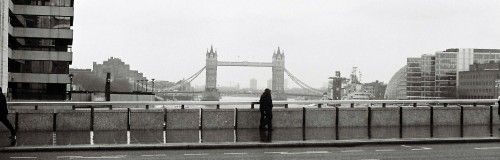



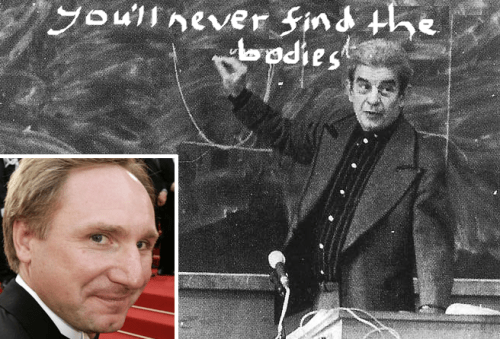
 “Does thees not demonstrate precisely zhat in making a line acrosh zhe face of zhe Real, zhe act of represhentation ish itshelf monstrous, in a senshe deesgushting?” Slavojina giggled.
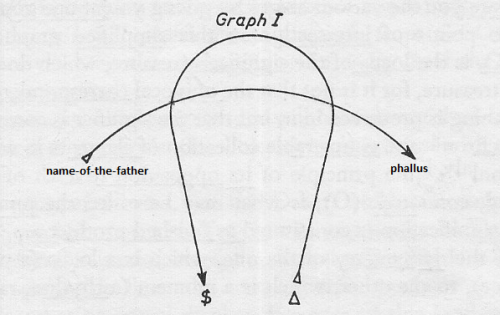 “My God,” said Slavojina. “Pure ideology.”

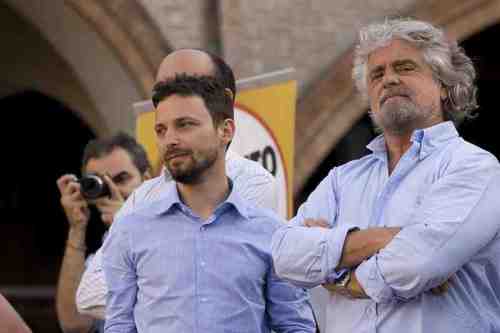


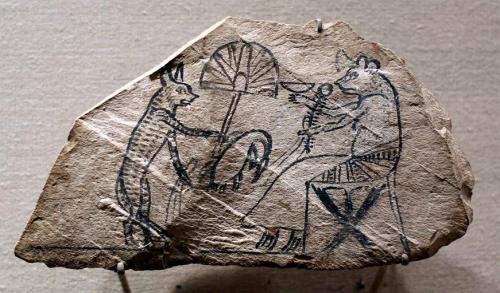


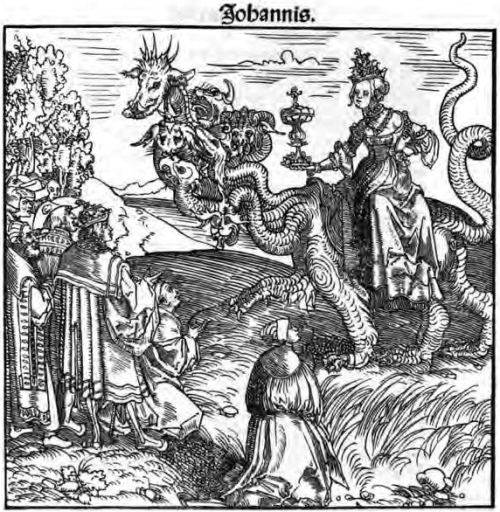
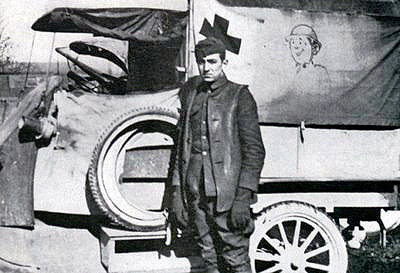


 Idiot Joy Showland